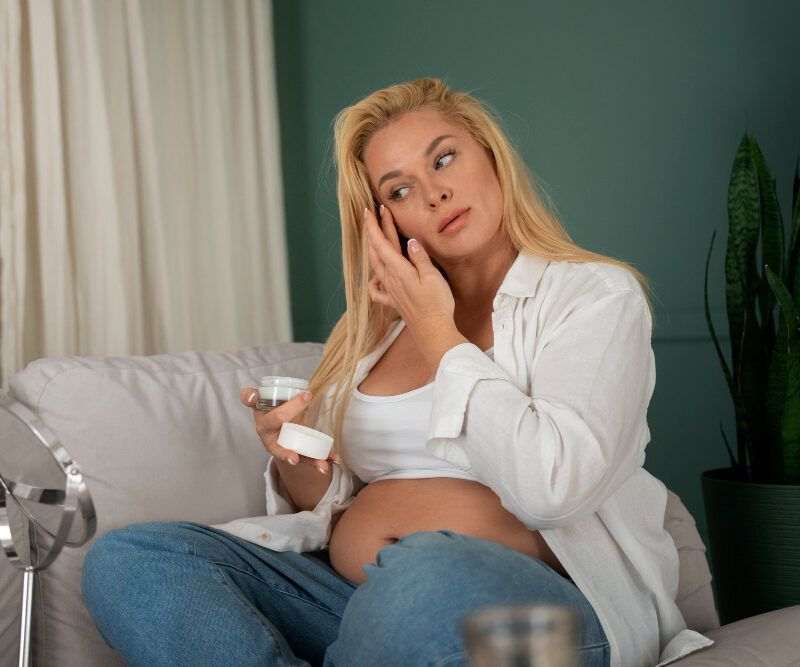
Let’s be real for a second—pregnancy already flips your world upside down. Hormones go wild, cravings make zero sense, and suddenly your skin decides to behave like a rebellious teenager. Fun, right?
Now add skincare confusion on top of that, and yeah… it’s a lot.
I remember staring at my bathroom shelf thinking, “Wait… can I still use this? Or will my face betray me?” If you’ve had that same mini panic, you’re in the right place. Let’s talk pregnancy-safe skincare like friends chatting over coffee—no judgment, no medical-school vibes, just honest, useful info.
Why Pregnancy-Safe Skincare Actually Matters
Your skin doesn’t magically become a sealed vault during pregnancy. It absorbs some ingredients, and a few of them can cross into your bloodstream. That sounds scary, but don’t freak out—I promise this isn’t about throwing away everything you own.
You just need to know what helps, what’s harmless, and what needs a temporary timeout.
Pregnancy also brings new skin drama, like:
Hormonal acne that laughs at your usual routine
Melasma (aka the “mask of pregnancy”)
Extreme dryness or sensitivity
Random redness that shows up uninvited
Ever wonder why your skin suddenly feels like it switched personalities overnight? Hormones run the show now, and they don’t ask permission.
Ingredients to Avoid During Pregnancy (Yes, Even Your Favorites)
This part always hurts a little. Some holy-grail products need to sit this season out. IMO, it’s temporary heartbreak for long-term peace of mind.
Retinoids (The Big One)
If skincare had a “do not pass go” ingredient, this would be it.
Avoid all forms, including:
Retinol
Retin-A
Tretinoin
Adapalene
Tazarotene
Doctors link vitamin A derivatives to potential birth defects. Even topical versions raise enough concern to say nope.
Trust me, I miss retinol too. But your glow-up can wait nine months.
Salicylic Acid (High Concentrations)
Before you panic—no, you don’t need to fear every product that ever whispered “BHA.”
Here’s the deal:
High-dose salicylic acid (peels, treatments) = avoid
Low concentrations (under 2%) = often considered okay
Still, many people skip it entirely to play it safe. I did, mostly because pregnancy anxiety doesn’t need extra fuel.
Hydroquinone
This ingredient fades dark spots like a champ, but your body absorbs way too much of it during pregnancy.
That high absorption rate makes experts uncomfortable—and honestly, same.
Skip it and opt for gentler brighteners instead.
Chemical Sunscreens (Some Types)
Certain chemical UV filters raise concerns, especially:
Oxybenzone
Avobenzone
Octinoxate
These ingredients may disrupt hormones. Since pregnancy already turns hormones into chaos goblins, adding more feels unnecessary.
Ingredients That Are Pregnancy-Safe (And Actually Amazing)
Good news—you still get great skin. You just switch your strategy.
Niacinamide
If I had to crown one pregnancy-safe MVP, it would be this.
Niacinamide helps with:
Redness
Acne
Oil control
Skin barrier repair
It works gently but effectively, which feels perfect when your skin acts dramatic.
Azelaic Acid
This ingredient deserves way more hype.
Azelaic acid helps with:
Hormonal acne
Pigmentation
Texture issues
Dermatologists love it for pregnancy because it delivers results without scary side effects. I noticed calmer skin within weeks, and yes, I bragged about it.
Hyaluronic Acid
Dry skin during pregnancy feels rude. Hyaluronic acid fixes that fast.
It:
Pulls moisture into the skin
Plumps fine lines
Works for every skin type
FYI, it doesn’t exfoliate or irritate, so you can use it daily without overthinking.
Vitamin C (In Moderation)
Vitamin C gives glow, boosts collagen, and fades dark spots.
Stick to:
Lower to mid-strength formulas
Stable forms like sodium ascorbyl phosphate
Your skin still shines—you just don’t fry it.
Mineral Sunscreen (Non-Negotiable)
If you do one thing, do this.
Choose sunscreens with:
Zinc oxide
Titanium dioxide
These sit on top of the skin instead of soaking in. They protect against melasma, which pregnancy loves to gift without warning.
Yes, some leave a white cast. Yes, it’s annoying. But uneven pigment lasts way longer than nine months.
A Simple Pregnancy-Safe Skincare Routine
Let’s keep this realistic. No one wants a 14-step routine while growing a human.
Morning Routine
Gentle cleanser
Hydrating serum (hyaluronic acid or niacinamide)
Moisturizer
Mineral sunscreen (SPF 30+)
That’s it. Simple wins.
Night Routine
Cleanser
Azelaic acid or niacinamide
Moisturizer or facial oil
If your skin feels tight or itchy, add more moisture. Pregnancy skin loves hydration like toddlers love snacks.
Acne During Pregnancy: Why It Happens & What Helps
Let’s talk about hormonal acne, aka the ultimate betrayal.
You eat well. You drink water. And still—bam—chin breakout.
Hormones increase oil production, clog pores, and invite bacteria to the party.
Helpful pregnancy-safe acne options include:
Azelaic acid
Niacinamide
Sulfur treatments (spot use)
Gentle clay masks (once weekly)
Avoid harsh scrubs. Your skin doesn’t need punishment—it needs patience.
Ever notice how aggressive routines only make things worse? Yeah, your face remembers.
Melasma & Pigmentation: The Unwanted Souvenir
Melasma shows up as dark patches, usually on the cheeks, forehead, or upper lip.
Pregnancy hormones + sun exposure = perfect storm.
What actually helps:
Daily mineral sunscreen
Wide-brim hats (fashion meets function)
Vitamin C
Azelaic acid
What doesn’t help:
Skipping sunscreen “just this once”
Trying to scrub it off (don’t do that)
Melasma fades slowly after pregnancy, so consistency matters more than intensity.
Clean Beauty vs Pregnancy-Safe: Not the Same Thing
This part trips people up.
“Clean,” “natural,” or “organic” doesn’t automatically mean safe for pregnancy.
Poison ivy is natural too. Just saying.
Always check ingredients, not marketing claims. Pregnancy-safe skincare depends on formulation, not vibes.
Common Myths I Wish Someone Had Debunked Earlier
“If it’s sold over-the-counter, it’s safe.”
Nope. Retinol lives on drugstore shelves and still gets the boot during pregnancy.
“Essential oils are harmless.”
Some essential oils can irritate skin or trigger reactions. Use cautiously and sparingly.
“I must suffer through bad skin.”
Absolutely not. You just need smarter swaps.
How to Read Labels Without Losing Your Mind
Ingredient lists look like chemistry exams. I get it.
Focus on spotting red flags:
Retinol or vitamin A derivatives
Hydroquinone
High-dose salicylic acid
When in doubt, ask your dermatologist or OB. They answer these questions daily—you won’t annoy them, I promise.
My Honest Take After Going Through It
Pregnancy-safe skincare taught me patience. I stopped chasing “instant results” and focused on barrier health and consistency.
My skin didn’t look perfect every day, but it looked calm—and honestly, calm skin feels like a luxury.
Sometimes less really does more.
Final Thoughts: You’re Doing Better Than You Think
Pregnancy already comes with enough rules. Skincare shouldn’t feel like a minefield.
Here’s the quick recap:
Avoid retinoids, hydroquinone, and harsh acids
Use azelaic acid, niacinamide, hyaluronic acid, and mineral sunscreen
Keep routines simple and hydrating
Protect your skin from the sun like it’s your job
You don’t need perfection. You just need intention.
So next time you stand in front of the mirror wondering if you’re “doing it right,” remember this—you’re growing a human. Your skincare doesn’t need to be flawless. It just needs to be safe, gentle, and kind… just like you.
And hey, once pregnancy ends, retinol will still be there waiting patiently. Until then, glow softly and carry on.