

This post contains affiliate links. If you click a link and make a purchase, I may earn a small commission at no extra cost to you. I only recommend products I genuinely believe in. Thank you for supporting Amoria Style!
Let’s address the word first. Looksmaxxing comes from online self-improvement culture — originally male-dominated spaces where guys catalogued every possible lever for improving their appearance. Women picked it up, stripped out the more neurotic energy, and turned it into something genuinely useful: a practical framework for appearance optimization that actually names what most women have been doing informally for years. Skincare routines, posture correction, color analysis, learning your face shape — this is all looksmaxxing. The term just makes it honest about what it is.
This guide isn’t about transforming yourself for someone else’s benefit or chasing an aesthetic that has nothing to do with your actual face and body. It’s about getting specific. About understanding your own features, coloring, and proportions well enough to present them at their best. There’s no guilt required for wanting to look good. No pretending appearance doesn’t matter. Just the information that actually moves the needle — and why it works.
The Foundation: What Changes Everything Else
Skin Quality Is the Multiplier
Before anything else — before makeup, before styling, before any of the more visible interventions — skin quality is the variable that affects every other result. Healthy skin makes makeup look better. It makes you look younger. It creates that quality people describe as “effortless” or “glowing” that no amount of contouring can replicate from scratch.
The routine that produces results isn’t complicated, but it has to be matched to your skin type to actually work. A gel cleanser for oily or acne-prone skin removes excess sebum without stripping; a cream or milk cleanser for dry skin cleans without compromising the moisture barrier; micellar water for sensitive skin does the job without triggering reactions. This isn’t aesthetic preference — using the wrong cleanser actively works against you. Apply moisturizer while the skin is still slightly damp from cleansing, not after it’s fully dried. The residual water helps lock in hydration more effectively.
The single highest-impact looksmaxxing habit available — and I mean this without exaggeration — is daily SPF 30 minimum. Not because of some abstract future benefit, but because UV exposure is responsible for the majority of visible aging: uneven skin tone, loss of elasticity, fine lines, pigmentation. Every day without SPF is a small erosion. Every day with it is compounding protection. The skin texture improvements from a consistent routine become visible around four to six weeks. More significant changes in tone and elasticity take three to six months. This is slow by the standards of fast gratification, but the results are structural, not cosmetic.

Sleep Is Not Wellness Advice
Sleep is usually framed as self-care — something you owe yourself, rest, balance. That framing undersells it as an appearance tool. During deep sleep, growth hormone peaks and drives collagen synthesis. Cortisol drops, which directly reduces inflammation and puffiness. The lymphatic system, which runs at full capacity during sleep, clears cellular waste from skin tissue. These are not metaphors. They’re the actual mechanisms.
Chronic sleep deprivation produces measurable visible changes: increased dark circles from blood pooling under thin undereye skin, reduced skin elasticity from compromised collagen production, increased dullness from impaired cell turnover, and — compounding everything — increased appetite for high-glycemic foods that worsen skin inflammation. You can’t exfoliate your way out of consistently bad sleep.
The specific sleep practices that affect appearance: a silk or satin pillowcase reduces friction on both skin and hair, which matters if you’re trying to maintain either. Back sleeping minimizes sleep lines — the compression creases that, over years, deepen into permanent ones. It’s difficult to maintain if you’re a side sleeper, but worth attempting. And the pre-sleep skincare window matters: actives like retinol applied at night have hours of uninterrupted absorption without UV exposure to work against them. Night is when the heavy lifting happens.

Eyebrows: The Frame That Changes the Face
Disproportionate impact. That’s the only way to describe what eyebrows do. They frame the eyes, create apparent facial structure, communicate expression, and signal grooming level in an instant. No other single facial feature carries that much information.
The three-point rule for finding your natural best brow shape: the start of the brow should sit above the inner corner of the nostril; the arch should peak above the outer edge of the iris when looking straight ahead; the tail should end at the 45-degree angle drawn from the nostril past the outer corner of the eye. These aren’t arbitrary — they’re derived from the proportions that tend to create balance across different face shapes.
The most common mistake that ages faces: over-plucking. Removing too much fullness from the body of the brow, particularly from the front third, strips the face of the natural density that youth provides. Sparse, overly sculpted brows — a legacy of the late 90s and early 2000s — read as older and harsher than full brows. If you’ve over-plucked, the recovery timeline is typically three to six months of leaving them completely alone.
For grooming by commitment level: threading gives the most precise definition and the cleanest lines. Tinting adds depth and definition without requiring daily pencil work — particularly useful for fair-haired women whose brows disappear without product. Microblading offers semi-permanent shape and color for women who want to stop thinking about it entirely; it’s worth researching thoroughly before committing, since quality varies enormously between technicians.

Posture and How You Occupy Space
Most appearance guides skip this entirely. That’s a mistake. Posture affects how clothing sits on the body, how the face and neck appear in profile, and how others read your presence before you’ve said anything.
Forward head posture — the forward positioning of the skull relative to the shoulders that most people develop from screen use — creates the appearance of a double chin regardless of body weight. The soft tissue under the jaw compresses when the head moves forward. A single intervention addresses this more effectively than anything else: the chin tuck. Standing or sitting upright, draw the chin directly back (not down) as if creating a “double chin” deliberately. Hold for two to three seconds, repeat ten times. Daily. It lengthens the suboccipital muscles at the base of the skull and retrains the head position over weeks of consistent practice.
Shoulder mobility work — specifically opening the anterior chest muscles that shorten from sitting — prevents the forward shoulder roll that makes clothing hang poorly and collapses the chest. Core engagement, which most people understand in theory and practice rarely, is what makes everything else sustainable. You cannot hold good posture with a weak posterior chain. The work is boring, it’s physical therapy-adjacent, and it produces visible results in appearance that nothing you apply topically can replicate.

The Multipliers: High-Impact, Often Overlooked
Hair as a System, Not a Problem
Most people manage their hair reactively: dealing with damage, trying products when something isn’t working, cutting when the ends get bad enough. The shift that produces consistently better results is treating hair as a system with proactive maintenance.
The health practices that produce visibly better hair are less complicated than the product industry wants you to believe. Protein-moisture balance matters — over-moisturized hair goes limp and doesn’t hold style; over-proteinated hair goes brittle and snaps. Heat protection isn’t optional if you use heat tools regularly; the damage is cumulative and eventually irreversible. Trim frequency for retention — particularly for those trying to grow length — is counterintuitive: regular small trims prevent split ends from traveling up the shaft and requiring larger cuts later.
The most impactful single change most women can make: finding a cut that actually suits their face shape rather than defaulting to whatever they’ve always had. Round faces are served by cuts with volume at the crown and length that creates vertical line. Square faces often benefit from softness and layers around the jaw. Oval faces have the most flexibility. Long, narrow faces typically benefit from width, not more length. A good hairdresser will tell you this. Not all hairdressers are good. It’s worth finding one who will have an honest conversation about what your face shape needs rather than just executing what you ask for.

Color: Near the Face First
Clothing color is one of the most underused appearance tools available, and it’s completely free. The principle that matters most is what happens with color near the face — the neckline, the collar, the top layer.
Skin undertone (warm, cool, or neutral) determines which colors will make your complexion look clear and vibrant versus sallow or washed out. Warm undertones — yellow, peachy, golden — tend to be served by warm colors: camel, rust, olive, warm reds, mustard. Cool undertones — pink, bluish, neutral — tend toward cool colors: navy, burgundy, cool greys, jewel tones. But the effect is easier to test empirically than to diagnose theoretically: hold fabric near your face in natural light and look at what happens to your complexion, not the fabric.
Eyes respond to their opposite on the color wheel. Brown eyes become more vivid against blue or teal. Blue eyes intensify against warm amber or copper tones. Green eyes pop against red-adjacent colors. This is a specific, usable piece of information.
The strategic approach to a wardrobe is building a palette rather than accumulating individual pieces. A coherent color palette — even a simple one — makes everything look more intentional, makes getting dressed faster, and means individual pieces combine more readily. More expensive-looking, too, which matters if you’re trying to maximize impact without constant spending.

Teeth and the Specific Details of a Smile
First impressions form in fractions of a second and the smile is a major input. The specifics here: whitening that actually works uses peroxide. Over-the-counter strips with 10-15% carbamide peroxide or 3-6% hydrogen peroxide are effective with consistent use; going higher without professional supervision risks sensitivity and enamel damage. The trays from a dentist offer better coverage and stronger concentrations than strips for comparable long-term cost.
The electric toothbrush plus water flosser combination is worth the upfront investment because it improves gum health visibly — healthy gums sit correctly at the tooth line and don’t recede or look inflamed, which affects the whole aesthetic of the smile. The water flosser removes debris from between teeth and below the gumline more effectively than string floss alone for most people.
One small, specific thing: in photos and in conversation, slightly parting the lips rather than keeping them fully closed creates a more open, warmer expression. Fully closed mouth can read as tense or guarded even when it isn’t. The difference is subtle and it registers immediately.

Fitness as Appearance Architecture
Rather than “exercise is good for you,” which everyone already knows and few find motivating, the specific types of training that most affect appearance and why they work:
Strength training builds the muscle that gives clothing its shape. The shoulder-to-waist-to-hip ratio that creates visual proportion is largely determined by muscle development at the shoulders and glutes. You cannot achieve that structure through weight loss alone — you need mass in the right places. Strength training also raises resting metabolic rate and, critically, improves posture through posterior chain development.
Walking is underrated. It’s the cardiovascular intervention most compatible with real life — no equipment, no gym, sustainable indefinitely. The appearance effects operate through improved circulation (which genuinely shows on the face), stress reduction (which lowers cortisol and reduces inflammation), and the lymphatic movement that walking generates. 8,000 to 10,000 steps a day is not a magic number but it’s a reasonable target that produces results.
Nutrition and skin quality are directly linked in ways most people underestimate. High omega-3 intake (fatty fish, flaxseed, walnuts) reduces skin inflammation visibly. Low glycemic diets reduce the insulin spikes that drive acne and accelerate collagen degradation through glycation. Zinc and vitamin A are both involved in skin cell turnover and wound healing; deficiency in either shows on the face. None of this requires extreme dietary changes. It requires consistency and enough awareness to notice when dietary patterns correlate with skin changes.

The Finishing Details: The 20% That Does 80% of the Work
Fragrance as Presence
Scent is the appearance element that most guides leave out, possibly because it can’t be photographed. But the olfactory system connects more directly to the limbic system — the brain’s emotional processing center — than any other sense. Fragrance creates associations and memory in a way that visual elements don’t. It’s part of how you’re remembered.
Choosing a signature fragrance is personal and subject to individual skin chemistry — the same perfume genuinely smells different on different people because of how it interacts with skin pH and natural scent. Testing on skin rather than paper is non-negotiable. Testing one fragrance at a time, over several hours, to understand how it develops through top, middle, and base notes.
Application for longevity: pulse points (inner wrists, neck, behind the knees, inner elbows) because the warmth amplifies projection. Applying to moisturized skin — or better, an unscented body lotion as a base layer — extends how long fragrance lasts significantly. Alcohol-based fragrances disappear faster on dry skin.

Nail Maintenance as Signal
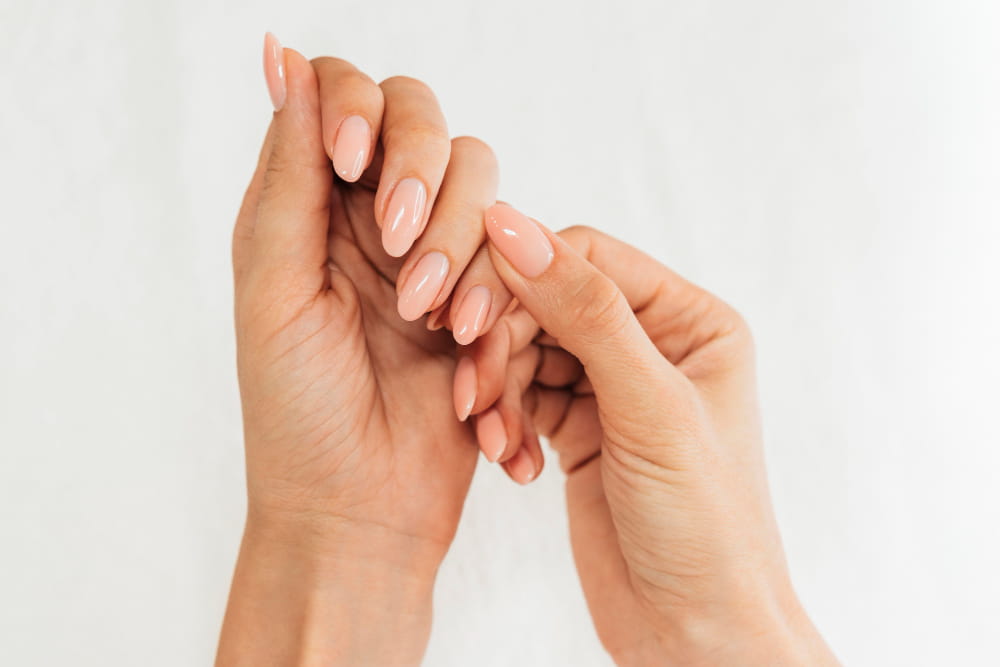
Nail care is easy to overlook and immediately noticed. Not nail art — nail maintenance. Clean, well-shaped nails that are evenly maintained with a single polish color or a clear top coat register as “put together” in a way most people can’t articulate but process instantly. The reverse is also true: chipped polish, uneven lengths, or neglected cuticles read as a finishing detail that was abandoned.
The routine that achieves good nails is approximately fifteen minutes per week: filing to consistent shape, pushing back cuticles (not cutting — cutting creates uneven regrowth), applying a base coat, two thin layers of color or clear, a top coat. That’s it. The key variable is doing it on a regular schedule rather than waiting until it looks bad.
Fit Above Everything in Clothing
Price doesn’t create the appearance of wealth. Fit does. An inexpensive garment that fits perfectly reads better than an expensive one worn incorrectly. This is not an opinion — it’s what the eye actually processes.
The alterations worth paying for: hemming trousers (even a centimeter makes a dramatic difference in how proportional the leg looks), taking in a dress at the waist, and adjusting shoulder seams on a jacket (the shoulder seam must hit exactly at the shoulder point — nothing else can compensate for this being off). These three alterations transform the wearability and appearance of a garment more than any other changes.
Knowing your proportions — not your size number, but your actual measurements and how they relate to each other — helps you identify fit problems before you buy, rather than after. The waist-to-hip ratio affects trouser fit. Shoulder width relative to bust affects how jackets fall. Torso length affects where seams land. These are learnable. A single session with a tailor who explains what they’re adjusting and why teaches you more about fit than years of guessing.

The Meta-Principle: Consistency Over Intensity
An elaborate skincare routine performed twice a week produces worse results than a simple one performed every day. A dramatic gym commitment that collapses after two months produces less than a moderate sustainable habit maintained over years. This is the single most important thing to understand about looksmaxxing — not as a platitude, but as a practical design principle for building a routine.
The habits that compound: SPF begins protecting against further UV damage immediately and the cumulative benefit builds over years. Consistent sleep repays itself in collagen production over months. Strength training reshapes body composition over a training career, not a single month. These are slow changes that become dramatic differences over a three-to-five year window. The women who look noticeably better in their late thirties than they did at twenty-five almost invariably attribute it to consistent boring habits — not to a dramatic intervention.
The timeline, roughly: skin texture improvement from a consistent routine, four to six weeks. Visible change in skin tone and pigmentation, three to six months. Posture change from daily exercises, four to eight weeks of consistent work. Hair health from changing practices, three to six months for new growth to show through. Body composition change from strength training, twelve to sixteen weeks for visible recomposition. None of these are fast. All of them are real.
Looksmaxxing at its best is self-knowledge applied to self-presentation. The goal isn’t to look like someone else or to optimize toward a single aesthetic ideal. It’s to understand your own face, coloring, and body well enough to present them clearly — to stop fighting your natural features and start working with them. That’s a different project than transformation. It’s refinement. And refinement, done consistently over time, produces results that no single product or intervention ever will.
The information in this post is based on personal research and experience and is intended for educational purposes only. It is not a substitute for professional medical or dermatological advice, diagnosis, or treatment. Always consult a qualified healthcare provider before making changes to your skincare routine or health practices, especially if you have a medical condition or sensitivity.
