
This post contains affiliate links. If you click a link and make a purchase, I may earn a small commission at no extra cost to you. I only recommend products I genuinely believe in. Thank you for supporting Amoria Style!
Every dermatologist says wear SPF every day. Most people have tried, hit a problem — pilling, greasiness, a white cast that makes foundation look terrible — and quietly stopped. The problem is almost never the sunscreen itself. It is the order, the timing, and the combination of products around it.
This is what the “SPF-first routine” concept actually means, and how to make it work with the routine you already have.
Why SPF Goes Where It Goes
Sunscreen needs to sit on top of your skin — or as close to the surface as possible — to do its job. The UV filters in sunscreen (both chemical and mineral) work by being present at the skin’s surface when UV radiation hits. If you layer a moisturiser, serum, or foundation on top before the sunscreen has formed its film, you dilute and disrupt that film. The protection drops.
This is why the order is: skincare first, sunscreen second, makeup third. Not sunscreen buried somewhere in the middle of your routine.
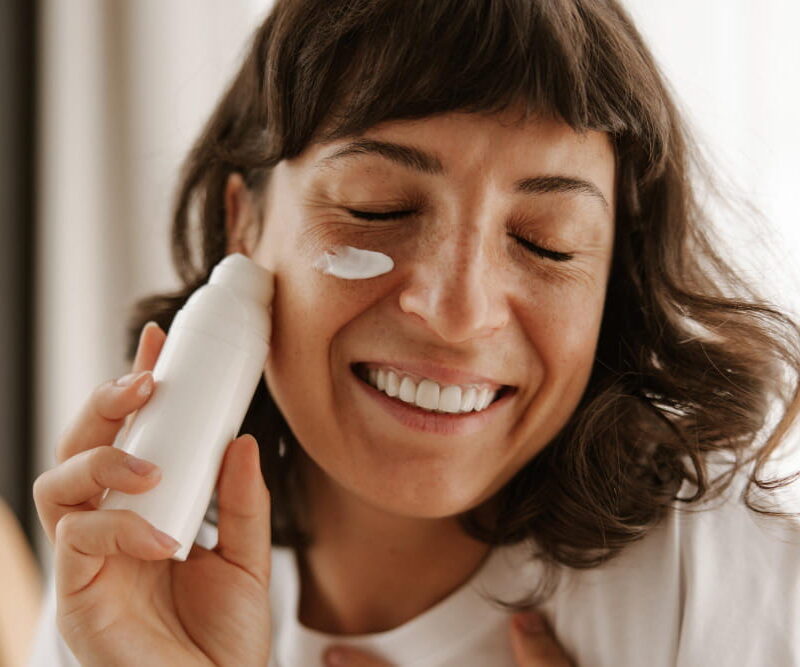
What most people get wrong is treating sunscreen like a moisturiser — patting it in, pressing it down, blending it the way you would a serum. Sunscreen needs to sit, not absorb. Apply it in gentle sweeping motions and let it settle for 2-3 minutes before touching your face again or applying anything on top.
The Two Types of Sunscreen and Why It Matters for Layering
Understanding which type of sunscreen you are using changes how you layer everything around it.
Chemical (organic) sunscreens absorb UV radiation and convert it to heat. Common filters include avobenzone, octinoxate, tinosorb S, and octisalate. These tend to be thinner, more transparent, and easier to layer under makeup. They need about 15-20 minutes after application to become fully effective, which is worth factoring into your morning routine. The tradeoff: some chemical filters can cause sensitivity or flushing in people with reactive skin, and certain filters (particularly avobenzone) can interact with some vitamin C formulations and cause temporary discolouration on the skin.
Mineral (inorganic) sunscreens use zinc oxide and/or titanium dioxide to physically deflect UV radiation. They work immediately on application. They tend to be thicker and are more likely to leave a white cast — though newer formulations using micronised particles have significantly reduced this issue. Mineral sunscreens sit on top of skin rather than absorbing into it, which makes them more likely to pill when layered over heavy moisturisers or silicone-based serums.
The practical rule: if you are using a mineral SPF, keep the layers under it lightweight and fully absorbed before applying. If you are using a chemical SPF, apply it as the last skincare step and give it time to set before foundation.

The Pilling Problem — What Is Actually Causing It
Pilling (when product rolls up into small balls on your skin) is the most common complaint about sunscreen in a layered routine, and it is almost always caused by one of three things:
1. Incompatible textures. Silicone-based products and water-based products do not layer well together. If your moisturiser is silicone-heavy (look for dimethicone, cyclopentasiloxane, or similar “-cone” ingredients high on the ingredient list) and your sunscreen is water-based, they will resist each other. The solution is either switching to a sunscreen with a compatible base, or switching the moisturiser.
2. Products not fully absorbed before the next layer. Applying sunscreen over a moisturiser that is still wet on the surface is the fastest route to pilling. The 60-second rule: wait at least 60 seconds between each layer, and more if the previous product feels tacky.
3. Too much product. Sunscreen requires about a quarter teaspoon for the face alone (the equivalent of two finger lengths, per the two-finger rule used in clinical SPF testing). But layering too many thick products underneath means there is no space for the sunscreen to sit. Simplify the layers underneath and use more sunscreen rather than less.
The Bag-Ready Beauty Approach: Editing Your Routine for Reapplication
This is the part most SPF routines ignore completely: reapplication.
SPF wears off. UV exposure, sweating, touching your face, and time all degrade your protection. The clinical recommendation is to reapply every 2 hours of UV exposure. If your routine requires removing your makeup to reapply sunscreen, you will not do it. The bag-ready beauty approach solves this by building reapplication into your routine from the start.
What actually works for reapplication over makeup:
SPF setting sprays — mist-format sunscreens that you spray over makeup. Look for ones that specify SPF 30 or 50 on the label (not just “SPF-infused”), and check that they have been tested to provide that protection as a spray, not just as a cream. The spray method has less reliable coverage than cream application, so getting even coverage matters — hold the bottle 20-30cm from your face and mist in overlapping strokes rather than one quick pass.
SPF powder — mineral sunscreen in a powder format that goes directly over makeup. Particularly useful for oily skin or in humid weather because it mattifies while protecting. The same coverage caveat applies: use more than you think you need and apply in layered passes rather than one swipe.
Tinted SPF as a base — replacing your moisturiser or foundation with a tinted SPF simplifies the entire routine and means your first application is already providing coverage. In summer, many people find that a tinted SPF 50 replaces the need for foundation entirely, particularly on days that involve outdoor time. The coverage is lighter, but the protection is real and reapplication is far more practical.
Building the Actual Routine
Here is what a functional SPF-first routine looks like in practice, for different skin types:
For oily or combination skin:
- Gentle cleanser
- Niacinamide or lightweight water-based serum (fully absorbed)
- Lightweight gel moisturiser or skip moisturiser entirely if your SPF is hydrating
- SPF 50 fluid or gel formula (look for “oil-free” or “non-comedogenic” on the label)
- Wait 2-3 minutes
- Lightweight foundation or tinted SPF if additional coverage is needed
Reapplication: SPF powder or setting spray throughout the day.
For dry or normal skin:
- Gentle cleanser
- Hydrating serum (hyaluronic acid or similar, fully absorbed)
- Moisturiser (wait 60 seconds)
- SPF 50 — cream or lotion formula, which will add additional hydration
- Wait 2-3 minutes
- Foundation or tinted moisturiser if needed
Reapplication: SPF mist or a second application of tinted SPF pressed gently over makeup.
For sensitive or reactive skin:
- Minimal routine — fewer layers means less friction and less pilling risk
- Fragrance-free moisturiser if needed
- Mineral SPF 50 (zinc oxide-based, no chemical filters)
- Wait 2-3 minutes
- Tinted SPF or light coverage only if needed — heavy foundation over mineral SPF increases pilling risk
Reapplication: Same mineral SPF applied with a sponge or brush, or mineral SPF powder.

The Makeup Compatibility Question
Not all foundations and SPFs behave well together, and the combination often matters more than the individual product.
Foundations with silicone bases (dimethicone as a key ingredient) layer best over chemical SPFs. Mineral SPFs underneath silicone foundations can create slip and reduce the foundation’s adherence.
Water-based foundations and tinted moisturisers work well over both chemical and mineral SPFs, provided the SPF has fully set first.
Powder foundations are the most forgiving option for layering over sunscreen because they do not disturb the SPF film the way liquid products can. If your SPF is consistently pilling under liquid foundation, switching to a powder foundation temporarily is a useful test to isolate whether the SPF or the foundation is the variable.
One thing worth knowing: the SPF listed on a foundation or BB cream is tested in isolation at the amount used in clinical SPF testing. In practice, people apply far less foundation than the amount required to achieve the stated SPF. Do not rely on the SPF in your foundation as your primary sun protection. Treat it as a small bonus on top of your actual sunscreen.
What to Look for on the Label
When choosing a sunscreen for daily wear and layering, the label tells you most of what you need to know:
- SPF 50 minimum for year-round daily use, particularly for the face
- Broad spectrum — this means it protects against both UVA (ageing, skin cancer) and UVB (burning). In the UK and EU, look for the UVA circle logo which indicates the UVA protection meets the required standard relative to the SPF rating
- PA+++ or PA++++ — a Japanese and Korean rating system for UVA protection, increasingly appearing on European and US products. PA++++ indicates the highest UVA protection available
- Water resistant if you will be outdoors, exercising, or in heat and humidity — though note this does not mean waterproof, and reapplication is still required after swimming or heavy sweating

The One Thing That Changes Everything
The biggest shift that makes an SPF-first routine actually sustainable is reframing what sunscreen is for in a daily context.
In beach or outdoor settings, sunscreen is blocking acute UV exposure that causes burning. In a daily urban routine, what you are protecting against is cumulative exposure — the UV that comes through windows, the 10 minutes walking between appointments, the lunch spent outside. This kind of exposure does not burn you visibly, but it is responsible for the majority of photoageing: hyperpigmentation, loss of collagen, uneven texture, and fine lines that appear gradually over years.
The reason SPF-first routines are worth getting right is not the sunburn you are preventing today. It is the skin you are protecting for the next decade.
The information in this post is based on personal research and experience and is intended for educational purposes only. It is not a substitute for professional medical or dermatological advice, diagnosis, or treatment. Always consult a qualified healthcare provider before making changes to your skincare routine or health practices, especially if you have a medical condition or sensitivity.
