
This post contains affiliate links. If you click a link and make a purchase, I may earn a small commission at no extra cost to you. I only recommend products I genuinely believe in. Thank you for supporting Amoria Style!
Retinol has more clinical evidence behind it than almost any other topical skincare ingredient. It also has a higher quit rate than almost any other skincare ingredient, because the adjustment period is real, uncomfortable, and poorly explained in most of the content that recommends it. People start, experience dryness and peeling within the first two to four weeks, conclude retinol doesn’t work for their skin, and stop — right before the period when the documented benefits start appearing.
Understanding why the adjustment period happens, and what the actual correct usage protocol looks like, is the difference between giving up at week three and seeing genuine results at month three.
What Retinol Actually Is
Retinol is one form of vitamin A used in over-the-counter skincare. When applied topically, it converts in the skin to retinoic acid — the active form that actually produces the documented effects. Prescription tretinoin is retinoic acid directly, which is why it works faster and causes more initial irritation: it skips the conversion step. Over-the-counter retinol requires conversion, which makes it slower-acting and gentler than tretinoin but operating through the same mechanism.
What It Actually Does
Accelerates cell turnover. Retinol increases the rate at which skin cells move from the deeper layers to the surface and are shed, which over time produces smoother texture, more even tone, and clearer pores. This accelerated turnover is also what causes the initial adjustment period — the skin is shedding faster than it’s used to, which produces temporary dryness, flaking, and sensitivity before it adapts.
Stimulates collagen production. This is retinol’s most extensively studied long-term effect. Retinoic acid upregulates collagen gene expression and inhibits matrix metalloproteinases — enzymes that break down existing collagen. Over consistent use across months, this produces measurable improvements in skin firmness and a reduction in fine lines.
Reduces hyperpigmentation. The same accelerated cell turnover that causes initial flaking also cycles out pigmented cells faster, which gradually reduces the appearance of sun damage, post-inflammatory hyperpigmentation from acne, and general uneven tone. This effect compounds with consistent use over time.
Treats acne. Retinoids are among the most evidence-supported treatments for acne, both in prescription and OTC forms. They work by regulating cell turnover in a way that prevents the initial blockage of pores — treating acne at the formation stage rather than after the fact.
The Adjustment Period — What's Actually Happening
The redness, dryness, and peeling that most people experience in the first two to six weeks of retinol use is called retinoid dermatitis or retinization. It’s not an allergic reaction, not a sign that retinol is wrong for your skin, and not permanent. It’s the skin’s response to accelerated cell turnover before it has adapted to the new rate.
The adjustment period severity depends on: starting concentration (higher concentrations produce more initial irritation), application frequency (daily use produces more irritation than starting with two or three times per week), and how the retinol is buffered (applied to dry skin produces more irritation than applied over a moisturizer or sandwiched between moisturizer layers).
Most people who quit retinol do so at weeks two to four — right in the middle of the adjustment period and before the skin has had time to adapt. Adaptation typically occurs between weeks four and eight, after which most people can increase frequency and often concentration without the same level of irritation.
The Correct Starting Protocol
Start at a low concentration. 0.025% to 0.05% retinol is appropriate for beginners. The instinct to start at the highest available concentration to see results faster is counterproductive — higher initial concentrations produce more irritation, which either causes people to quit or forces them to reduce frequency anyway, producing slower actual progress than a lower concentration used consistently.
Start with two nights per week, not daily. Two non-consecutive nights per week for the first four to six weeks allows the skin to begin adapting without the cumulative irritation of daily use. After six weeks with no significant irritation, increase to three nights. After another four to six weeks, move toward alternate nights. Daily use can be reached after three to four months of this gradual escalation for most people.
Apply to dry skin, not damp. Retinol penetrates more aggressively on damp skin, which increases irritation. Waiting ten to fifteen minutes after cleansing before applying retinol reduces irritation meaningfully without reducing efficacy.
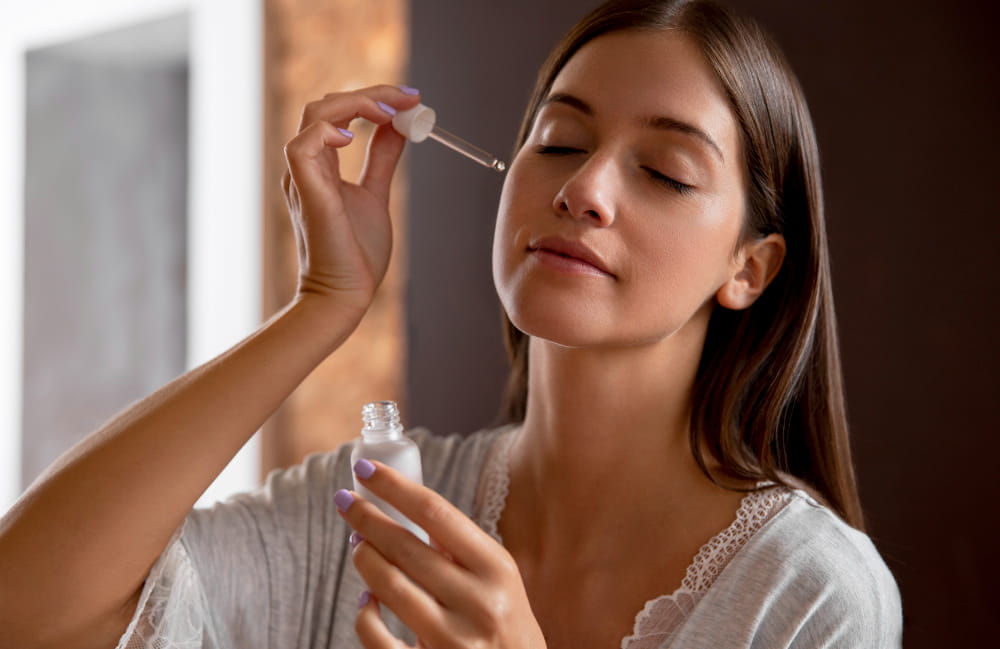
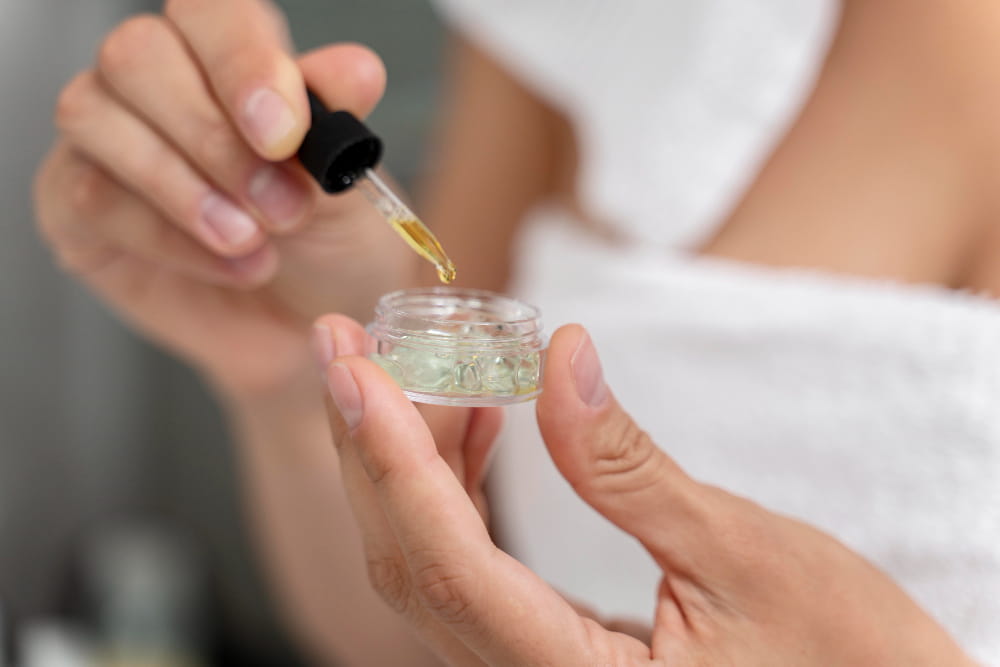
Use the sandwich method during adjustment. Apply a light moisturizer first, then retinol over it, then another layer of moisturizer on top. This buffers the retinol’s penetration rate without eliminating its effect, and it’s a standard dermatologist recommendation for the adjustment period specifically. Once the skin has adapted, the sandwich approach can be dropped and retinol applied directly to dry skin.
Never use retinol on the same night as strong acids. AHAs, BHAs, and retinol used on the same night produce compounded irritation significantly beyond what either would cause alone. This is the strongest case for skin cycling — dedicating separate nights to each active and protecting the skin’s ability to tolerate both over the long term.
What Concentration to Use and When
0.025%–0.05%: Beginner concentration. Appropriate for the first three to four months, or indefinitely for very sensitive skin. Produces real results on the same mechanism as higher concentrations, just more slowly.
0.1%: The concentration used in most significant clinical research on OTC retinol. A reasonable target after several months of tolerance-building at lower concentrations. Produces measurable collagen and texture improvements within three to six months of consistent use.
0.3%–1%: Higher OTC concentrations that function closer to low-dose prescription retinoids. Appropriate after established tolerance. Not a starting point.
Prescription tretinoin (0.025%–0.1%): Significantly more potent than OTC retinol at equivalent labeled concentrations because it’s already in active form. Requires a prescription and a dermatologist’s guidance, but produces faster and more dramatic results than OTC retinol at any concentration.
What to Expect and When
Weeks 1–4: Possible dryness, flaking, mild redness. This is normal adjustment. Maintain your protocol without increasing frequency.
Weeks 4–8: Adjustment typically resolves. Skin begins tolerating retinol without significant irritation. Texture may begin to improve slightly.
Months 2–3: Clearer pores, more even tone, smoother texture become noticeable. Acne-prone skin often sees meaningful improvement in this window.
Months 3–6: Collagen-related improvements (reduced fine lines, improved firmness) begin to appear. These effects require consistent use over this timeline — they don’t appear in weeks.
Beyond 6 months: Continued improvement with consistent use. The evidence on retinol’s collagen effects extends to years of use, with continued benefit throughout.
The One Thing That Undoes Retinol
Sun exposure without adequate SPF. Retinol increases photosensitivity — skin undergoing accelerated cell turnover is more vulnerable to UV damage than skin at its normal turnover rate. Using retinol consistently without daily SPF isn’t just suboptimal — it’s potentially counterproductive, generating UV damage at a rate that offsets the collagen and pigmentation benefits retinol is providing. Retinol is an evening-only ingredient for exactly this reason, and daily SPF isn’t optional if you’re using it.
The combination of consistent retinol use and consistent daily SPF is one of the most evidence-supported anti-aging pairings available in over-the-counter skincare. Neither works as well without the other.
The information in this post is based on personal research and experience and is intended for educational purposes only. It is not a substitute for professional medical or dermatological advice, diagnosis, or treatment. Always consult a qualified healthcare provider before making changes to your skincare routine or health practices, especially if you have a medical condition or sensitivity.
