

This post contains affiliate links. If you click a link and make a purchase, I may earn a small commission at no extra cost to you. I only recommend products I genuinely believe in. Thank you for supporting Amoria Style!
Skin cycling reshaped how a lot of people think about rotating actives — structured nights of exfoliation, retinoid, and recovery, instead of throwing every product at your face every single night. The same logic is now being applied to the scalp, and it solves a problem that’s been quietly mishandled for years: most people either treat their scalp like an afterthought attached to their hair, or they overload it with every trending scalp product at once and wonder why it’s more irritated than before.
Scalp cycling borrows the cycling structure and applies it specifically to scalp health — and it’s a genuinely useful framework, not just a repackaged trend name.
Why the Scalp Needs Its Own Approach
The scalp is skin — thicker than facial skin in most people, but skin nonetheless, with its own barrier function, its own oil production, and its own response to over-treatment. Hair care routines have historically treated the scalp as secondary to the hair itself — shampoo formulated for hair texture, conditioner focused on strands, with the scalp simply along for the ride.
This has created a gap: scalp-specific concerns — buildup, excess oil, flaking, sensitivity, slow growth — often don’t improve with standard hair care because standard hair care isn’t actually targeting the scalp as its own system with its own needs.
Scalp cycling addresses this by applying the same active-then-recovery logic that’s proven useful for facial skin: clarifying and active treatment nights, paired deliberately with recovery nights that allow the scalp barrier to reset rather than being perpetually under low-grade stress from constant product exposure.
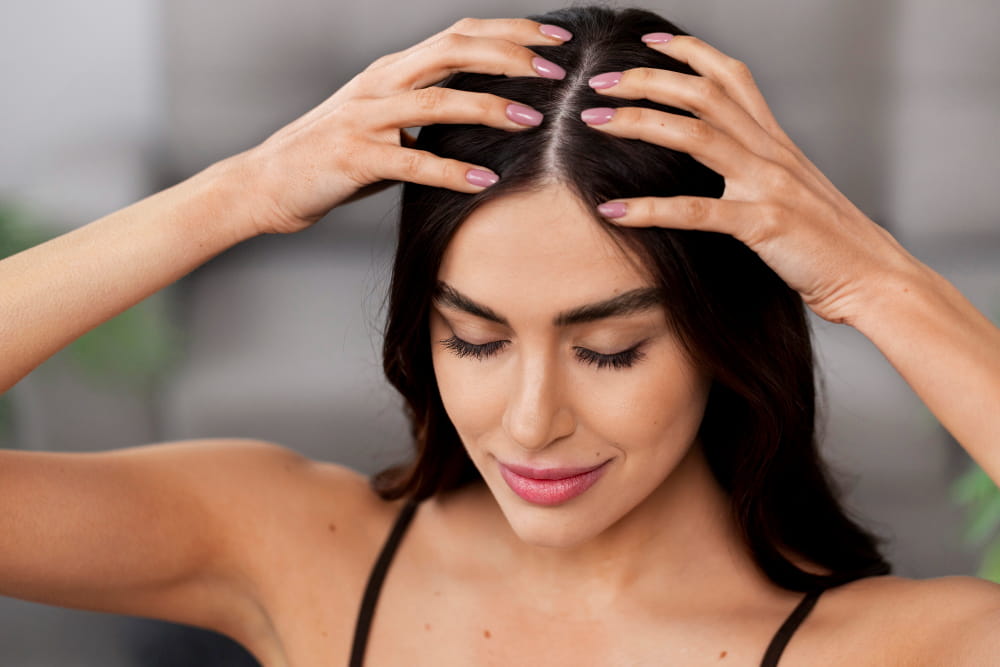
The Problem With Treating the Scalp Every Wash Day
Many “scalp care” routines that have gained popularity involve daily scalp serums, daily exfoliating scalp scrubs, or daily scalp massage oils layered with active ingredients — applied with the same frequency as a skincare routine, without the same understanding of why skincare routines build in recovery time.
The scalp barrier, like facial skin, can become compromised through over-treatment. Excessive exfoliation or active ingredient exposure on the scalp can lead to increased sensitivity, a compensatory increase in oil production (the scalp overproducing sebum to counteract the stripping effect of frequent active use), and paradoxically worse flaking or irritation than an under-treated scalp would show. This mirrors exactly what happens with over-exfoliated facial skin, just less commonly discussed because scalp health gets less attention generally.
The Scalp Cycling Structure
The most practical version maps onto a roughly weekly rhythm, since most people wash their hair two to four times per week rather than daily — which naturally creates built-in cycling opportunities that don’t exist in the same way for daily facial skincare.
Wash day one — Clarifying. Use a clarifying or scalp-detoxifying shampoo to remove product buildup, excess oil, and residue from styling products or dry shampoo. This is the equivalent of an exfoliation night — removing what’s accumulated and resetting the scalp surface. Clarifying shampoos are more stripping than daily shampoos by design, which is exactly why they’re not meant for every wash.
Wash day two — Active treatment. This is where a scalp serum, treatment, or targeted active ingredient comes in — whether that’s a growth-supporting serum (ingredients like caffeine, peptides, or minoxidil for those using it), an anti-inflammatory treatment for sensitivity or flaking, or a specifically targeted product for an identified scalp concern. Applying actives to a freshly clarified scalp, without buildup interfering with absorption, gives the active ingredient better access to the scalp surface than applying it over several days of accumulated product.
Wash day three (and beyond) — Recovery. A gentle, hydrating shampoo and conditioner, no active treatments, no exfoliation. This is the scalp equivalent of a skin cycling recovery night — allowing the barrier to rest, rebuild, and recover from the previous two more intensive sessions. If you wash more than three times per week, additional wash days beyond the third should also be recovery-focused rather than introducing more actives.
The specific products matter less than the structure — clarify, treat, recover, repeat — adjusted to your actual wash frequency rather than forced into a rigid daily schedule that doesn’t match how often you actually wash your hair.
How to Identify What Your Scalp Actually Needs
Before adopting any cycling structure, it helps to know what you’re actually addressing, since “scalp care” as a category covers genuinely different concerns that need different approaches.
Oily scalp with buildup benefits most from more frequent clarifying days relative to active treatment days — the priority is managing oil and buildup before introducing additional actives that could compound congestion.
Dry, flaking scalp needs less aggressive clarifying and more emphasis on the recovery phase — gentle, hydrating formulas with longer stretches between any active treatment, since a dry scalp is already in a more vulnerable barrier state and benefits less from frequent stripping.
Scalp concerns related to hair thinning or shedding are where the active treatment day matters most — this is when growth-supporting serums or treatments have the cleanest opportunity to work, applied to a clarified scalp without other products interfering.
Sensitive or reactive scalp benefits from a slower cycle overall — extending recovery days, reducing the frequency of both clarifying and active treatment days, and paying close attention to how the scalp responds before increasing intensity.
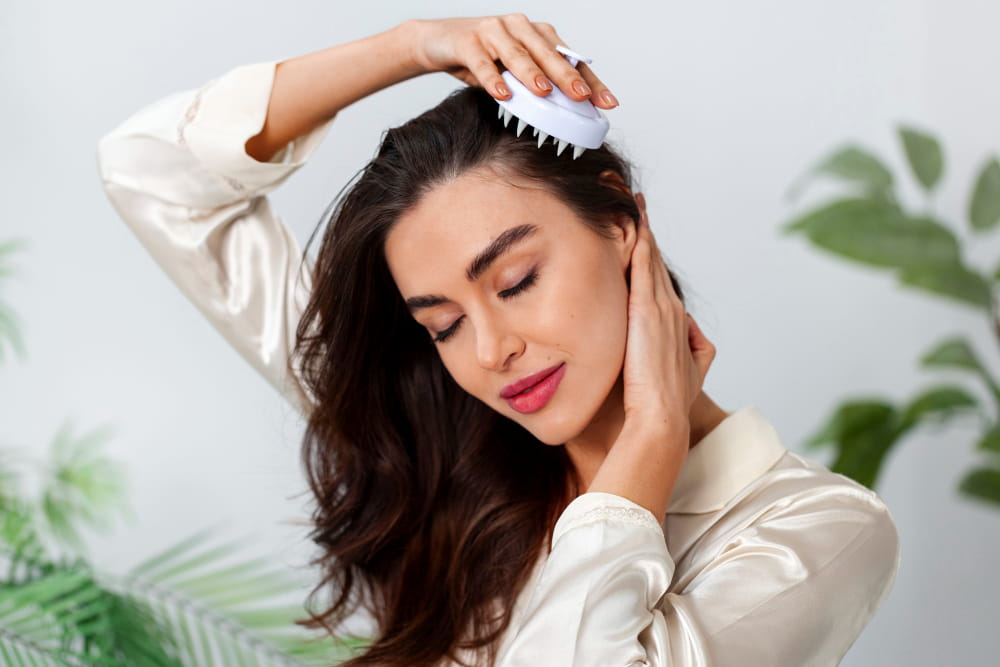
What Actually Goes Wrong Without Cycling
The most common scalp care mistake is treating every scalp concern with daily product layering — a clarifying shampoo on top of a daily scalp serum on top of a weekly scalp mask, all used continuously without any deliberate recovery period. This is the scalp equivalent of using retinol, an exfoliating acid, and a vitamin C serum all on the same night, every night, without ever giving skin a break — a combination that facial skincare communities have largely learned to avoid, but that scalp care content hasn’t caught up to yet.
The result is often a scalp that feels perpetually irritated, sensitive, or oddly imbalanced — overproducing oil in response to constant stripping, or showing increased flaking from barrier disruption — and the instinctive response is usually to add more products to fix the irritation, which compounds the original problem rather than resolving it.
Setting Up Your Own Cycle
Start by mapping your actual wash frequency rather than an idealized one — if you wash twice a week, your cycle has two days to work with, not the three-day structure described above. Two-day cycles work fine: clarify on the first wash, active treatment and recovery combined more gently on the second, then repeat. The structure scales to your actual habits rather than requiring you to wash more frequently to fit a specific cycle length.
Pay attention for two to three weeks before adjusting anything. Scalp changes — reduced oiliness, less flaking, improved comfort — take longer to become apparent than the immediate, single-wash feeling of “clean” that a strong clarifying shampoo gives. Judging the cycle’s effectiveness after one or two washes doesn’t give the structure enough time to actually demonstrate its effect.
If you notice increased sensitivity, more flaking, or excess oil despite following the structure, the answer is almost always to extend the recovery phase rather than add more active products — the same principle that applies to over-exfoliated facial skin applies here.

The Honest Summary
Scalp cycling isn’t a fundamentally new discovery — it’s the application of a principle that’s already well-established in skincare to a part of the body that’s historically been treated as an afterthought. The structure itself, more than any specific product within it, is what makes the difference between a scalp routine that improves things over time and one that just creates a more expensive version of the same irritation.
The information in this post is based on personal research and experience and is intended for educational purposes only. It is not a substitute for professional medical or dermatological advice, diagnosis, or treatment. Always consult a qualified healthcare provider before making changes to your skincare routine or health practices, especially if you have a medical condition or sensitivity.
