

This post contains affiliate links. If you click a link and make a purchase, I may earn a small commission at no extra cost to you. I only recommend products I genuinely believe in. Thank you for supporting Amoria Style!
Wide leg pants exist for a very specific emotional need: you want to look like you made an effort, but you also want to feel like you’re wearing something comfortable enough to fall asleep in. That’s not a contradiction — that’s exactly what a good wide leg pant delivers, and it’s why they’ve been in consistent rotation for three seasons without showing any sign of leaving.
The One Rule That Makes Everything Easier
The wider the trouser, the more precisely everything else has to be chosen. A billowing leg opening is unforgiving of a top that is slightly too long, a shoe that is slightly too clunky, or a bag that is slightly too small. When it works, it looks effortless. When it does not, it is obvious why. This is worth stating plainly before anything else, because it is the piece of information most styling guides skip. Wide leg pants are not automatically easy. They are easy when the decisions are right — and identifying what “right” means requires understanding the structural logic behind the silhouette, starting from the floor and working up. The nine outfits below are built around that logic. Each one is constructed from the ground up — shoe first, then trouser, then top, then any outerwear and accessories. The ordering is deliberate. In wide-leg dressing, the shoe is not a finishing touch. It is the technical decision that everything else pivots around.
The Clean White Uniform
The Shoe
Start here with the Blair Sneakers White. A clean white low-profile trainer is one of the most technically accommodating shoes for wide-leg trousers because its flat sole keeps the hem at maximum length. With a trainer rather than a platform sneaker, the trouser grazes the floor without breaking or pooling — the hem skims across the top of the shoe and reads as one continuous vertical line. A round toe is preferable to a chunky silhouette because the leg opening of a wide-leg pant already carries mass; a bulky trainer beneath it doubles that mass at the ankle and makes the look bottom-heavy. The narrow profile of a clean court shoe or low trainer disappears under the hem in exactly the right way.
The Trouser
The Basma Trouser Pants in White are the foundation — a high-waisted wide-leg silhouette in a fabric weight that is substantial enough to hold its shape through a full day but not so heavy that it loses the fluid drape that makes white trousers work. The rise matters here: high-waisted places the visual break at the narrowest part of the torso, which elongates the leg and prevents the wide hem from cutting across the thigh in a way that shortens everything. White specifically works in this formula because it reflects light and makes the leg look cleaner and longer than any other colour at the same width.
The Top & Tuck
The Taelynn ¾ Sleeve Button-Up Shirt in White is tucked loosely at the front — a half-tuck rather than a full tuck, so one corner of the hem drops slightly below the waistband. This is not casual sloppiness; it is a proportional decision. A full tuck on a white shirt with white trousers flattens the silhouette. A half-tuck introduces a small visual interruption at the hip that breaks the monotony of a single tonal block and draws the eye to the waist. The ¾ sleeve is worth noting: with a wide leg, a long sleeve creates too much fabric at both ends of the body. A ¾ sleeve shows the forearm and lightens the upper half in proportion to the volume below.
The Bag
Keep it minimal and keep it white or carry nothing at all. A small structured crossbody in white leather is the most architecturally consistent accessory choice. Anything too large at the shoulder creates visual width on the upper body that competes with the leg opening below. Anything too small reads as an afterthought. The structured quality matters — a slouchy white bag reads as formless against the clean geometry of the trouser.
- Shoe: Blair Sneakers White
- Trouser: Basma Trouser Pants White
- Top: Taelynn ¾ Sleeve Button Up Shirt White


The Elevated Casual
White wide-leg denim — the accessible entry point
The Shoe
Wide-leg denim operates by slightly different rules to tailored wide-leg trousers, which is why the shoe conversation changes here. The structure of denim — its weight, its stiffness compared to crepe or linen — means it holds its shape differently at the hem. A flat sandal reads well because the denim hem falls to the instep and creates a relaxed, easy break that suits the casual register of the fabric. A block-heeled mule also works: the square toe cuts a cleaner line against the wide hem than a pointed stiletto would, and the modest heel height raises the leg just enough to suggest intention without pushing the look into evening. Avoid platform trainers here — the combination of chunky sole and wide denim creates visual weight at the ankle that the stiffness of denim already brings.
The Trouser
The Ramos Low Rise Denim Jeans in White change the proportional formula in one specific way: the low rise. Most wide-leg trouser advice defaults to high-waisted because it maximises leg length. Low-rise reverses that logic — it lowers the visual start of the leg and relies instead on the length of the trouser and the shoe to create the elongation. It requires more precision in the top half: nothing can sit below the hipbone, nothing can be loose. But when it is right, the low-rise wide-leg combination has a ease that high-waisted styles sometimes lack, and white denim specifically absorbs the challenge of the lower rise by keeping the silhouette light.
The Top & Tuck
A fitted ribbed tank or a simple fitted tee tucked fully at the front is the right counterweight for a low-rise jean. The low waistband needs the top to end cleanly — a half-tuck on a low-rise waistband creates bunching rather than intentionality. Fitted is non-negotiable: anything boxy or cropped in the wrong way will shorten the torso at exactly the point where low-rise already shortens it. A scoop or v-neckline opens the chest and draws the eye upward, which compensates for the lower waistband placement.
The Bag
A small shoulder bag in a warm neutral — tan leather, cognac, or camel — grounds the white denim with warmth and reads as elevated casual rather than sporty. The bag should sit at the hip rather than higher; a short strap crossbody on low-rise denim cuts across the hip line and interrupts the already lower waist placement.
- Trouser: Ramos Low Rise Denim Jeans White
- Shoe: Flat block-heel mule or sandal
- Top: Fitted ribbed tank, fully tucked

The Satin Evening Look
Fluid satin trouser — how wide-leg works at night
The Shoe
The Therapy Bette Boot in Black is the starting point, and it is a more counter-intuitive choice than it appears. The conventional evening instinct with satin trousers is a pointed-toe stiletto — and a stiletto is not wrong, but the boot option is better for one specific reason: ankle-height ankle boots with wide-leg satin trousers create an interplay where the trouser hem falls across the boot shaft and the slim silhouette of the boot leg contrasts cleanly with the wide leg opening above it. The key is the height — the boot needs to sit below where the trouser hem falls in motion, so the fabric drapes over the boot rather than bunching around the shaft. A kitten heel or low block heel on the boot keeps the look proportional without flattening the satin’s drape. If choosing a stiletto instead, the pointed toe matters more than the heel height: the narrow point cuts through the hem elegantly.
The Trouser
The Aubrette Satin Tie Pants in Cream — satin is the fabric that most directly translates wide-leg to evening because its finish catches light in a way that resembles suiting fabric at a fraction of the formality. Cream satin is the specifically intelligent choice over black satin for this outfit: it is more unexpected, reads as more deliberately chosen, and works better against a black top. The tie waist is a genuine functional advantage rather than just a styling detail — satin trousers without a structured waistband need to hold their position precisely, and the tie waist allows micro-adjustments to where the fabric sits. The width of the leg at the hem with satin should be generous; a narrow or tapered leg in satin reads as costume rather than fashion.
The Top & Neckline
A simple fitted black top — a thin-strap cami, a fitted scoop-neck jersey, or a structured black bodysuit. The neckline decision is worth attention: against cream satin with wide legs, a high neckline (turtleneck, crewneck) closes the top of the silhouette and makes the outfit feel heavy. A V-neck, scoop, or off-shoulder opening at the neckline creates a visual counterweight at the top that lifts the look and prevents the satin volume from dominating. The top must be fully tucked or worn as a bodysuit — any fabric sitting outside the waistband with satin trousers creates horizontal breaks that interrupt the fluid line of the fabric.
The Bag
The Zenia Shoulder Bag in Black — structured, not slouchy. Evening satin trousers require a bag that has some architectural quality; a soft bucket bag or hobo reads as inconsistent with the formality of the fabric. The black grounds the cream-and-black outfit and keeps the accessories coherent without adding another colour into the palette.
- Shoe: Therapy Bette Boot Black
- Trouser: Aubrette Satin Tie Pants Cream
- Bag: Zenia Shoulder Bag Black


The Warm Neutral Stack
Earth tones — camel, brown, cream, tonal depth
The Shoe
The Voodoo Sandals in Black are the grounding decision in an outfit that is otherwise entirely warm-toned. A black sandal beneath cream or white wide-leg trousers creates a clean visual anchor — it stops the look from becoming too diffuse and adds a sharpness that keeps the warm palette from reading as muddy. The flat sandal specifically works here because the trouser length needs to graze the floor, and a flat sandal allows that length without a heel. The slimness of a flat sandal strap is preferable to a chunky sandal or open mule: the leg opening of a wide trouser is already substantial, and a delicate sandal strap creates the contrast that makes the hem look intentional rather than accidental.
The Trouser
Wide-leg cream or white trousers in a mid-weight fabric — the specific Basma trouser from Outfit 1 works here also, or any cream wide-leg in a fabric that holds its shape. The choice of cream rather than a brown or camel trouser is the proportional decision: with a brown knit as the top layer, a cream trouser creates tonal contrast within the warm palette that gives the outfit depth. A brown trouser with a brown knit reads as a single flat block of colour.
The Top & Layer
The Hertford Zip Through Knit Sweater in Brown worn half-zipped over the Ackee Ruched Off Shoulder Top in Brown underneath. The zip-through half-open creates a V-opening at the chest that breaks the closed silhouette of a crewneck and adds visual interest at the neckline. The ruched off-shoulder top underneath is a layering strategy: it gives the outfit an extra dimension when the knit is removed, and the off-shoulder neckline creates the chest opening that a closed neckline would eliminate. The ruching at the shoulder of the underlayer adds texture that is visible at the neckline of the zip-through, which prevents the look from being too flat at the top.
Bag & Outerwear
A small camel or tan leather bag keeps the warm palette coherent. Avoid adding another layer over this outfit — the zip-through knit is already structured enough to function as outerwear at temperatures where a light jacket would be appropriate. Adding another coat over the knit adds bulk to the upper body that the wide leg below cannot absorb proportionally.
- Shoe: Voodoo Sandals Black
- Layer: Hertford Zip Through Knit Sweater Brown
- Under-Top: Ackee Ruched Off Shoulder Top Brown


The Leather Jacket Formula
Structure above volume — the contrast principle
The Shoe
The Sawyer Knee High Boots in Black — and here the positioning of the boot shaft matters more than almost any other shoe decision in this guide. A knee-high boot with wide-leg trousers works only when the boot sits entirely beneath the trouser hem in motion. If the boot shaft is visible — if the trouser rides up when walking and reveals a gap between the hem and the boot top — the look breaks. The wide leg trouser needs to drape over the boot, with the boot’s shaft providing structure beneath the fabric rather than competing with it. This means the trouser needs a generous inseam length, not cropped. Matte black specifically over patent: the leather jacket above and the wide trouser below are both strong visual elements, and patent leather at the boot creates a third competitive focal point. Matte recedes and lets the other elements lead.
The Trouser
Any black wide-leg trouser in a medium-weight fabric — the weight matters because too light a fabric with a knee-high boot creates bunching at the boot shaft as the trouser falls over it. A crepe or ponte fabric holds its line over the boot. The trouser should be high-waisted to maximise the leg length beneath the leather jacket, which tends to sit at the hip and shorten the torso slightly.
The Top & Jacket
The Harmony Knit Sweater in Black tucked into the trouser, with the Vyolette Faux Leather Collared Jacket in Washed Black over the top. The collared jacket — as opposed to a plain bomber collar — is the structural decision: the collar adds a visual anchor at the neckline that frames the face and creates a point of interest above the flat line of the jacket hem. The washed black finish of the faux leather makes the jacket look worn-in and intentional rather than costume-y, which is the challenge with all-black outfits — avoiding the flat uniformity that makes every element blend into every other. The washed finish introduces subtle variation in tone that gives the jacket its own character.
Bag
Small, structured, and either black or a sharp contrast colour — a red, burgundy, or camel bag is the one place in this all-black outfit where a colour accent pays off. A small structured bag at the shoulder or held in the hand adds the finishing detail that makes the outfit look edited rather than assembled without thought.
- Shoe: Sawyer Knee High Boots Black
- Jacket: Vyolette Faux Leather Collared Jacket Washed Black
- Knit: Harmony Knit Sweater Black


The Burgundy Statement
Single-colour focus — one element carries the outfit
The Shoe
A clean black heel — pointed-toe pump or a slim-heeled mule in matte black. When the entire statement of an outfit is concentrated in one piece (here, the burgundy jacket), the shoes need to recede entirely. A pointed-toe pump in black does this cleanly: it reads as formal enough to match the leather jacket’s register without drawing any attention toward the foot. Avoid burgundy shoes that match the jacket — matching shoe to statement piece looks coordinated in the wrong way, the way a matching luggage set looks coordinated rather than styled.
The Trouser
Black wide-leg trousers — high-waisted, substantial fabric weight. The entire purpose of the trouser here is to provide a clean, receding background against which the burgundy jacket can operate. Any variation from black (navy, charcoal, dark brown) introduces a colour conversation that competes with the jacket rather than supporting it.
The Top & Jacket
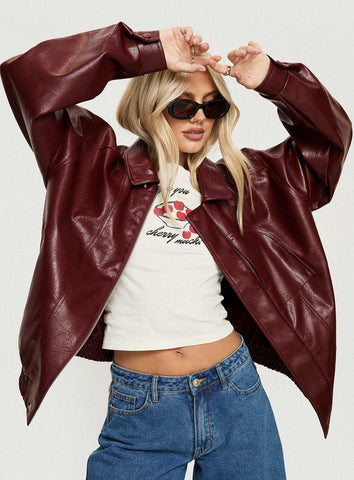
A fitted black top — bodysuit, fitted ribbed top, or a simple scoop-neck — fully tucked or worn as a bodysuit beneath the Devija Faux Leather Jacket in Burgundy. The jacket is worn open or half-open to show the black top beneath; a closed jacket over the trouser reads as too uniform. The open jacket creates a vertical line of black at the centre front that lengthens the torso, and the burgundy frames that line on either side. Burgundy faux leather is a specific tonal choice that deserves credit: burgundy sits in the red family but reads as rich rather than bright, which means it can sit against black without the garish quality that a true red sometimes brings in evening contexts.
Bag & Proportions Note
A small black structured bag — nothing that introduces a third colour. The proportions of this outfit depend on restraint: the moment a second accent colour is added anywhere, the burgundy jacket stops being the statement and becomes one of several competing elements. Edit ruthlessly.
- Jacket: Devija Faux Leather Jacket Burgundy
- Trouser: Black wide-leg, any high-waisted style
- Shoe: Black pointed-toe pump or mule
The Beige Bomber
Smart-casual linen — warmth and breathability
The Shoe
A flat leather sandal or a clean white low-profile trainer — the fabric of the trouser (linen blend) and the bomber jacket create a register that is definitively daytime and casual-smart. A heel pushes this combination into a territory that doesn’t suit the relaxed nature of linen and a bomber. A flat sandal that shows the foot reads as warm-weather, appropriate and elegant against a linen trouser hem. A white trainer keeps it year-round. Avoid a heavy or chunky shoe: the linen blend is a light fabric that drapes softly, and a heavy sole beneath it creates a visual disconnect between the fabric weight above and the mass below.
The Trouser
The Silver Moon Linen Blend Tie Pants in White — the functional virtue of this specific trouser is the fabric, not just the silhouette. Linen blend breathes better than any synthetic wide-leg fabric, which makes the wide-leg silhouette practical rather than merely aesthetic in warmer conditions. A synthetic wide-leg trouser in summer heat accumulates at the back of the thigh in a way that is uncomfortable and visible; the linen blend moves with the body and holds its drape regardless of temperature. The tie waist is a practical detail that allows the trouser to sit correctly at the waist regardless of body proportion, which matters with a high-waisted style.
The Top & Layer
A fitted tank or a lightweight fitted top fully tucked beneath the Sancia Bomber Jacket in Beige. The bomber jacket with wide-leg trousers works because the jacket’s hem typically sits at the hip — above the wide-leg volume, rather than inside it. This is the structural distinction between a bomber and a longer jacket: a bomber does not compete with the wide leg’s volume because it ends before that volume begins. Beige over white creates the same tonal warmth as the earth-tone outfit in Outfit 4 but with lighter, cooler fabrics that suit a different season and a different register.
Bag
A small raffia, woven, or natural-material bag keeps the natural fabric palette coherent. A smooth leather bag in a warm tan also works. The key is that the bag material should have some warmth or texture — a clean structured black leather bag against beige bomber and white linen reads as too formal for the relaxed register of the fabrics.
- Jacket: Sancia Bomber Jacket Beige
- Trouser: Silver Moon Linen Blend Tie Pants White
- Shoe: Flat leather sandal or white trainer


The Texture Play
Shearling and satin — contrast within a tonal palette
The Shoe
A slim black heel — stiletto or a slim block — is the right counterpoint to the volume and texture of the shearling jacket. When the upper body is carrying significant visual mass (shearling is among the bulkier jacket materials available), the shoe needs to be as slim and refined as possible to create balance. A platform or chunky shoe beneath a shearling jacket and wide-leg satin trousers would make the outfit read as overwhelmingly heavy at both ends. The slim heel lifts the whole look and balances the upper mass with a precise, pointed anchor at the foot.
The Trouser
The First Place Low Rise Satin Pant in Black — satin as the trouser fabric makes the contrast with shearling above maximally effective. The opposition between the smooth, reflective surface of black satin and the matte, fluffy texture of black shearling is what creates visual interest in what is otherwise an entirely tonal outfit. Without that textural contrast, an all-black outfit needs colour variation or pattern to have dimension. Here the texture is the variation, and it is enough.
The Jacket & Top
The After Party Shearling Jacket in Black over a minimal fitted black top. The shearling needs to be worn over something extremely streamlined because the jacket itself carries all of the visual weight in this outfit. A fitted ribbed top or a simple black bodysuit is the right base; anything with volume at the shoulder or extra fabric at the waist creates competition with the shearling’s natural bulk. The jacket should ideally be worn open or with just the top button fastened — the fullness of shearling worn fully closed over a wide-leg trouser creates a silhouette that reads as shapeless rather than deliberate.
Bag & Accessories
A small black structured bag — kept minimal. This outfit already has a strong point of view between the shearling jacket and the satin trouser, and accessories should not add complexity to that conversation. A pair of small gold hoops or a thin gold chain adds warmth against the all-black palette without introducing a new element that needs resolving.
- Jacket: After Party Shearling Jacket Black
- Trouser: First Place Low Rise Satin Pant Black
- Shoe: Slim black heel — stiletto or fine block


The Scarf Detail
The accessory that does disproportionate work
The Shoe
White trainer or a clean tan loafer — this is a daytime, warm-palette outfit, and the shoe needs to reinforce the relaxed, considered nature of the whole look. A loafer in tan or camel leather bridges the gap between casual and elevated in exactly the right way for a beige-and-white outfit with a scarf accent: it reads as intentional without trying too hard, which is the exact register this combination should occupy.
The Trouser & Foundation
The linen blend white trouser from Outfit 7, or the Basma white trouser — the foundation is the same clean wide-leg in white that establishes the tonal palette. The beige bomber from Outfit 7 sits over a fitted top, with the trouser at full floor-grazing length.
The Accessory that Resolves Everything
The Freeze Fluffy Scarf in Beige — worn loosely around the neck, draped over one shoulder, or tied loosely at the collar of the bomber jacket. The disproportionate impact of the scarf in this outfit deserves explanation: an outfit that is otherwise entirely made of flat planes (the bomber’s smooth surface, the flat white trouser, the fitted top) gains its sole point of three-dimensional texture from the scarf. The fluffy texture at the neck creates visual interest exactly where the eye naturally goes first — the face and neckline — and the beige ties the bomber’s colour to the scarf in a way that makes the whole warm palette read as deliberate and thought-through rather than assembled from available pieces. The scarf also functions as the finishing detail that makes the outfit feel complete: without it, the beige bomber and white trouser combination is good but slightly plain. With it, there is a clear point of view.
Bag
A structured tan or beige bag, or a small white bag — whichever keeps the palette coherent. The scarf is already the detail; the bag should not compete for attention. Small, structured, and warm-toned.
- Accessory: Freeze Fluffy Scarf Beige
- Jacket: Sancia Bomber Jacket Beige
- Trouser: Silver Moon Linen Blend Tie Pants White

Inseam Length and Height: The Difference Between Looking Longer and Looking Buried
This is not a footnote. Inseam length in wide-leg trousers is the single most consequential technical decision in the purchase — more important than the colour, more consequential than the fabric, more make-or-break than any styling choice made afterward. A wide-leg trouser at the wrong inseam length does not look like a trouser that is slightly off. It looks like a completely different garment: frumpy where it should be fluid, cropped where it should be long, pooling where it should skim. Understanding why requires understanding what the wide-leg silhouette actually does visually. The line of a wide-leg trouser works by creating an unbroken vertical plane of fabric from the hip to the floor. That plane elongates everything above it: it makes the waist look higher, the hip narrower (by contrast with the width below), and the overall silhouette taller than it is. When the inseam is wrong — when the trouser ends too early or breaks at the wrong point on the leg — that vertical plane collapses. Instead of a clean floor-length line, you get a horizontal interruption at the calf or ankle, which is exactly where the eye does not want to be directed.
This is where most people get wide-leg trousers wrong.
The Three Hemline Positions and What Each Does
There are effectively three positions where a wide-leg trouser hem can fall, and each produces a distinct visual result. The first is floor-grazing or full-break — the trouser hem reaches the floor or comes within a centimetre of it, creating a slight pooling or a clean floor-length line depending on the fabric weight. This is the longest option and the most elongating; it works in any fabric that holds its shape, and it is the most forgiving of height differences because the shoe is largely hidden beneath the hem. The trade-off is practicality: a floor-grazing hem frays faster, collects dust, and requires a specific shoe height to maintain its length rather than bunching. The second position is the mid-break — the hem falls across the top of the foot, showing the top of the shoe but not the ankle. This is the most versatile inseam position: it works at almost every height, it works with both flat and heeled shoes, and it reads as deliberately styled rather than slightly too long or accidentally cropped. The mid-break is the position most women’s tailors default to for a reason — it is the most technically reliable. The third position is cropped, and with wide-leg trousers this position requires the most precision and the most courage to execute. A wide-leg trouser cropped at the ankle or above the ankle works only in specific circumstances: the fabric needs to be stiff enough (denim, heavy twill) to hold its shape and not collapse inward at the hem, the shoe needs to have a clear visual presence (ankle boot, mule, or platform trainer) that creates a visual anchor below the hem, and the body proportions need to allow a horizontal visual interruption at the calf without shortening the overall silhouette too severely. For most body types, the cropped wide-leg requires a heel to compensate for the visual shortening at the hem. Below 163 cm Floor-grazing is non-negotiable. The trouser needs to skim the floor — any visible ankle creates a horizontal break that shortens the leg visually. High-waisted styles are essential; low-rise eliminates the leg length the wide hem needs to work. Avoid very wide leg openings that exceed shoulder width; they widen rather than lengthen the silhouette. A heel — even a modest one — at this height makes a wide-leg trouser work significantly better than a flat shoe, because the heel raises the hem from the floor and prevents the fabric from bunching. 163 – 170 cm The range with the most flexibility, but also the most decisions to make. Mid-rise and high-rise both work; low-rise requires careful management of the top half. Floor-grazing and mid-break both suit this height — the choice depends on the shoe. A flat shoe almost always benefits from a floor-grazing hem; a heel can work at mid-break or floor-grazing. The width of the leg opening can be generous but should be calibrated to shoulder width: a leg opening significantly wider than the shoulders creates a triangular silhouette rather than a rectangular one. Above 170 cm The most options and the easiest proportional experience with wide-leg silhouettes. Greater height can carry a wider leg opening without the silhouette becoming dominated by the trouser. Longer inseams — floor-grazing or even with a slight break — suit taller frames specifically because the vertical line of the trouser has more height to work with. Low-rise is manageable here in a way it isn’t at shorter heights. The cropped wide-leg also works at this height with the right shoe, because the trouser length above the crop is long enough to retain the elongating effect even after the hem ends.
The Hem and the Shoe: Why They Cannot Be Decided Separately
The specific interaction between heel height and inseam length is where most wide-leg trouser mistakes happen — and most of them happen because the shoe is chosen after the trouser hem has been established, rather than alongside it. These two decisions need to be made simultaneously because they are structurally dependent. A wide-leg trouser cut for a flat shoe will pool and bunch when worn with a heel, because the heel raises the hem height and the extra length has nowhere to go except the floor. A trouser cut to floor-length with a heel will reveal two or three inches of ankle when worn with a flat shoe, creating the horizontal ankle interruption that undermines the entire silhouette. The correct approach is to decide the shoe first — to commit to a heel height or a flat shoe before determining the inseam — and then tailor or hem the trouser to match.
The Practical Rule If you own one pair of wide-leg trousers and multiple shoe heights: hem them for the flat shoe. The trouser will work with flat shoes at its full floor-grazing length, and when worn with a modest heel, it will simply sit slightly higher on the foot — which in most cases reads as a mid-break rather than an ankle-baring crop. The reverse — hemming for a heel and wearing with flats — creates an ankle-cropped look that is difficult to recover from without re-hemming.
What Happens When the Inseam Is Wrong
It is worth being specific about the failure modes, because recognising them makes it easier to diagnose what is wrong when an outfit isn’t working. The most common failure is the mid-calf break — a wide-leg trouser that ends at the widest part of the calf. The calf is the single most unflattering place for a hem to fall regardless of trouser style, but it is particularly damaging for wide-leg trousers because the wide hem at the calf creates a horizontal band of fabric at the point where the leg is at its widest. The visual result is that the trouser appears to widen the calf rather than elongate the leg. If a wide-leg trouser ends at this point, the solution is either to hem it shorter (above the calf, at the knee level — a wide-leg culottes silhouette that requires the right shoe) or longer (below the calf, toward the ankle or floor). The second failure mode is the ankle break — the trouser falls to the ankle bone or just above it, showing the ankle. With wide-leg trousers, the ankle is a structurally awkward point: the wide leg above creates volume, and the exposed thin ankle below creates a visual disconnect between the trouser’s mass and the shoe below it. The ankle break works for slim-leg and straight-leg trousers, where the narrow hem transitions naturally to the ankle. For wide-leg, the ankle break interrupts the vertical line in a way the silhouette cannot absorb. The third failure mode is simply too much length — the trouser pooling significantly at the floor in a way that creates a train rather than a clean hem. This is most common with fluid fabrics (satin, silk) and very tall wearers. The fix is straightforward but requires committing to having the trouser hemmed: most ready-to-wear wide-leg trousers are cut generously long, which means the majority of people wearing them are walking on at least an inch of extra fabric. Taking that inch (or two) off transforms the trouser from something that reads as almost-right into something that reads as precisely calibrated.
Getting the Inseam Right: The Practical Approach
The standard inseam length for wide-leg women’s trousers in ready-to-wear ranges from 30 to 34 inches. For reference, a full floor-length hem typically requires between 30 and 32 inches depending on height. Most brands cut their trousers at the longer end of this range to accommodate returns and alterations, which means the majority of people are buying trousers that are at least one to two inches too long for flat shoes and approximately correct for a modest heel. The single most impactful alteration in women’s fashion is hemming. A wide-leg trouser from any price point, hemmed correctly to the right inseam for your height and preferred shoe, looks more expensive and more deliberate than an expensive trouser at the wrong length. Tailoring a hem costs between fifteen and forty pounds depending on the fabric and the tailor. It is almost always worth it.
| Height | Flat Shoe Inseam | Low Heel (5–7 cm) | High Heel (8+ cm) |
|---|---|---|---|
| Under 5’2″ / 157 cm | 28–29″ floor-grazing | 27–28″ mid-break | 25–27″ above ankle |
| 5’2″–5’4″ / 157–163 cm | 29–30″ floor-grazing | 28–29″ mid-break | 26–28″ above ankle |
| 5’4″–5’6″ / 163–168 cm | 30–31″ floor-grazing | 29–30″ mid-break | 27–29″ |
| 5’6″–5’8″ / 168–173 cm | 31–32″ floor-grazing | 30–31″ mid-break | 28–30″ |
| Over 5’8″ / 173 cm | 32–34″ floor-grazing | 31–32″ mid-break | 29–31″ |
These figures are approximate starting points. The actual measurement that matters is always the one taken with the specific shoe on the specific person — inseam length is individual enough that two people of identical height with identical heel heights can require different inseams if one has a longer torso and one has longer legs. The table is a starting point for understanding where the ready-to-wear inseam is likely to fall and what needs to change; a tailor with a pin, a mirror, and the specific shoe is the final authority.
The Honest Reality
Wide-leg pants photograph better than they feel in a fitting room. The first time you try them on, the silhouette can look overwhelming — there is a lot of fabric, the proportions feel unfamiliar, and nothing about it resembles how clothes normally work on the body in motion. Give it ten minutes and an actual full-length mirror rather than a fitting room mirror angled to the thigh. The wide-leg silhouette requires you to see yourself in motion to understand it properly. The most common mistake is a top that is too long. The top needs to end at or above the hip — anything longer eliminates the waist definition that holds the outfit’s proportions together. This is the single check that will tell you within thirty seconds whether a wide-leg outfit is working: where does the top end? If it falls below the hip, shorten it. Tuck it. Or change it. That one adjustment resolves the majority of wide-leg styling failures without requiring anything else to change.
The One Rule Wide leg pants need either a fitted top or a structured layer above the waist. The volume in the leg requires something more controlled above to create balance. A loose, oversized top with wide leg pants reads as shapeless. A fitted top, a tucked shirt, or a structured jacket reads as intentional. Everything above is built around this principle.
