
This post contains affiliate links. If you click a link and make a purchase, I may earn a small commission at no extra cost to you. I only recommend products I genuinely believe in. Thank you for supporting Amoria Style!
Something interesting happened to French tips. Not recently — it’s been a slow evolution over several years — but by 2026 it’s arrived at a point where the phrase “French manicure” could describe anything from a barely-there line of translucent white that you’d only notice in direct sunlight, to a reverse-geometry look where the moon at the base of the nail becomes the design element entirely. What these looks share is a single architectural idea: the nail tip as a deliberate design choice. How that idea is executed, though, has never had more range.
This is a guide to ten of the best white French tip designs to know right now — organized not by numbered list but by character, because what you’re choosing is really a mood, a message, and a lifestyle fit. Technique is covered separately; here we’re talking about why each design works, what it communicates, and when to wear it.
The Classic Revisited
The Micro French
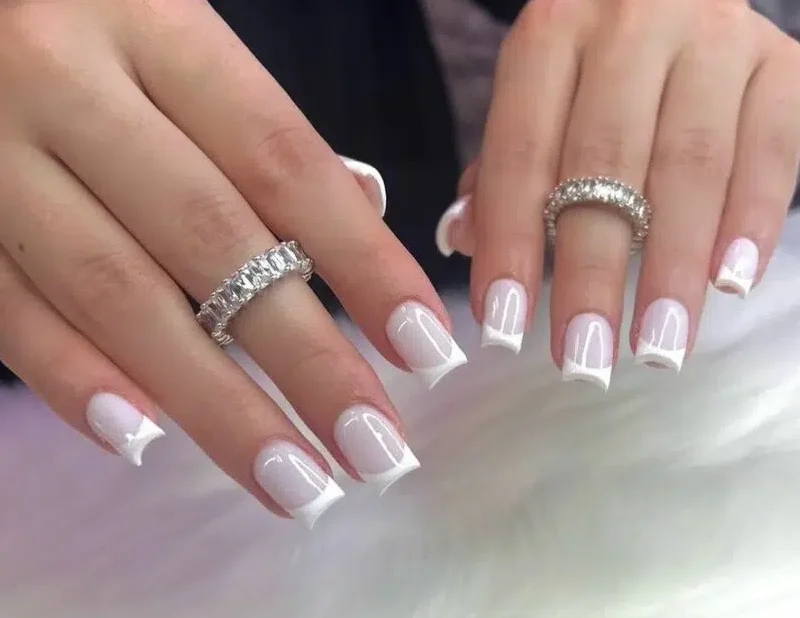
The micro French is a 1–2mm line of white or near-white at the very tip of the nail. That’s it. No drama, no geometry — just a whisper of definition that says finished without shouting. The reason it works in 2026 specifically is the same reason quiet luxury became a real aesthetic rather than a marketing category: restraint communicates confidence in a way that decoration sometimes can’t.
The micro French suits round and squoval nails best — the soft nail shape matches the soft scale of the line. It’s the only French tip that genuinely passes as “my nails just happen to look this good,” which is exactly what makes it appealing to people who’ve grown tired of nails that announce themselves. Wear it to work, to dinner, to the airport. It requires nothing from the occasion.
Application-wise, it’s technically demanding for exactly the reason it looks effortless: the line has to be perfectly clean and precisely even. A freehand steady hand or a thin liner brush over a sheer pink or barely-there nude base, sealed with a thin topcoat. The difficulty isn’t the concept — it’s execution.
The Classic French, Updated
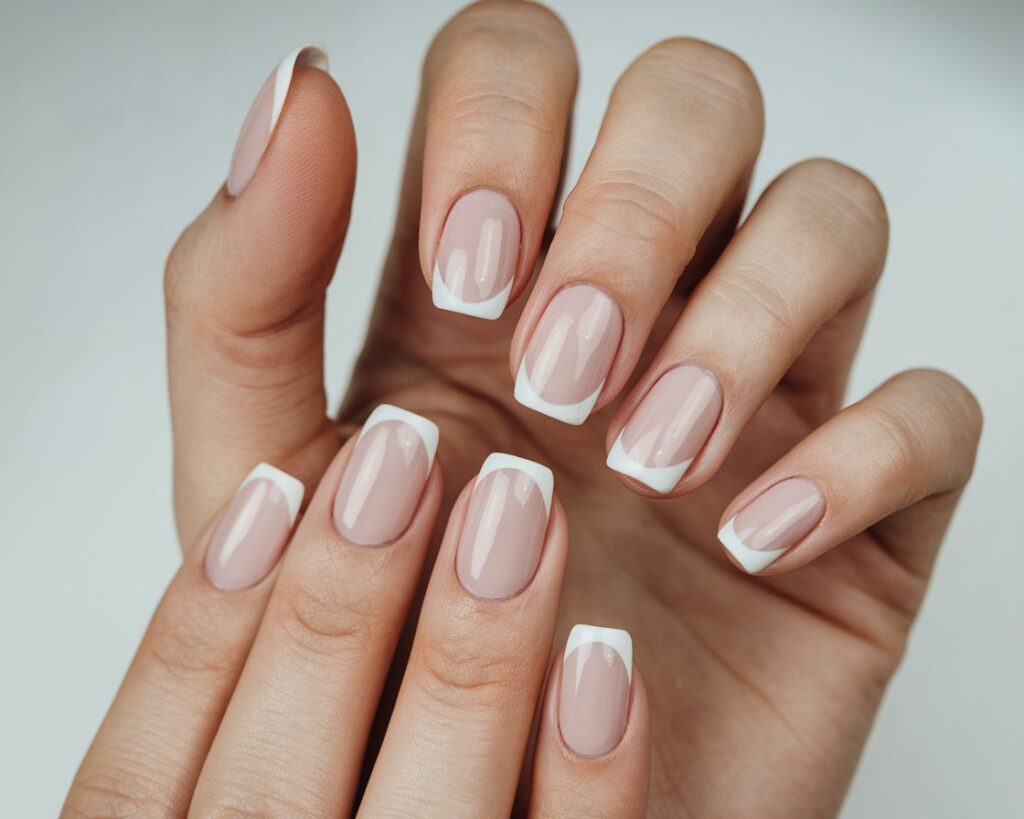
The classic French tip hasn’t been dated for a few years now — it became dated, peaked in ironic-revival territory for a while, and has now come back as something genuinely wanted. The difference between 2026’s version and the 90s original is proportion: the white tip is thinner, more precise, and applied over a cooler or more transparent base rather than the warm peachy-pink that was standard then.
This is the version that suits squoval nails on medium length. It reads professionally in corporate environments, feels right at weddings (particularly as a guest), and ages well in photographs in a way that strong nail color often doesn’t. The aesthetic is controlled elegance — not creativity, not edge, just well-dressed nails that complement rather than compete.
The Glazed French
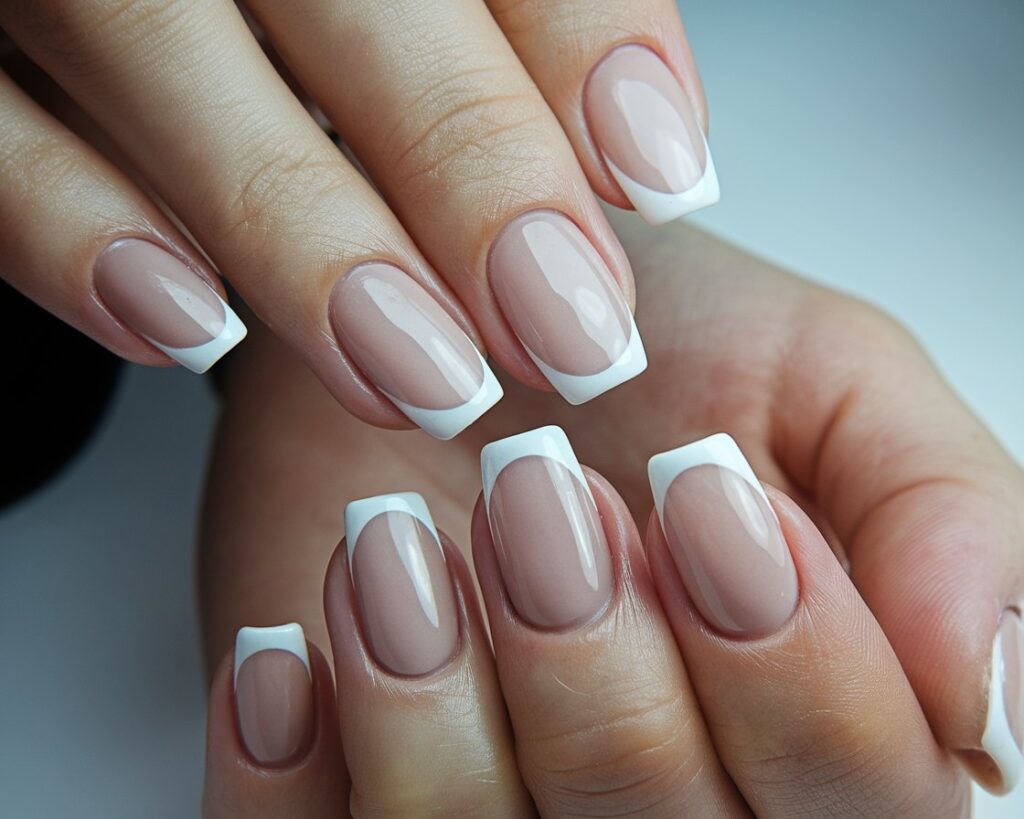
The glazed French replaces opaque white with a translucent tip — almost like a soft light diffusing through the free edge rather than sitting on top of it. The effect is subtle but noticeably different from both the micro French and the classic: it has warmth, a kind of luminosity. It became associated with the broader “glazed donut” aesthetic that circulated a while ago, but in 2026 it’s shed that specific reference and become its own thing.
Round nails are the ideal shape here. The glaze effect requires a sheer white or off-white gel product applied in thin, slightly feathered strokes, and a high-gloss topcoat is non-negotiable — it’s the shine that creates the glazed illusion. This is the one to choose for beach holidays: low maintenance, forgiving to chips, goes with everything in your suitcase.
The Architectural French
The Double French
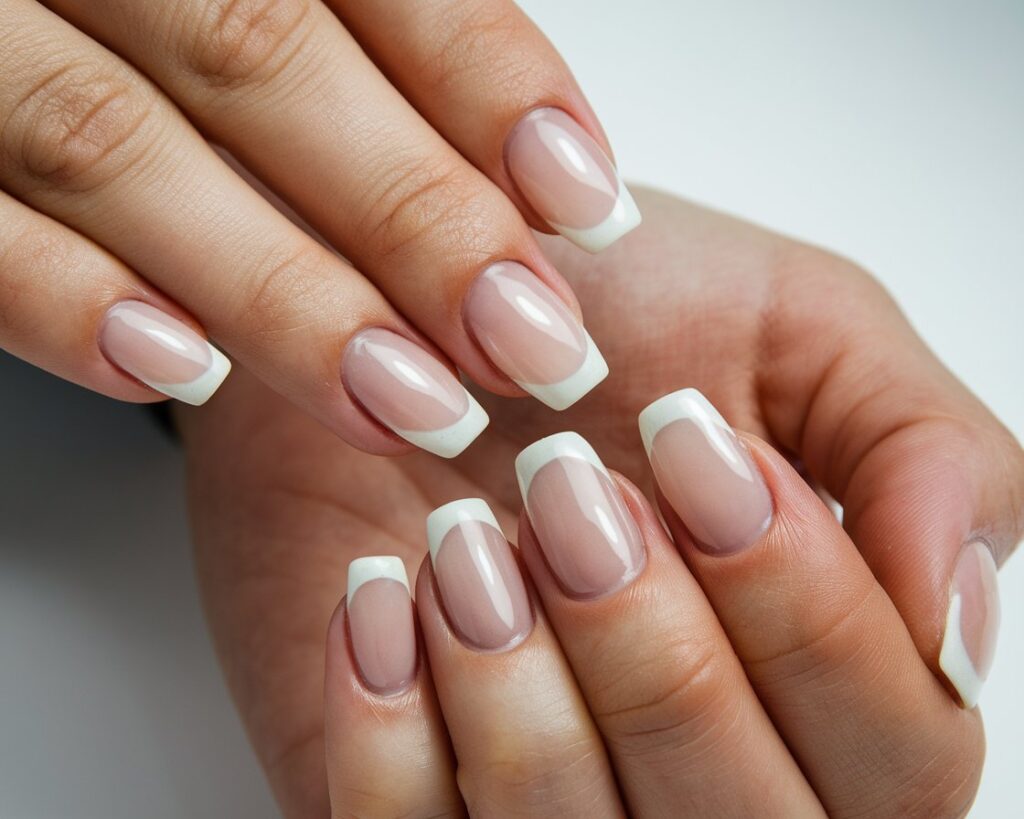
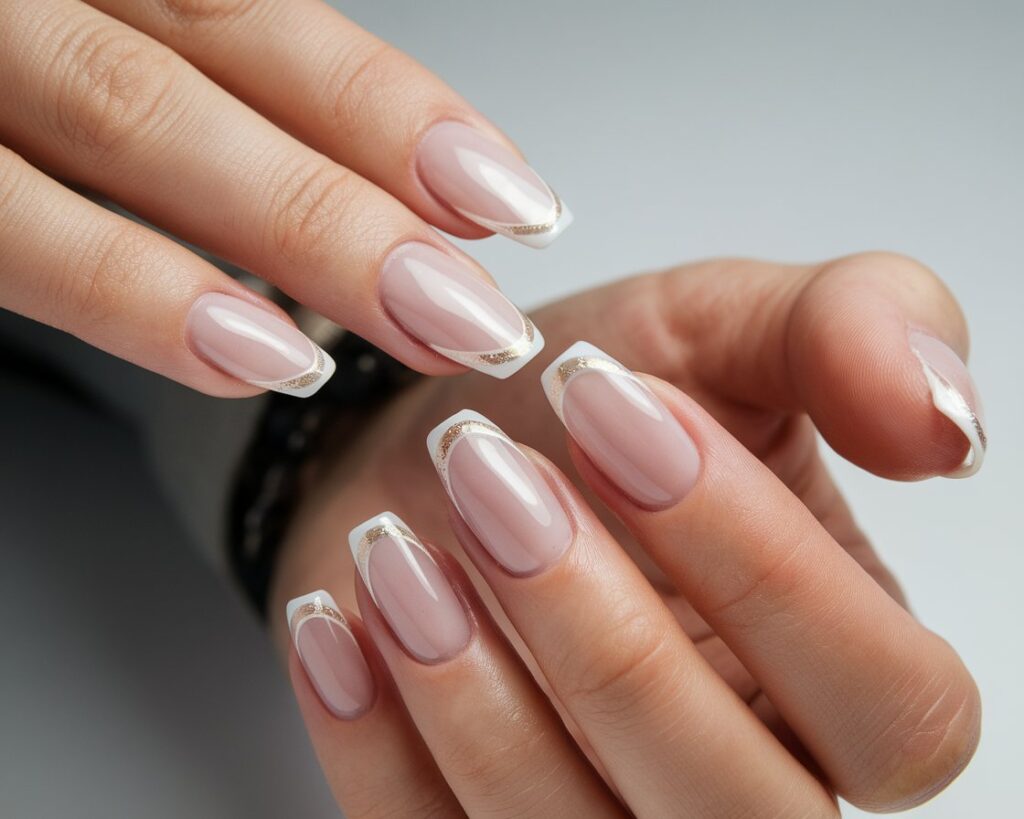
Two parallel smile lines instead of one. The gap between them can be a bare nail, a different color, or a fine glitter line — the choice changes the mood entirely. Two clean white lines on a nude base reads as minimalist precision. White plus gold reads festive. The construction is the same; the filling is the variable.
This design requires length — it disappears below 5–6mm — and suits squoval or coffin shapes best. Almond tends to make the double line look crowded. The occasion is anything where regular French feels slightly too restrained but you don’t want to commit to a full embellishment. It’s architecture in the most literal sense: two lines creating visual structure.
The Outlined French
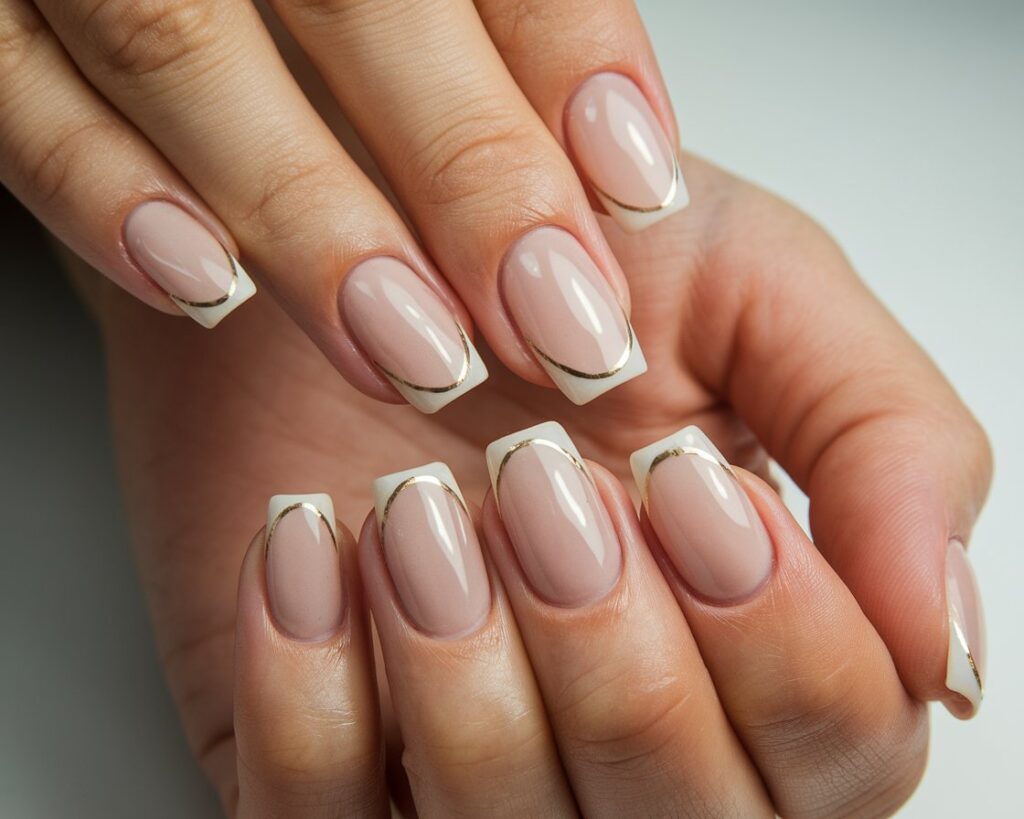
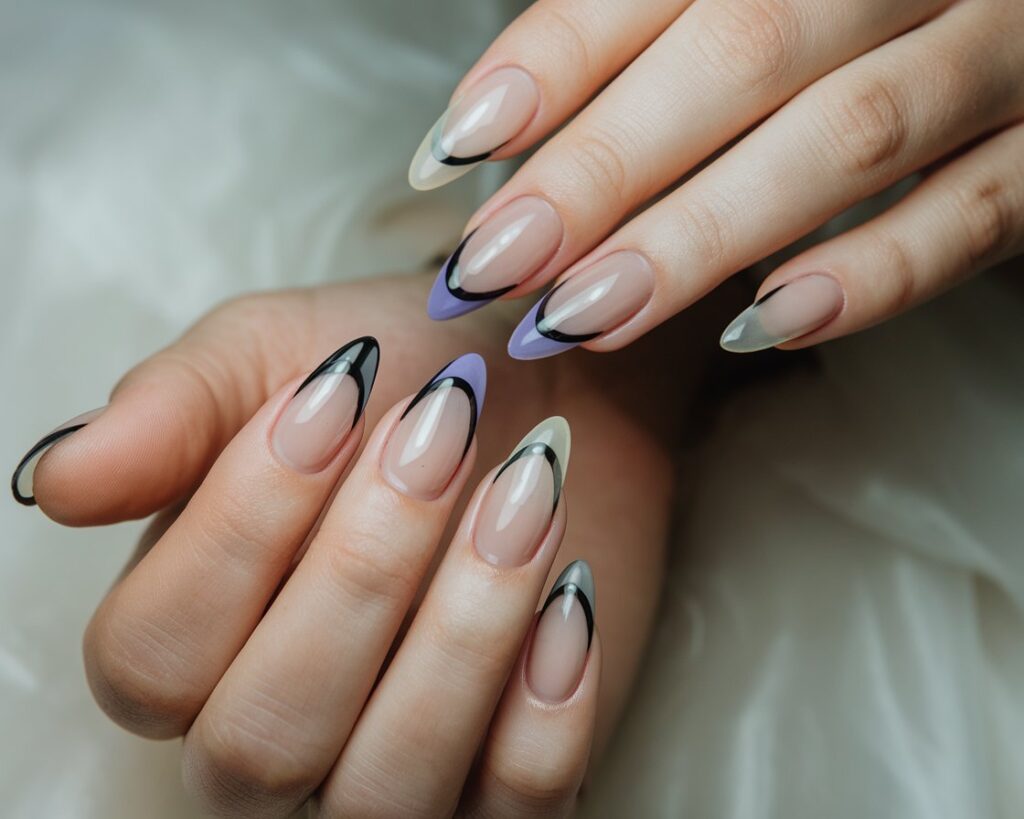
The white tip is there — but tracing just inside its edge is a second, thinner line in a contrasting color. The outline doesn’t fill; it frames. The result is a French tip that reads as deliberate and designed in a way the classic alone doesn’t quite achieve, without crossing into embellishment territory. It’s the difference between a painting and a painting with a mat: the added border changes how the eye reads the whole thing.
The color of the outline is where the character lives. A fine black outline over a classic white tip is graphic and precise — it suits squoval and coffin shapes and has an editorial quality without being unwearable. A gold outline reads as elevated and pairs well with the glazed French base. A colored outline — dusty rose, sage, soft terracotta — softens the whole look and suits almond nails particularly well. Technically, this is done with a fine liner brush after the white tip has set, then sealed under topcoat. The line needs to be thin enough that it reads as definition, not a second French tip sitting on top of the first.
The Diagonal French
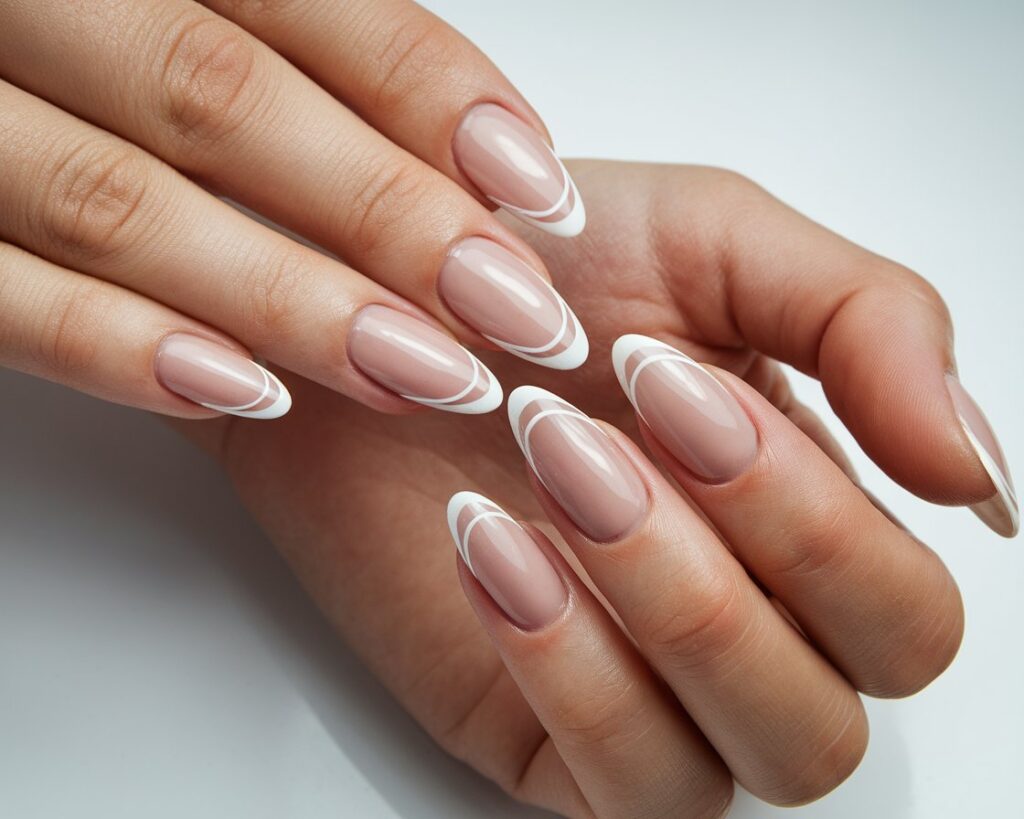
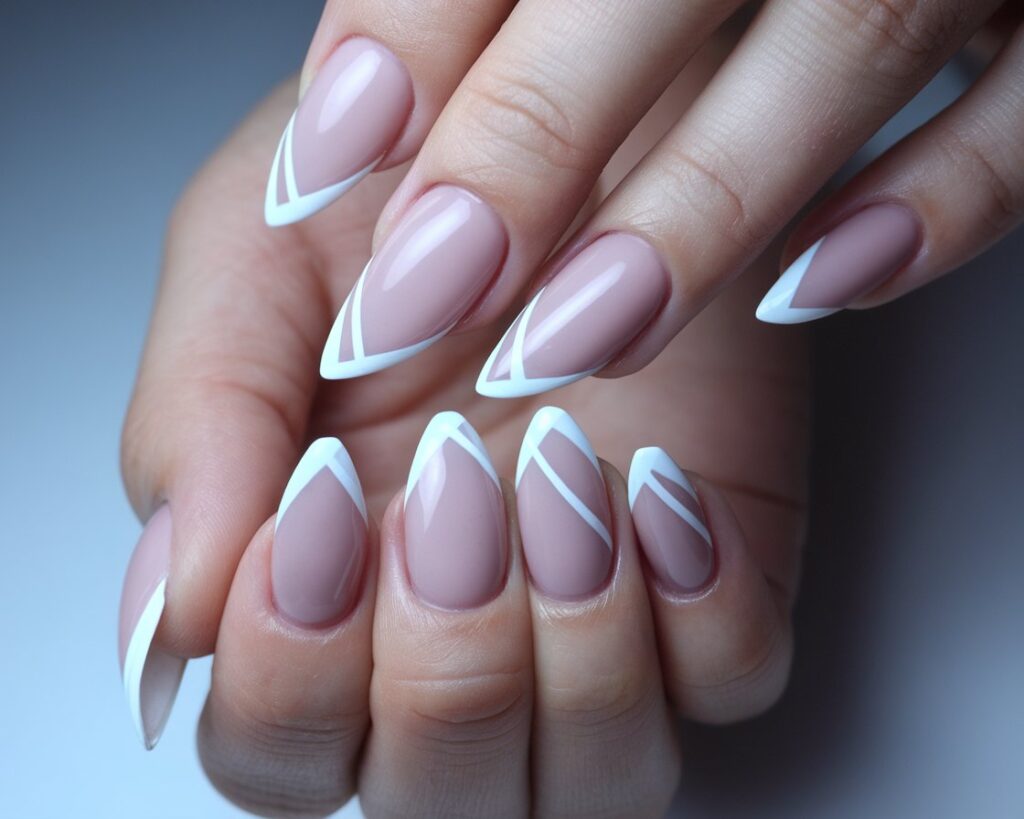
Instead of following the natural smile line, the tip line cuts diagonally across the nail, corner to corner. The asymmetry is deliberate, angular, and reads as intentionally modern rather than accidentally different. Stiletto nails are the shape where this looks most considered — the natural point at the tip creates a geometric tension with the diagonal line that feels designed. On round nails it can look like a mistake; on stiletto it looks like a statement.
This is not an everyday nail design. It’s for occasions that have a creative, fashion-forward energy: openings, events, the kind of dinner where people notice what you’re wearing. The technique requires a careful guide or tape line to get the diagonal consistent across all nails — freehand diagonal is rarely actually straight.
The Negative Space French
The tip is not painted white. Instead, the rest of the nail is painted a color — anything from a sheer blush to a deep navy — and the very tip is left bare nail. The “French” is defined by absence rather than presence. It’s conceptually interesting: the same design principle, inverted.
Squoval works for this. So does coffin on longer nails. The bare tip requires very clean filing and a sharp edge — the free edge does all the work here, so rough or uneven filing is immediately visible. The occasion is creative and confident: this nail doesn’t explain itself.
The Color French
White isn’t the only option. In 2026, colored tips are no longer a novelty; they’re a choice with the same seriousness as the classic.
Butter yellow is the warmest, most summer-appropriate version. A clean white or pale beige base pairs best — anything too pink or too cool will make the yellow look sallow. It flatters medium and deeper skin tones particularly well, and it has a cheerfulness that reads as intentional rather than accidental. Spring and summer only; it tends to look wrong against winter coats.
Lavender tips over a soft, milky base are the most romantic color French going. Oval and almond shapes make them look most elegant — the curved tip mirrors the soft hue. This color is genuinely season-flexible if the base stays pale enough: light lavender works in spring, a more dusty-muted version carries through autumn.
Black tips are the same construction as classic French, different universe. The mood shifts from pristine to precise; the effect is more editorial, slightly harder, but not aggressively so. A cool sheer pink or even a clear base underneath the black tip creates an interesting contrast — the transparency of the base against the opacity of the tip. This suits fair to medium skin tones best, and it’s the only French tip that is actively well-suited to autumn.
Clear/glass tips take the glazed French one step further: no added color at all, just a sharply defined edge where the free nail begins. The design is entirely structural. It requires a very clean nail edge and a high-gloss topcoat to read as intentional. The effect is quietly architectural.
The Embellished French
Chrome Powder Tips
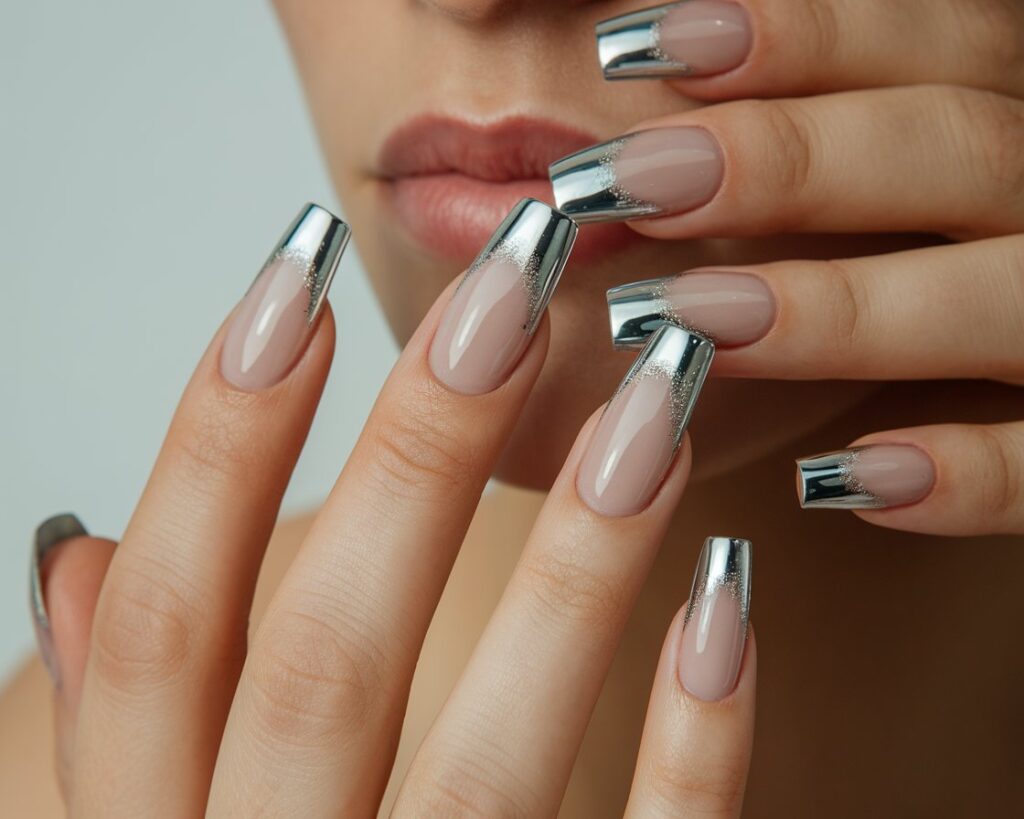
Chrome powder dusted over the smile line, over gel, creates a mirror-like metallic tip. The technique involves applying the chrome over uncured gel — the chemistry is specific and requires gel products. The result, when done correctly, is chrome that looks poured rather than painted, with no brush marks and a reflective surface that moves with light.
Coffin and stiletto nails are the shapes built for this. Medium and longer lengths only — short chrome tips look crowded. The maintenance reality is that chrome can wear at the edges faster than regular gel polish, particularly on tips that take impact. Expect 2–3 weeks of perfection, followed by some edge wear. For occasions: events, evenings, anywhere that involves good lighting.
Rhinestone Smile Line
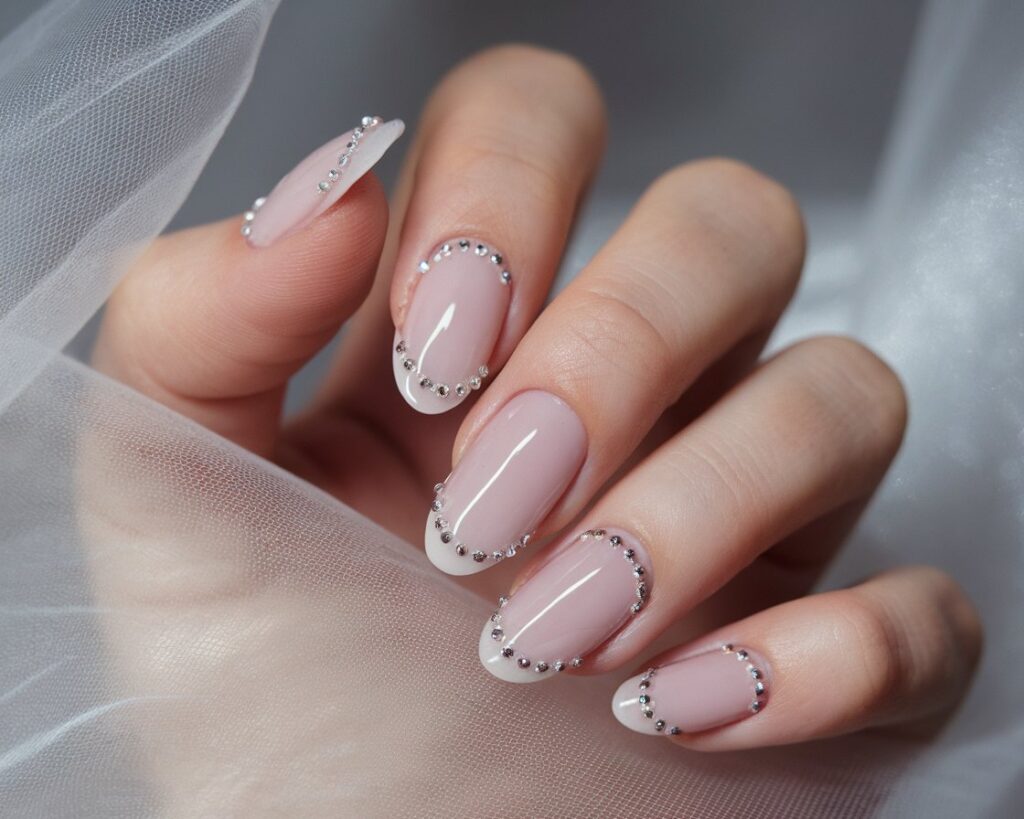
A single row of micro-rhinestones following the French line. The scale is everything here — micro crystals (SS3 to SS5) read as refined rather than overdone; anything larger starts looking like pageant nails. The application requires nail adhesive or a gel bond layer and a steady hand with a dotting tool or rhinestone picker. Done correctly, it catches light without announcing itself aggressively.
This lasts as long as the adhesive holds, which varies by brand and hand use. Dish gloves are the friend of rhinestone nails. The occasion is any event formal enough that embellishment feels earned — not a Tuesday grocery run, but appropriate for everything from a work party to a wedding.
Foil Tips
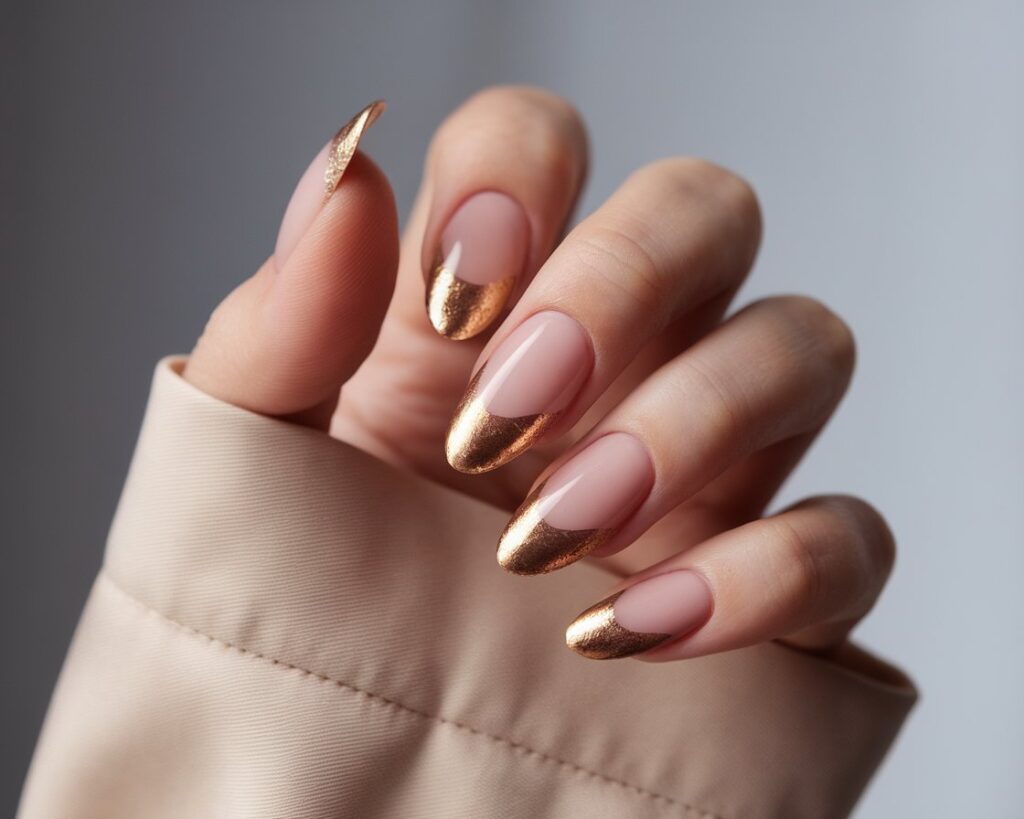
Metallic foil applied to the tip area using a gel adhesive gives a textured, slightly irregular metallic surface that’s different in character from chrome — more organic, less mirror-like. Gold foil over a warm nude base is particularly strong. The technique is accessible without a lamp for some foil types, though gel adhesive methods last significantly longer.
The longevity is slightly shorter than chrome on average — foil can lift at edges with regular hand use. But the aesthetic payoff is high, and application is faster than rhinestone work.
Wearing French Tips Through the Seasons
The “all year” case for French tips isn’t marketing — it’s genuinely the most season-adaptable nail category, but only if you adjust the variables.
Spring is butter yellow tips and lavender tips, both discussed above, plus the option of a single nail (usually ring finger) with a small floral detail over a French base. The French becomes the background; the accent nail does the storytelling. This works because the French doesn’t compete with the floral — it contextualizes it.
Summer is glazed French at the beach, glass French for heat (when opaque anything starts looking heavy), and in the evenings: a thin gold-tipped French — classic proportions, gold instead of white — that works with tan skin and linen dresses in equal measure.
Autumn shifts the palette. Swap bright white tips for slightly warm ivory — not cream-yellow, but white with the faintest warmth pulled out of it. The base goes more nude-beige than pink. A tortoiseshell accent on the ring finger over a French base is genuinely striking in autumn light: the warm browns and ambers of the accent nail, the clean precision of the French on the others.
Winter is where the dark base / white tip inversion lives. A deep burgundy or navy base with a clean white smile line reads as sophisticated in a way that feels almost counterintuitive — the white tip normally signals light and clean, but against a dark base it reads as a sharp graphic contrast. It’s unexpectedly elegant and suits both Christmas parties and January offices.
Which Nail Shape for Which French
A few genuine guidelines, not rules:
Squoval (square with soft corners) is the most versatile canvas — classic French, architectural French, and the double French all look considered on this shape. It’s also the most forgiving for DIY application.
Almond makes the reverse French look most elegant. The shape naturally elongates the nail and draws the eye toward the base, which is where the design lives. It also flatters lavender tips and any soft-color French.
Stiletto is where diagonal French looks most intentional. The angular tip already makes a statement; the diagonal line adds a second angular element that creates real geometric tension.
Round suits micro French and glazed French perfectly. Soft nail shape, soft design — the match is intuitive and the pairing always looks considered.
Coffin/ballerina is the most dramatic canvas in this list. Chrome tips, rhinestone details, foil — embellished French needs coffin nails the way a large painting needs a large wall. The wide flat tip gives the design room to exist.
French tips in 2026 are not a default. They’re a choice — and a wide one. The same fundamental idea executed in a dozen different ways, each one communicating something slightly different about the person wearing it. The micro French says effortless. The reverse French says observant. The rhinestone line says occasion. The dark-base winter inversion says I know exactly what I’m doing.
That range is what makes French tips interesting again. They were boring when they were only one thing. Now that they’re many things, picking one actually means something.
