
This post contains affiliate links. If you click a link and make a purchase, I may earn a small commission at no extra cost to you. I only recommend products I genuinely believe in. Thank you for supporting Amoria Style!
Castor oil has been used in beauty routines for centuries, which either means it genuinely works or that humans are very slow to update their habits. In this case, it’s the former — castor oil has a specific chemical composition that makes it legitimately useful for hair growth, skin hydration, and eyebrow and lash care in ways that most oils don’t replicate.
The problem is that most castor oil content online either overpromises (it will not regrow hair that’s gone due to permanent follicle damage) or underpromises (dismissing it as old-fashioned folk remedy). The reality sits in the middle: used correctly for the right purposes, castor oil works well. Used incorrectly, it creates buildup, breakage, and disappointment.
This guide covers everything you actually need to know — what castor oil does, what it doesn’t do, how to use it for each specific purpose, and the mistakes that make it not work.
What Castor Oil Actually Is
Castor oil is pressed from the seeds of the Ricinus communis plant. It’s thick, viscous, and pale yellow. The key component is ricinoleic acid, which makes up about 90% of its fatty acid content — a composition unique among commonly available oils.
Ricinoleic acid has three properties that make castor oil useful in beauty applications:
Anti-inflammatory — it reduces inflammation at the scalp and skin surface, which matters because inflammation is one of the factors that impairs hair follicle function and contributes to scalp conditions like dandruff and seborrheic dermatitis.
Antimicrobial — it inhibits certain bacteria and fungi at the surface, which contributes to scalp health and makes it useful for conditions where microbial overgrowth is a factor.
Humectant-like behavior — it draws moisture to the surface and creates an occlusive barrier that prevents moisture loss. Unlike most oils, which are primarily occlusive (sealing in existing moisture), castor oil actively attracts moisture, which makes it more effective as a standalone moisturizer.
The thickness of castor oil is both its strength and its main practical challenge. It doesn’t spread easily, which is why most effective castor oil applications involve diluting it with a lighter carrier oil.
For Hair Growth and Scalp Health
This is the most common use of castor oil and the one with the most misinformation around it.
What it can do: Castor oil can improve the conditions for healthy hair growth by reducing scalp inflammation, improving scalp circulation (the massage required to apply it contributes to this), and creating an environment where hair follicles function better. It can strengthen existing hair and reduce breakage by coating the hair shaft and sealing the cuticle.
What it cannot do: It cannot regrow hair from follicles that have permanently closed due to androgenetic alopecia (pattern baldness), scarring, or other permanent damage. If your hair loss has a hormonal or genetic cause, castor oil is not a treatment — consult a dermatologist.
How to use it correctly:
Mix castor oil with a lighter carrier oil at a ratio of roughly 1:2 or 1:3. Castor oil alone is too thick to distribute evenly and can cause buildup if applied undiluted. Good carrier oils: jojoba, sweet almond, argan, or fractionated coconut oil. A simple effective mix is 1 part castor oil to 2 parts jojoba.
Warm the oil mixture slightly — place the container in a bowl of warm water for a few minutes. Warm oil penetrates the scalp more effectively than cold.
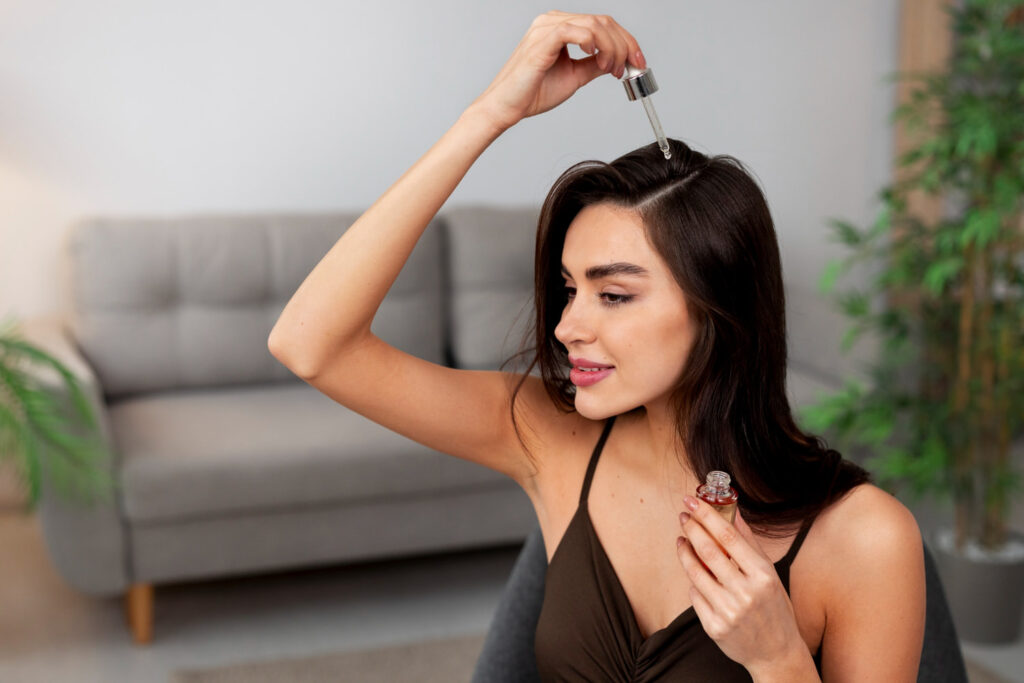
Section your hair and apply the mixture directly to the scalp using your fingertips or a dropper applicator. Massage gently in circular motions for 5-10 minutes. This isn’t decorative — the massage mechanically stimulates blood flow to the follicles, which is an independent factor in hair growth beyond the oil’s chemical properties.
Apply to the lengths of your hair as well, focusing on the ends.
Cover with a shower cap and leave for a minimum of 30 minutes. Overnight is more effective for dry or damaged hair. Some people find leaving it on too long causes dryness — find what works for your hair.
Shampoo out thoroughly. Castor oil’s thickness means you’ll need to shampoo at least twice to remove it fully. If you find significant residue persists, apply shampoo to dry hair before wetting — this helps the shampoo bind to the oil before water dilutes it.
Frequency: Once a week for dry or damaged hair. Once every two weeks for normal hair as maintenance.
For Eyebrow Growth and Thickness
Castor oil applied to sparse or thin eyebrows is one of its most popular applications, and this one has more observable evidence behind it than the hair growth claims — eyebrows respond noticeably within 4-6 weeks of consistent application in most people.
Why it works: The ricinoleic acid’s anti-inflammatory properties address one of the common causes of thinning brows — chronic low-level inflammation at the follicle. The occlusive coating also protects existing hairs from breakage, which makes brows appear fuller even before new growth occurs.
How to use it:
Use pure castor oil for eyebrows, not diluted — the area is small enough that thickness isn’t an application problem. A clean mascara wand, a clean cotton bud, or a dedicated eyebrow serum brush all work.
Apply a small amount each night before bed. Stroke along the brow in the direction of hair growth, ensuring you’re reaching the skin beneath the hairs rather than just coating the hairs themselves. The follicle is at skin level — that’s where the oil needs to be.
Remove in the morning as part of your regular face wash — leaving castor oil on the face long-term can potentially clog pores for some skin types.
Frequency: Nightly. Consistency matters more than quantity — a small amount every night produces better results than a generous application once a week.
Timeline: Most people notice visible difference at 4-6 weeks. Full results take 3-4 months. If you see no change after 3 months of consistent nightly application, castor oil is unlikely to work for your specific brow situation and a dermatologist visit to rule out underlying causes is worthwhile.
For Eyelash Growth
The same principle as eyebrows but requires more care due to proximity to the eyes.
How to use it:
Use a clean mascara wand or a very fine brush — precision matters here to avoid getting oil in the eyes. Apply a tiny amount along the base of the lash line (upper lashes only — lower lash application increases the chance of oil entering the eye) in a single gentle stroke.
Do this at night after removing all makeup. The oil sits on the lash line while you sleep and absorbs gradually.
Important: If castor oil enters your eyes it causes significant temporary irritation and blurring. This is uncomfortable but not dangerous — rinse with clean water if it happens. To minimize the risk, use the minimum amount needed and avoid applying close to sleep if you’re prone to rubbing your eyes.
Frequency: Nightly for the first 6-8 weeks, then 3-4 times per week as maintenance once you’ve achieved your desired result.

For Dry Skin and Lips
Castor oil is one of the most effective natural moisturizers for very dry skin specifically because of its humectant-like behavior — it doesn’t just seal in moisture, it actively draws moisture to the surface.
For lips: Apply a small amount to chapped or dry lips at night. The thickness creates a protective barrier that stays in place overnight better than lighter balms. A small amount mixed with a drop of vitamin E oil makes an effective overnight lip treatment.
For dry patches on skin: Apply castor oil to dry elbows, heels, or cuticles. Its thickness makes it unsuitable as a general face or body moisturizer for most people — it’s too heavy and can clog pores — but for localized, very dry areas it’s highly effective.
For cuticles: A drop of castor oil massaged into the cuticles nightly is one of the most effective cuticle treatments available. The combination of moisture-drawing properties and thickness makes it work better for this purpose than most dedicated cuticle oils.
For Skin on the Face (Use With Caution)
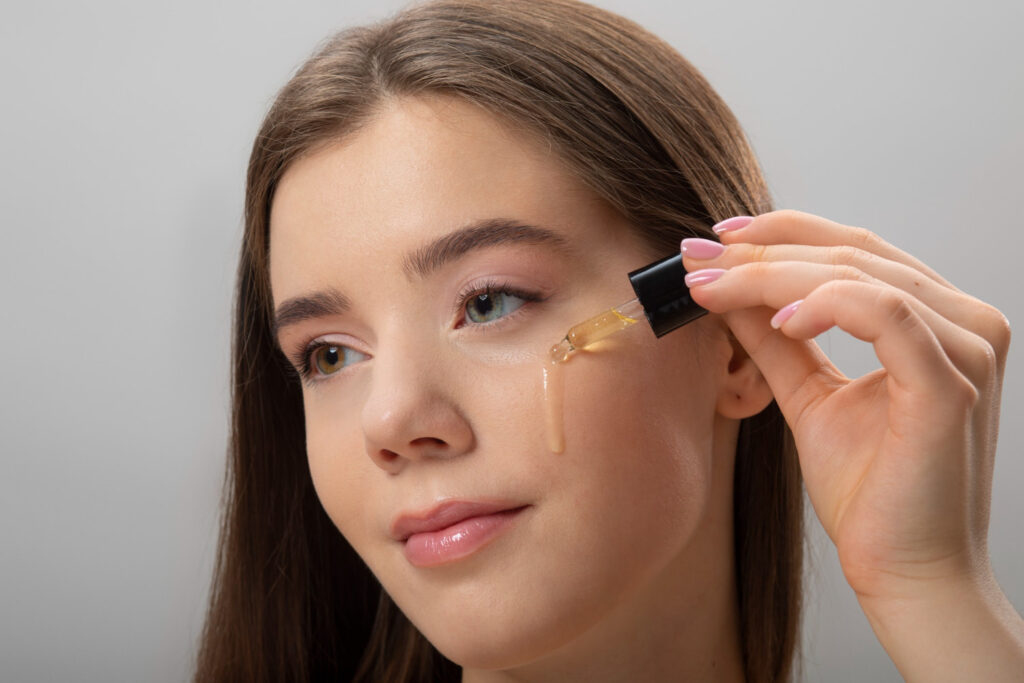
Castor oil is occasionally recommended for facial use, including for acne (due to its antimicrobial properties) and as part of the oil cleansing method. This works well for some people and causes breakouts in others — it has a comedogenicity rating of 1 (low), but its thickness and the ricinoleic acid content can still cause issues for acne-prone or sensitive skin.
If you want to try castor oil on your face, start with a very small amount mixed with a lighter oil such as jojoba, and patch test for a week before applying more broadly. Monitor for any increase in congestion or breakouts and discontinue if you see either.
The face application where castor oil works most consistently well is as a spot treatment for dry, flaky patches — not as an all-over moisturizer.
Which Type of Castor Oil to Buy
Not all castor oil is equivalent.
Cold-pressed castor oil is the standard version — pale yellow, thick, and suitable for all the applications above. This is what most products labeled “castor oil” contain.
Jamaican black castor oil (JBCO) is made by roasting the castor beans before pressing, which produces a darker oil with a higher ash content and a different pH. Many people report JBCO being more effective for hair growth applications specifically, though direct comparative studies are limited. The higher pH (more alkaline) opens the hair cuticle more, which may improve penetration at the scalp. Worth trying if standard castor oil hasn’t produced results.
Hydrogenated castor oil is a processed form used in cosmetics manufacturing — it has a very different texture and is not suitable for the applications in this guide.
For hair and eyebrow applications: try JBCO first if you can access it; standard cold-pressed if not.
For skin applications: standard cold-pressed is preferable — the higher pH of JBCO can be irritating for some skin types.
The Mistakes That Make Castor Oil Not Work
Applying it undiluted to hair. Pure castor oil is too thick to distribute evenly through hair — it creates concentrated buildup at application points rather than coating the hair evenly. Always dilute for hair applications.
Not massaging it into the scalp. The scalp massage component isn’t optional. The mechanical stimulation of massage is independently beneficial for hair growth and improves the absorption of the oil into the follicle.
Using too much. Castor oil buildup is real. More is not more — a small, well-distributed application works better than a generous one that sits on the surface.
Inconsistency. Castor oil benefits accumulate over time. One application per month will not produce visible results. Weekly application for three months will. The timeline commitment is the most common reason people conclude it doesn’t work when they haven’t actually given it a fair trial.
Expecting it to reverse genetic hair loss. If the hair loss has a hormonal or genetic cause, no topical oil is a treatment. Castor oil improves scalp conditions and can support healthy hair growth from functioning follicles — it cannot revive follicles that have stopped functioning.
The information in this post is based on personal research and experience and is intended for educational purposes only. It is not a substitute for professional medical or dermatological advice, diagnosis, or treatment. Always consult a qualified healthcare provider before making changes to your skincare routine or health practices, especially if you have a medical condition or sensitivity.
