
This post contains affiliate links. If you click a link and make a purchase, I may earn a small commission at no extra cost to you. I only recommend products I genuinely believe in. Thank you for supporting Amoria Style!
Let me be honest with you before we go any further. When gua sha started flooding every corner of the skincare internet a few years ago, I was skeptical. The before-and-after photos looked implausible. The claims — “lifted jawline in 30 days,” “non-surgical facelift,” “rebuilds collagen at home” — sounded like the kind of marketing that relies on people not asking follow-up questions. So I started asking them.
What I found was more interesting than either the hype or the dismissal. Gua sha — a technique adapted from Traditional Chinese Medicine, where it was originally applied to the body with firm, therapeutic intent — does genuinely useful things to a face when practiced with the right technique and realistic expectations. It also does precisely none of the things that get it the most clicks. The gap between what it actually does and what people claim it does is wide, and I want to close that gap for you before you pick up a stone.
This is a guide for people who are starting from zero. No assumed knowledge, no jargon left unexplained, no filler.
1 — What Gua Sha Actually Does
Your face is not just skin and bone. Underneath that skin sits a network of lymphatic vessels — a kind of secondary circulatory system that doesn’t pump on its own the way your heart pumps blood. Instead, it moves fluid through movement, muscle contraction, and manual pressure. The lymphatic system in your face drains toward nodes in your neck, and when that drainage slows down — which happens during sleep, during stress, during long sedentary days — fluid pools. That’s the puffy face you see in the mirror on a bad morning. It’s not fat. It’s not permanent. It’s fluid that hasn’t moved yet.
Gua sha, when done correctly, manually assists that drainage. The slow, directional strokes move fluid toward the lymph nodes at the sides of the neck and under the ears, which then process and clear it. The depuffing effect you see after a good gua sha session is real, measurable, and — this is the honest part — temporary. It’s the same thing that happens when you splash cold water on your face, go for a walk, or massage your face in the shower. Gua sha just does it more systematically and more thoroughly.
The other evidence-backed benefit is muscle tension relief. Your face holds an enormous amount of tension you’re not aware of. The masseter muscles along the jaw clench during stress and during sleep. The frontalis across your forehead contracts every time you concentrate or squint. The muscles around your eyes tighten under screens. Gua sha, applied with appropriate pressure, releases that tension the same way a sports massage releases tension in your shoulders — not because it’s magic, but because sustained manual pressure on a muscle tells it to relax. The result is a face that sits differently, looks less compressed, and feels genuinely lighter.
Circulation is the third real benefit. The friction and pressure of gua sha increase blood flow to the skin surface. That’s why your face looks flushed and glowing immediately after — you’ve pushed fresh, oxygenated blood into the tissue. Over time and with consistency, improved circulation supports healthier skin by keeping it better supplied with what it needs to function.
What gua sha will not do is lift your face in a structural, lasting sense. It cannot reposition tissue, reverse bone resorption, or rebuild collagen the way a professional treatment can.
The overclaimed benefits need to be addressed directly. Gua sha will not lift your face in a structural, lasting sense. Lifted tissue means repositioned tissue, and repositioning tissue requires either surgical intervention or the kind of focused radiofrequency or ultrasound energy that professional devices deliver. A stone moving across your skin cannot do this. The before-and-after photos that show dramatically lifted results are almost always taken at different times of day (morning puffiness vs. post-session), with different lighting angles, and often with the person’s posture and expression subtly altered. The “lift” you see is real — it’s reduced puffiness and released muscle tension — but it is not permanent facial repositioning.
Collagen production is similarly misrepresented. Yes, increased circulation supports skin function. Yes, gentle manipulation may have some minor positive effect on the dermis over time. But collagen production at meaningful levels requires either injury-response mechanisms (which professional microneedling and laser treatments trigger) or topical actives like retinoids that penetrate the skin barrier and signal fibroblasts. A gua sha stone cannot do this. If someone tells you it can, they’re selling you something.
None of this means gua sha isn’t worth doing. It just means you should do it for the right reasons.
2 — Choosing Your Tool
The gua sha tool market has become genuinely bewildering. You can spend twelve dollars or you can spend two hundred, and the price spread tells you almost nothing about effectiveness. Let me explain what actually matters in a gua sha tool and what is pure marketing.
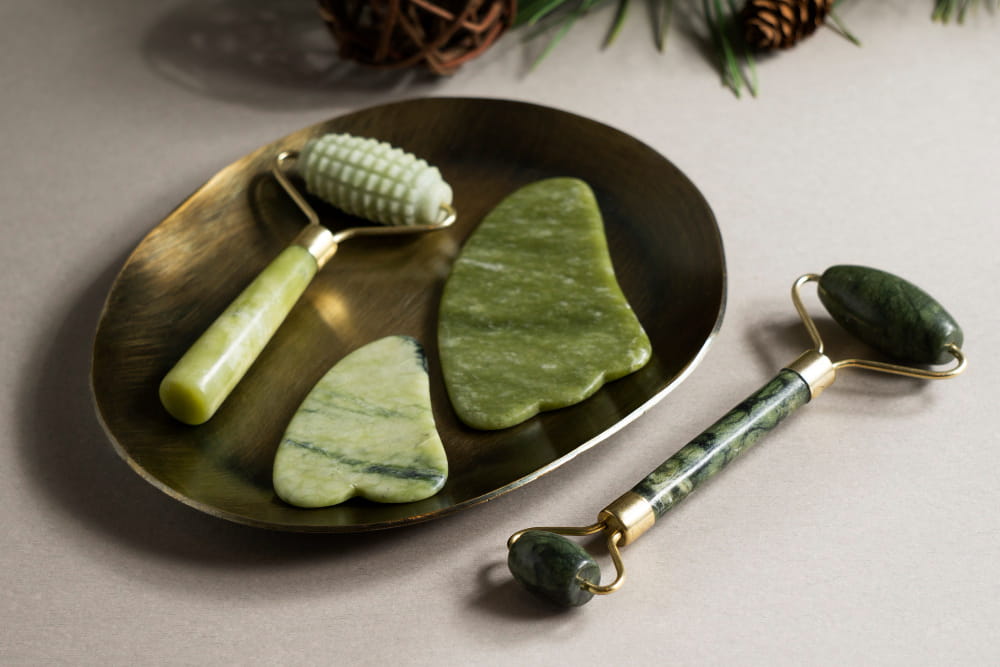
The shape is the most important variable. A good gua sha tool has a curved edge that fits anatomical contours — the curve of the jawline, the hollow under the cheekbone, the brow ridge. It should have at least one concave edge (for the jaw and neck) and one flatter, broader edge (for larger zones like the cheeks and forehead). The notch at the top of many tools, shaped like a U or a fish-tail, is designed to straddle the neck tendons. Tools that don’t have these curves aren’t wrong — some people prefer simpler shapes — but they do less of the anatomical work automatically.
The edge quality matters just as much. You want a smoothly polished edge with no roughness, no sharp corners, no seams. A poorly finished edge can drag and catch on the skin, which is both uncomfortable and counterproductive. This is actually where cheap tools sometimes fail — not because of the material, but because of the finishing quality. Run your finger along the edge before you use it. It should feel entirely smooth.
Now for the materials. Jade is the traditional choice — specifically nephrite jade, which is the genuine article. It’s cool to the touch, retains temperature, and the coolness adds a mild vasoconstrictive effect (it slightly reduces surface circulation before the massage warms things up, which some people find soothing and depuffing). Rose quartz is softer in feel, warms to body temperature faster, and for some people edges jade out purely because it feels more pleasant against the skin. Whether either stone has the energetic properties attributed to it in some traditions is not something I’m going to argue either way — as a physical tool, they perform comparably.
Bian stone is a volcanic rock used in traditional Chinese practice and is harder and denser than either jade or rose quartz. Some practitioners prefer its weight and believe the stone has therapeutic properties from its mineral composition. The evidence for stone-specific benefits is thin, but the density does make it feel more substantial in the hand, which some people find gives them better control over pressure.
Stainless steel is the practical outlier. It’s cold (much colder than stone, and it stays that way longer), easy to sanitize, extremely durable, and completely non-porous. It doesn’t absorb bacteria the way a stone with microscopic pores might. For someone who prioritizes hygiene or who runs warm and wants the cold-tool effect, stainless steel is legitimately excellent.
The honest bottom line: a $12 gua sha stone and an $80 one do the same job if the shape and edge quality are comparable. What you’re paying for at the high end is branding, packaging, and the aesthetics of the object itself. None of that helps your skin.
3 — The Oil Question
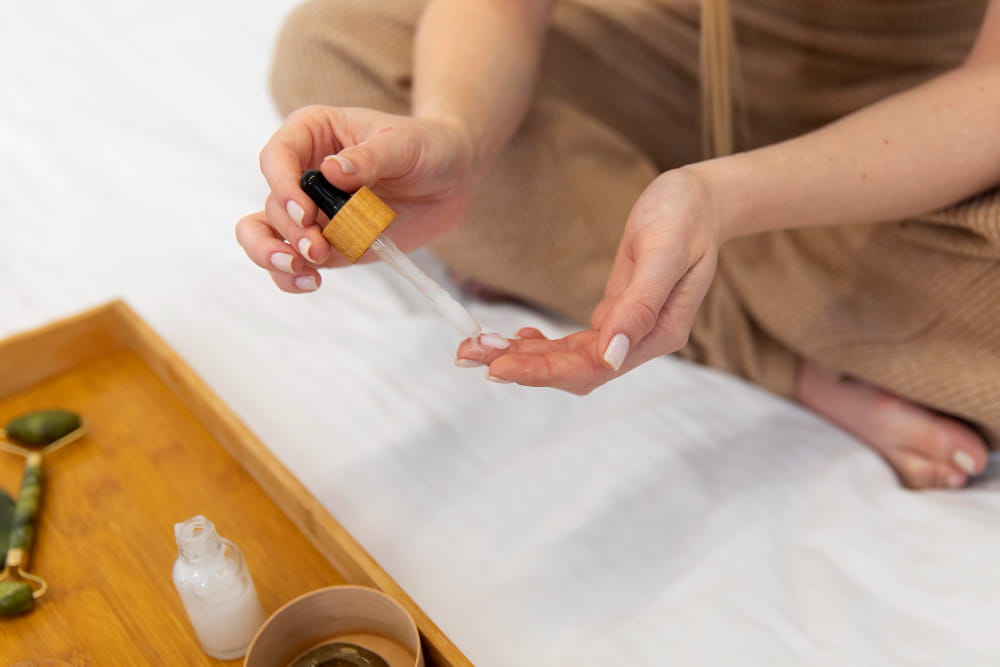
This is non-negotiable: you cannot use gua sha on dry skin. The tool needs to glide. When it doesn’t glide — when there’s friction between stone and skin — you’re not massaging, you’re abrading. Repeated dragging on dry skin damages the skin surface, can break capillaries, and causes inflammation. People who try gua sha for a week and report redness, irritation, and broken blood vessels are almost always people who skipped the oil, used too little of it, or rushed through without enough slip. The tool should move with almost no resistance.
For the face, you want a light to medium-weight oil that absorbs reasonably well without being sticky. Jojoba is near-perfect — it’s technically a liquid wax, not an oil, and it’s structurally similar to the skin’s own sebum. It doesn’t clog pores in the way heavier oils can, absorbs cleanly, and provides exactly the right amount of slip. Squalane (derived from plants, not sharks, in modern formulations) is similarly excellent — extremely light, non-comedogenic, and comfortable under the stone. A good facial oil blend will usually work well if it’s designed to absorb rather than sit on the skin.
Coconut oil is the one I’d steer you away from for most people. It’s highly comedogenic, meaning it has a strong tendency to block pores, and it’s thick in a way that can leave a heavy residue. If you have oily or combination skin, coconut oil on your face is likely to cause breakouts. There are people who swear by it and seem to tolerate it fine — skin is individual — but for most people there are meaningfully better options.
One alternative to oil: a thick, slippery serum can also work, particularly hyaluronic acid serums or dedicated facial massage serums. The requirement is slip, not oil specifically. Oil is usually recommended because it stays where you put it and doesn’t absorb mid-session the way a serum might.
4 — The Correct Technique, Zone by Zone
The most common mistake in gua sha technique is misunderstanding direction. Almost everyone knows you’re supposed to stroke “up and out” — but very few beginners understand why, and without understanding why, the technique tends to drift. The principle is anatomical: you are moving fluid toward your lymph nodes. The main lymph nodes relevant to facial drainage sit along the sides of the neck, just under the ears, and under the chin. Every stroke should be moving fluid toward one of these drainage points. Strokes that go against this direction — toward the center of the face, downward, or back and forth — don’t just fail to help; they work against the natural flow.
Hold the tool at roughly a 15-to-45-degree angle to the skin throughout — more flat than perpendicular. A tool held too upright digs in rather than glides. Take 3 to 5 seconds per stroke. If it’s taking you two minutes to do your whole face, you’re rushing.
Start at the neck — always. This is the step most beginners skip. You need to open the drainage pathway before you start moving fluid toward it — think of it like unplugging a drain before you run the water. Use the flat or concave edge and stroke downward along the sides of the neck, from just below the ear toward the collarbone, with light pressure. Five to ten strokes per side before you touch your face.
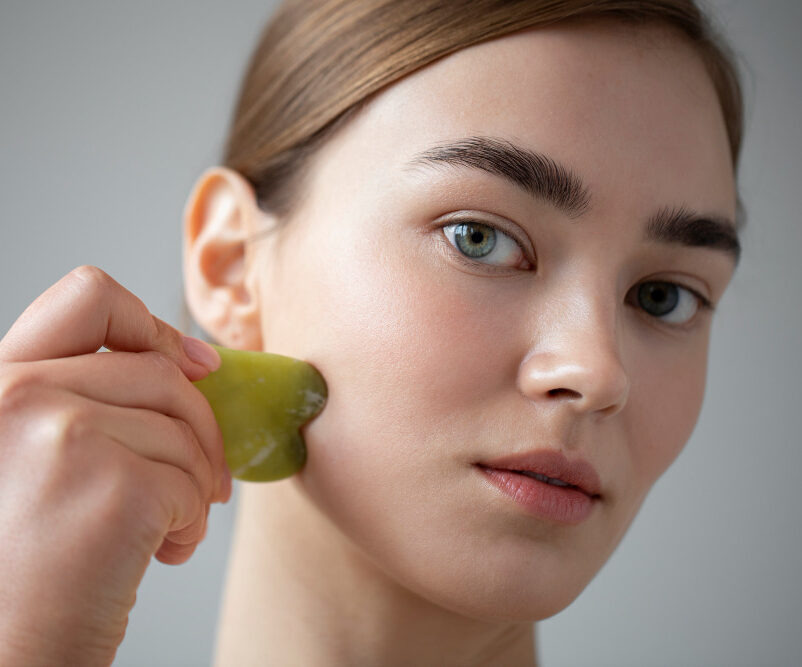
Jawline and chin. Place the concave edge of the tool at the center of your chin, cradling the jawbone in the curve. Stroke outward and slightly upward along the jaw toward the ear, ending at the lymph node just in front of the earlobe. Firm enough to feel the pressure, light enough that the skin doesn’t drag. Five to seven strokes per side. The jawline holds more tension than almost any other facial zone; you may feel the muscle yield and soften during the strokes if your pressure is calibrated correctly.
Cheeks. Start at the edge of the nose and stroke outward across the cheekbone toward the ear, following the line of the bone. The motion is horizontal with a slight upward angle — you’re moving fluid along the cheekbone toward the lymph nodes in front of the ear. Use the flatter, broader edge of your tool here. Five strokes per side, medium-light pressure. The cheeks tend to carry a lot of puffiness and you’ll often see the most visible change here, most quickly.
Under-eye area. This zone requires the lightest possible pressure — a fraction of what you use elsewhere. The skin under the eye is thin and has almost no fat beneath it; pressing too hard can damage delicate capillaries. Use the small, curved end of your tool and stroke from the inner corner of the eye along the orbital bone outward toward the temple. Let the weight of the stone do the work; add virtually no additional downward pressure of your own. Three to five strokes per side, always moving outward.
Forehead. The forehead benefits most from horizontal strokes moving outward from center — start at the middle of the brow and stroke outward to the hairline, then repeat slightly higher, working up in layers. You can also add vertical strokes moving upward from between the brows, which address the tension in the corrugator muscles responsible for the “11 lines.” Five strokes in each direction, medium pressure. The forehead muscles are large and can handle slightly more pressure than the under-eye area, but you’re still signaling relaxation, not working out knots.

5 — When and How Often
Morning gua sha and evening gua sha serve genuinely different purposes, and understanding the difference stops you from doing the same routine at the wrong time and wondering why it’s not working.
Morning is when lymphatic drainage matters most. You’ve been horizontal for six to eight hours; fluid has pooled. A morning session focuses on depuffing — lighter pressure, emphasis on the drainage-toward-lymph-nodes direction, done efficiently before your day begins. The improvement in how you look immediately after is pronounced enough that many people find morning sessions more motivating than evening ones.
Evening gua sha is about tension release and supporting overnight skin repair. You’ve spent a day accumulating stress in your face muscles; evening is when you work through that systematically. Slightly more pressure on the jaw and forehead, slightly slower strokes, more time on zones that feel tight. This is also the session where applying your most nourishing oil makes sense — the increased circulation will help push those actives into the skin. Evening gua sha tends to feel more meditative because you’re winding down rather than starting up.
A two-minute gua sha while scrolling Instagram is not a gua sha session. It’s a brief massage. Not useless, but not what anyone means when they talk about results.
Frequency: daily is fine for a light session; three to four times per week is realistic for most people and produces results comparable to daily practice. Start with three sessions a week, establish a routine, and add sessions as it becomes habitual. A proper session is 8 to 10 minutes. Budget for that, or don’t expect what 8 to 10 minutes produces.
6 — The Mistakes That Make It Not Work
Too much pressure is the most common error, and the one with consequences. You are moving fluid and signaling muscles to relax — both require far less pressure than most people assume. If your skin is turning red in a patchy, irregular way (not the even flush of increased circulation, but red streaks or marks), you’re pressing too hard. If you see broken capillaries — tiny red spider-web lines that weren’t there before — you’ve damaged blood vessels. Back off significantly. The effective pressure for most zones is surprisingly light: heavy enough to feel the tool’s contact clearly, light enough that there’s no discomfort.
Never use gua sha over active acne. Over inflamed pustules or active cysts, the problem is bacterial spread: dragging a stone across a blemish pushes bacteria outward across the skin surface, potentially seeding new breakouts. Work around isolated spots, never over them. Similarly, avoid broken skin, open wounds, sunburn, or eczema flare-ups — the skin barrier is already compromised and you’ll make it worse.
Tool hygiene is genuinely important and widely ignored. A gua sha stone accumulates skin cells, oil, bacteria, and product residue with every use. Using a dirty stone on your face is using a contaminated surface on your face. Clean your tool after every session — warm water and a gentle soap, then dry it properly. For porous stones like jade and rose quartz, soap and water is safer than alcohol, which can dry and eventually damage the surface over time. For stainless steel, a wipe with micellar water works well. Store the tool somewhere clean, not loose at the bottom of your skincare bag.
7 — Realistic Results and Timeline
After your first session, done correctly, you’ll see and feel a noticeable difference. The depuffing is real and immediate — if you were puffy when you started, you’ll be measurably less puffy when you finish. The skin will have a temporary flush and glow from increased circulation. The jawline and cheek area will look slightly more defined because the fluid that was softening the contours has moved. Your face will feel different to the touch — the tension in the jaw and forehead will have eased.
All of this reverts. Within hours, fluid redistributes, muscles re-tighten, and you’re back to baseline. This is the part the before-and-after content tends to leave out: the timeline between the “after” photo and when the effects fade is often shorter than the video implies.
After a month of consistency — three to four sessions per week, proper technique, full sessions — something more lasting begins. The repeated lymphatic drainage means your baseline puffiness decreases. You stop waking up as swollen because you’ve been consistently clearing the fluid that accumulates. The repeated circulation boost supports skin function, and people with dull or congested skin often notice improved texture and clarity. The muscle tension work compounds — faces that held chronic tension in the jaw and forehead start to look less compressed and more open because those muscles aren’t perpetually clenched.
The definition you see after a month isn’t structural — it’s the difference between a face at rest and a face whose resting state is less obscured by swelling and tension. It’s genuinely visible in many cases. It’s just not the dramatic, permanent restructuring that the most ambitious gua sha content promises.
What it won’t do, regardless of how long you stick with it: lift tissue that has descended due to volume loss or collagen breakdown, erase deep-set wrinkles, slim a face that is naturally rounder in bone structure, or replace what professional treatments address. The people for whom gua sha looks most transformative are usually people who were carrying significant puffiness and tension that was obscuring good underlying structure — and removing that obscuring factor reveals a noticeably different face. For everyone else, the results are subtler but consistently worthwhile.
A Personal Note
I want to close on something that doesn’t get enough airtime in skincare writing, because it sounds soft and marketers have already weaponized it into meaningless wellness-speak: the ritual matters.
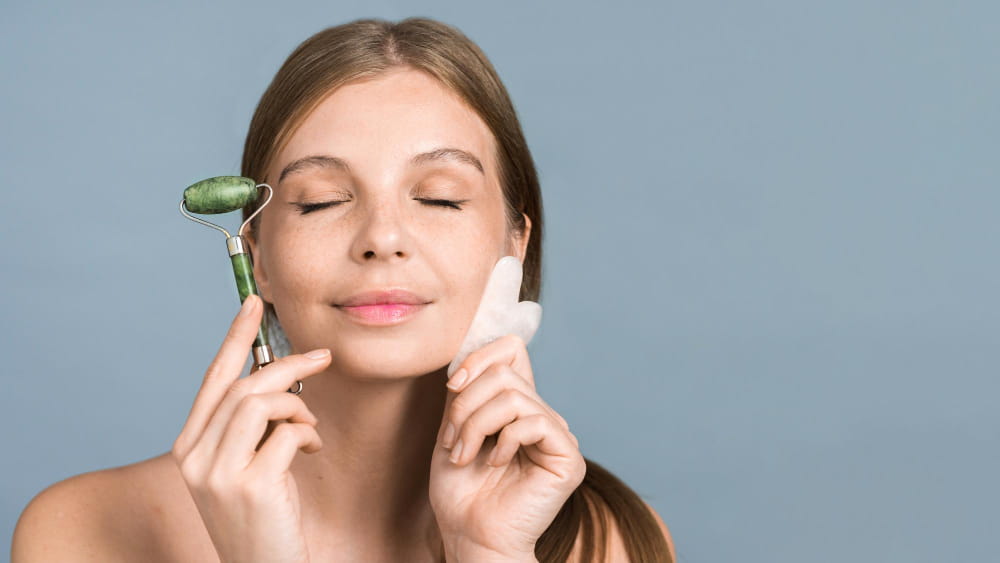
When I talk to people who have made gua sha a consistent practice, what they always come back to — beyond the depuffing, beyond the jawline, beyond everything we’ve covered — is the ten minutes itself. Ten minutes in which they are doing one focused thing. Not multitasking. Not responding to messages. Standing in front of a mirror paying careful, deliberate attention to their own face, their own hands, their own sensation of what tightness feels like and what release feels like. Ten minutes in their own body rather than in the constant ambient noise of everything else.
That experience — that deliberate, quiet attention — has an effect on how you feel about your skin that is entirely separate from what the stone is doing physiologically. Skin you pay attention to is skin you know. Skin you know, you tend to treat better. You notice when it’s dehydrated. You notice when something isn’t right. You build a relationship with your own face rather than using it as a surface you occasionally assess in the rearview mirror.
That’s not nothing. In fact, depending on the day, that might be the whole point.
The information in this post is based on personal research and experience and is intended for educational purposes only. It is not a substitute for professional medical or dermatological advice, diagnosis, or treatment. Always consult a qualified healthcare provider before making changes to your skincare routine or health practices, especially if you have a medical condition or sensitivity.
