
This post contains affiliate links. If you click a link and make a purchase, I may earn a small commission at no extra cost to you. I only recommend products I genuinely believe in. Thank you for supporting Amoria Style!
Let’s deal with the obvious thing first. Tallow is rendered beef fat. It comes from cows. And the idea of smearing animal fat on your face sounds, at first pass, like something your great-grandmother did because she had no other options — not like something you’d deliberately choose when there are seventeen hundred plant-based serums promising to transform your skin. I get that. I had the same reaction when I first came across it.
But I’m someone who researches beauty and skincare because the subject genuinely fascinates me, and when something keeps appearing across very different types of sources — historical cosmetic texts, dermatological research into skin barrier function, ancestral health circles — I pay attention. So I dug into tallow properly. What I found is that the reason tallow works on skin isn’t folk wisdom or nostalgia. It’s lipid biochemistry, and it’s actually quite interesting.
This is a complete guide. By the end of it you’ll understand what tallow is made of, why its composition matters, how to source and render it, who it actually suits (and who it doesn’t), and how to make six different formulations for different purposes and skin types. There are real recipes here with actual quantities, not the hand-wavy “mix a bit of this and a bit of that” you get from a lot of DIY skincare content.
Why Tallow Works on Skin
The skin’s outermost barrier — the stratum corneum — is held together by a mixture of lipids that it produces itself. These lipids include ceramides, cholesterol, and free fatty acids. The job of this lipid matrix is to keep moisture in and environmental irritants out. When the barrier is compromised, you get dryness, sensitivity, irritation, and in more severe cases, conditions like eczema.
The fatty acids in your skin’s barrier are dominated by saturated and monounsaturated fats. Human sebum — the oil your skin naturally produces — contains primarily oleic acid, palmitic acid, and stearic acid, along with smaller amounts of other fatty acids. Now look at what tallow contains:
| Fatty Acid | % in Tallow (approx.) | What It Does for Skin |
|---|---|---|
| Palmitic acid (C16:0) | 25–30% | A key component of the skin’s lipid barrier. Helps maintain structural integrity of the stratum corneum. Declining levels are associated with ageing skin. |
| Stearic acid (C18:0) | 20–25% | Softens and conditions skin without clogging pores. Helps repair a damaged skin barrier. Fills in gaps between skin cells as an emollient. |
| Oleic acid (C18:1) | 35–45% | The dominant fatty acid in human sebum. Penetrates skin efficiently, making it an excellent carrier. Softens and moisturises. Helps with dry, inflamed skin. |
| Conjugated linoleic acid (CLA) | 1–5% (grass-fed) | Anti-inflammatory properties. Significantly higher in grass-fed tallow. May support skin cell membrane function. |
| Palmitoleic acid (C16:1) | 3–5% | An antimicrobial fatty acid naturally present in young skin. Levels decline with age. Found in sebum; tallow is one of the few topical sources. |
The key insight is this: tallow’s fatty acid profile closely mirrors the fatty acids in human sebum. This is not a coincidence of farming — it’s a reflection of the fact that mammalian fat composition across species shares significant structural similarities. Because tallow’s fats are biochemically similar to what your skin already produces, your skin can incorporate them efficiently. The penetration is better than most plant oils, which tend to be higher in linoleic acid (an omega-6 polyunsaturated fat) and carry a different ratio of saturated to unsaturated fatty acids.
Plant oils aren’t inferior — they’re different. Rosehip oil is high in linoleic acid, which suits acne-prone and post-inflammatory skin. Marula oil is rich in oleic acid and absorbs cleanly. Jojoba isn’t technically an oil at all but a liquid wax ester, which is why it has such a long shelf life. The reason plant oils dominate modern skincare isn’t that they work better — it’s that they scale for manufacturing, don’t carry the cultural baggage of animal products, and are easier to market. Tallow got quietly dropped somewhere between the industrial revolution and the rise of the wellness industry, not because of anything wrong with the ingredient itself.
Tallow also contains fat-soluble vitamins — A, D, E, and K — in small but bioavailable amounts. These aren’t present in most plant oils, which is one more reason the comparison isn’t straightforwardly “plant oils win.”
Where to Get Tallow and How to Render It
The tallow you want for skincare is not the same thing as the beef dripping in a can at the supermarket, though that’s technically rendered tallow. The difference comes down to quality, sourcing, and processing. For a topical product, you want tallow that has been rendered low and slow, not industrially processed at high heat, and ideally sourced from grass-fed beef.
Grass-fed matters for a specific reason: CLA content. Conjugated linoleic acid is present at much higher levels in the fat of cattle raised on pasture versus grain-fed cattle — some estimates put it at two to five times higher. CLA has demonstrated anti-inflammatory properties in research and is one of the fatty acids that makes tallow interesting from a skin perspective beyond just its barrier-supporting fats. Beyond CLA, grass-fed tallow also tends to have better vitamin content and a cleaner smell after rendering.
Your sourcing options are: a local butcher (ask specifically for suet or leaf fat — the fat from around the kidneys — this is the purest, most neutral-smelling fat on the animal), farmers markets with direct-from-farm beef sellers, or online suppliers who sell already-rendered grass-fed tallow specifically for skincare or cooking use. If you’re buying pre-rendered tallow, make sure it’s been filtered and is pale yellow to white in colour with a mild, clean smell. A strong or rancid odour means it’s been sitting too long or processed badly.
Rendering Your Own Tallow
Rendering is the process of melting the raw fat to separate the pure lipids from the connective tissue and any remaining moisture. It’s not difficult, but it requires patience and attention to temperature, because you’re trying to drive off all water without overheating the fat — overheating accelerates rancidity.
Start with raw suet. Ask your butcher to cut it off for you; they usually will, and it’s very inexpensive. At home, cut it into small cubes (roughly 2cm) or pulse it briefly in a food processor to increase surface area, which speeds up rendering significantly.
Place the fat in a heavy-bottomed pot or slow cooker on your lowest heat setting. If using a stovetop, you want the temperature somewhere between 60–90°C — low enough that the fat melts gently without frying. Add a few tablespoons of water at the start; this sounds counterintuitive but it prevents scorching in the early stages and evaporates off during rendering. Stir occasionally.
Over the course of two to four hours, the fat will melt and the solid remnants — called cracklings — will turn golden and separate. You’ll also notice bubbling as moisture evaporates. Once the bubbling has completely stopped and the cracklings have sunk and turned consistently pale gold, you’re done. The bubbling is the water leaving; silence means the moisture is gone, which is what you want for a shelf-stable product.
Strain the liquid tallow through cheesecloth or a fine mesh strainer into glass jars, pressing the cracklings to extract the last of the fat. For the purest, whitest, most odour-neutral result, strain it a second time. Let it cool at room temperature, then refrigerate. Properly rendered tallow sets to a firm, pale cream or white solid. It should have a very mild, clean beefy smell — not strong, not rancid, not offensive. If it smells strong, you either overheated it or didn’t drive off all the moisture.
Properly rendered and sealed tallow keeps for one to two years in the refrigerator and around six to twelve months at room temperature if stored away from light and heat.
Who Tallow Lotion Actually Suits
I’m not going to tell you tallow works for everyone, because it doesn’t.
It suits dry skin extremely well — possibly better than almost any plant-based emollient, because of the barrier-matching fatty acid profile. If your skin is chronically dry, tight after washing, or flaky in cold weather, tallow is worth trying. People with eczema often report significant improvement with tallow-based products, and the likely mechanism is exactly what the science suggests: it replenishes the kind of fats the eczema-compromised barrier is missing. Sensitive skin generally tolerates plain, unfragranced tallow well because there’s very little in it to react to.
Acne-prone skin is more complicated. Tallow has a comedogenicity rating of around 2–3 on the standard 0–5 scale, which is moderate. For some people with acne-prone skin — particularly those whose acne is driven by a disrupted barrier, a pattern more common than people realise — tallow can actually help. For others, particularly those with oily, congested skin, it may be too heavy and could contribute to blockages. The honest answer is that it depends on your specific skin. If you want to test it on acne-prone skin, patch test on a small area for a week before using it more widely.
Important: If you have a known allergy to beef or bovine products, do not use tallow on your skin. Allergic reactions to topically applied food proteins are uncommon but documented. Start with a patch test on your inner arm if you’re uncertain about any sensitivities.
Oily skin in general is probably not the best match for tallow as a daily moisturiser, though the beeswax stick recipe below is fine for targeted application on dry patches even if the rest of your skin runs oily. Very oily skin doesn’t typically need additional lipid replenishment.
The Six Recipes
These formulations are genuinely different from each other — different use cases, different textures, different purposes — rather than slight variations on the same basic cream. Each one has been thought through in terms of why the ingredients work together, not just what the ingredients are.
Recipe 1: Basic Whipped Tallow
This is tallow in its purest form as a skincare product. No additions, no distractions. The whipping process is the only modification — it changes the texture from a waxy solid to something light, fluffy, and easy to spread, without changing the chemistry at all. If you want to understand what tallow does for your skin before layering in other ingredients, start here.
Ingredients
- 100g rendered grass-fed tallow, at room temperature
Method
The tallow needs to be at that sweet spot where it’s yielding but not liquid — roughly 20–22°C. Too cold and it won’t whip; too warm and it’ll just be greasy. If you’ve stored it in the fridge, bring it to room temperature for 30–45 minutes first. Using a hand mixer or stand mixer with the whisk attachment, beat on medium-high for three to five minutes, scraping down the sides of the bowl as needed. It will go from solid to a pale, fluffy cream that holds soft peaks, similar in appearance to whipped butter. Transfer to a clean glass jar.
Application
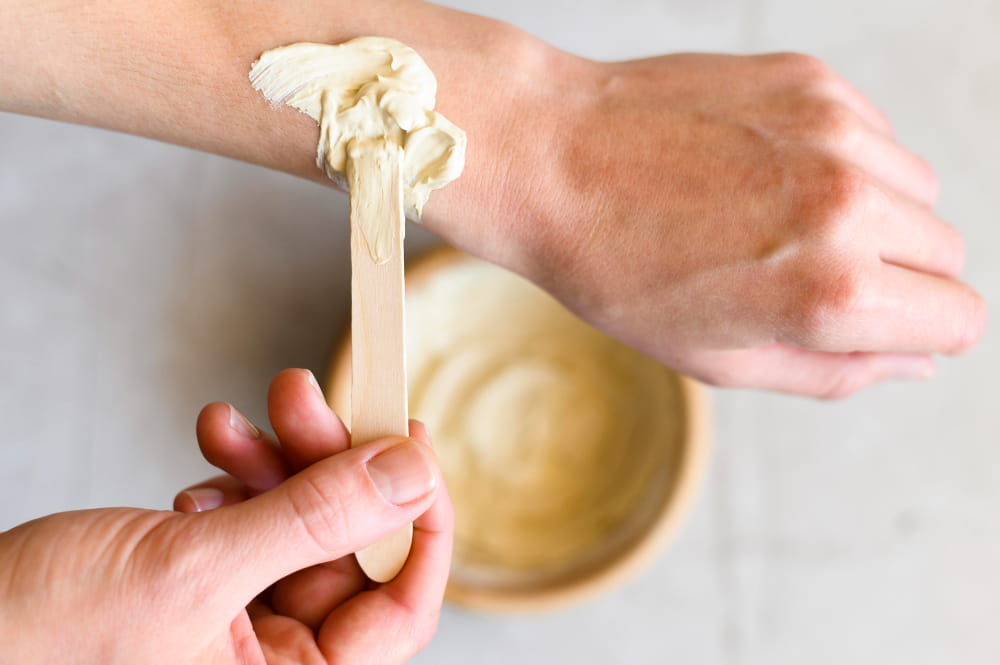
A pea-sized amount for the face, a hazelnut-sized amount for larger body areas. Warm it briefly between your fingertips before applying — it melts at skin temperature. Best applied to slightly damp skin to help lock in moisture.
Shelf life: 6–12 months | Storage: Cool, dark place or fridge | Preservative needed: No (anhydrous)
Recipe 2: Tallow and Jojoba Face Cream
Jojoba is the right choice for a face-specific formulation for a precise reason: it’s a liquid wax ester rather than a triglyceride oil, which makes it structurally more similar to the waxy esters in human facial sebum than almost any other plant-derived ingredient. It’s also non-comedogenic, exceptionally stable (essentially no rancidity risk), and it doesn’t feel heavy. Adding it to tallow lightens the texture for facial use and brings complementary skin-matching properties.
The ratio here is deliberate. Too much jojoba and you lose the barrier-repairing density of the tallow. Too little and the cream is heavier than most faces need. At 25% jojoba, you get a cream that absorbs in a reasonable time without leaving significant residue.
Ingredients
- 75g rendered grass-fed tallow
- 25g jojoba oil (cold-pressed, golden or clear)
- Optional: 10 drops rosehip seed oil (adds linoleic acid; particularly useful for post-inflammatory marks)
Method
Gently melt the tallow in a double boiler or a heatproof bowl set over barely simmering water. Once fully liquid, remove from heat and allow to cool until it begins to turn opaque at the edges — about 15–20 minutes at room temperature. Add the jojoba oil and rosehip if using, and stir thoroughly. Transfer to a small glass jar and allow to set fully before sealing. For a whipped texture, follow the same method as Recipe 1 once the mixture has cooled but is still pliable.
Application
Use as a morning or evening face moisturiser. Apply a very thin layer to cleansed skin and give it three to four minutes to absorb before layering other products. In the morning, SPF still goes on top.
Shelf life: 8–12 months | Storage: Cool, dark — fridge extends life | Preservative needed: No (anhydrous)
Recipe 3: Tallow and Shea Body Butter
Shea butter and tallow are both rich, solid-at-room-temperature emollients, but they have complementary rather than redundant fatty acid profiles. Shea is high in stearic and oleic acids with a significant percentage of unsaponifiable compounds — the fraction that doesn’t convert to soap — which includes triterpenoids with documented anti-inflammatory properties. Tallow brings palmitoleic acid and CLA that shea doesn’t have. Together, the combination provides a broader range of fatty acids and more anti-inflammatory activity than either alone, while the shea adds a subtle matte finish that plain tallow lacks.
This is specifically formulated for body use on very dry skin, rough elbows, heels, and any area that needs serious emollient work. It’s too rich for most faces.
Ingredients
- 60g rendered grass-fed tallow
- 30g unrefined shea butter
- 10g sweet almond oil (adds slip and helps with absorption)
Method
Melt the tallow and shea butter together in a double boiler, stirring until fully combined and liquid. Remove from heat, add the sweet almond oil, and stir. Allow to cool completely in the fridge — about an hour. Once solid, leave at room temperature for 10 minutes, then whip with a hand mixer for four to six minutes until you reach a light, airy body butter consistency. Jar and store.
Application
Best applied straight after bathing on damp skin. Focus on elbows, knees, shins, and any areas of chronic dryness. Allow a few minutes before dressing.
Shelf life: 8–10 months | Storage: Room temperature fine if used within 6 months | Preservative needed: No (anhydrous)
Recipe 4: Tallow and Beeswax Solid Stick
This is the portable, targeted application format — for lips, cuticles, dry patches at the corners of the nose in winter, and any small area that needs intensive spot treatment. Beeswax provides the structure that makes it solid and pushup-tube friendly; it also has its own skin-conditioning properties and forms a mild protective layer against moisture loss. The resulting product is harder and less greasy than a straight tallow formulation, which is exactly what you want for something going in a pocket or bag.
Ingredients (fills approximately 3 standard lip balm tubes)
- 10g beeswax (pastilles or grated block)
- 15g rendered grass-fed tallow
- 5g castor oil (adds gloss on lips and improves slip)
- Optional: 2 drops vitamin E oil (tocopherol — extends shelf life)
- Optional: 3 drops steam-distilled lavender essential oil (0.9% dilution in this volume — within safe limits for a lip product)
Method
Melt the beeswax first in a double boiler — it has the highest melting point. Once liquid, add the tallow and stir until fully combined. Remove from heat and add castor oil, vitamin E, and essential oil if using. Work quickly, as this begins to set fast. Pour into lip balm tubes using a small funnel or pour jug, filling just slightly above the top — they contract a little as they cool. Cap once fully set, approximately 20 minutes at room temperature.
Application
Apply directly to lips, cuticles, or dry patches as needed. The beeswax means it stays where you put it rather than spreading, which is useful for targeted work.
Shelf life: 12 months | Storage: Room temperature; avoid heat above 30°C | Preservative needed: No (anhydrous)
Recipe 5: Tallow with Lavender and Roman Chamomile for Sensitive Skin
Most essential oils are not appropriate for genuinely sensitive or reactive skin. Citrus oils are photosensitising. Peppermint and eucalyptus can trigger irritation. Clove and cinnamon are known sensitisers. The two essential oils in this recipe — true lavender (Lavandula angustifolia, not lavandin) and Roman chamomile (Chamaemelum nobile) — are among the most studied and well-tolerated for sensitive skin. Lavender’s main active components, linalool and linalyl acetate, have documented anti-inflammatory and calming properties. Roman chamomile contains esters — isobutyl angelate being the primary one — with significant soothing action. They’re also chemically compatible and smell genuinely good together.
Dilution matters. This recipe is formulated at 1% total essential oil concentration, which is the recommended level for sensitive skin and facial use.
Ingredients (100g total batch)
- 90g rendered grass-fed tallow
- 10g marula oil (rich in oleic acid; absorbs cleanly; well-tolerated by sensitive skin)
- 30 drops true lavender essential oil (Lavandula angustifolia)
- 20 drops Roman chamomile essential oil (Chamaemelum nobile)
Method
Melt the tallow, then allow it to cool to about 35°C — warm to the touch but not hot. Adding essential oils to overheated fat volatilises them and wastes your expensive Roman chamomile. Add marula oil, then the essential oils, and stir well. Either jar as-is for a firm cream or whip once cooled to workable consistency for a lighter texture.
Application
Suitable for the face and body. Apply to reactive, sensitised, or eczema-prone skin. Can be used as a night cream. Do not apply to broken skin. Patch test first — the essential oils are well-tolerated but not universally so.
Shelf life: 6–8 months | Storage: Fridge preferred; keeps longer and preserves essential oil integrity | Preservative needed: No (anhydrous)
Recipe 6: Tallow and Arrowroot Body Cream for Warmer Weather
The biggest barrier to adopting tallow-based products in warmer months is texture: tallow sits on warm skin more noticeably than it does in winter, and increased body temperature slows absorption. Arrowroot powder solves this problem elegantly. As a fine starch, it absorbs excess surface oil and imparts a dry, silky finish that transforms the feel of a tallow formulation without affecting how the fatty acids interact with the skin. It’s the same principle behind why many high-end body creams include tapioca starch or similar powders — texture modification without compromising efficacy.
This recipe is lighter in tallow content and includes fractionated coconut oil, which has a higher lauric acid content and a lighter feel in warmer temperatures.
Ingredients (100g total batch)
- 55g rendered grass-fed tallow
- 20g fractionated coconut oil (stays liquid at room temperature; lighter feel than regular coconut oil)
- 10g arrowroot powder
- 10g shea butter
- 5g jojoba oil
Method
Melt the tallow and shea butter together. Remove from heat and add the coconut oil and jojoba. Allow to cool partially — until the edges begin to firm but the centre is still liquid. Sift in the arrowroot powder gradually, stirring continuously to prevent lumps. Once fully incorporated, whip for three to four minutes until smooth and slightly fluffy. The arrowroot gives it a matte, almost powdery finish once it sets. Jar and allow to set fully before use.
Application
Body moisturiser for spring and summer use. Absorbs faster than the richer winter formulations and leaves significantly less residue. A good entry point for people who’ve been put off by tallow’s texture in the past.
Shelf life: 6–8 months | Storage: Cool, dark location; fridge in warm climates | Preservative needed: No (anhydrous)
Shelf Life and Rancidity
Every recipe above is anhydrous — meaning it contains no water. This matters for preservation because bacteria and mould need water to grow. An anhydrous product doesn’t require a broad-spectrum preservative the way a conventional lotion or cream with an aqueous phase does. This is one of the underappreciated advantages of fat-based skincare: you don’t need the kind of chemical preservation system that goes into a standard emulsion.
What anhydrous products do suffer from is oxidative rancidity. This is not microbial — it’s a chemical reaction where the unsaturated fatty acids in the formula react with oxygen and break down into compounds that smell bad and may irritate skin. The signs of rancidity are a sour, paint-like, or “crayon” smell (the classic rancid fat odour), discolouration, and sometimes a change in texture. If your tallow product smells noticeably different from when you made it — specifically worse — discard it.
You can meaningfully extend shelf life by keeping products in dark glass jars rather than clear plastic (UV accelerates oxidation), storing in a cool environment or the fridge, adding a vitamin E capsule per batch as a natural antioxidant, and ensuring all tools and containers are completely dry before use. Even a small amount of water in an anhydrous product creates a microbial risk. Plain tallow with nothing added is the most stable; formulations containing unsaturated plant oils like rosehip or marula are less stable and benefit most from refrigeration.
Switching from Synthetic Lotions — The Adjustment Period
If you’ve been using conventional synthetic moisturisers for years and you switch to a tallow-based product, there’s a real adjustment period that can last two to four weeks. It’s worth knowing about in advance so you don’t abandon the experiment too early.
Most commercial lotions are emulsions — they contain significant amounts of water alongside silicones, emollients, and humectants like glycerin and hyaluronic acid. They feel immediately hydrating because the water component absorbs fast, the silicones smooth over the surface, and the humectants pull moisture to the outer skin layers. The skin doesn’t have to do much work. With consistent use, the skin’s own lipid synthesis can actually downregulate — it stops producing as much of its own barrier lipids because external application has made them redundant.
When you switch to tallow, a few things happen. First, you lose the immediate “glassy” surface effect of silicones — tallow doesn’t smooth over texture the way dimethicone does. Second, your skin needs time to start absorbing and utilising a fat-based emollient efficiently again. Third, the absence of water means you’re genuinely nourishing the barrier rather than temporarily filling it with moisture that will evaporate off. During the adjustment period, skin can feel drier than expected, or slightly different in texture. Some people experience a short purging phase on the face as sebum production recalibrates. This passes.
If things haven’t improved after four weeks, tallow probably isn’t the right fit for your skin — and that’s a legitimate outcome. Not every ingredient works for every person, and honest skincare means accepting that.
For people who do find tallow suits them, the typical experience is skin that feels more consistently comfortable throughout the day, less reactive to environmental changes, and a barrier that doesn’t need constant reapplication. That’s the goal: not a surface fix, but an actual shift in how the skin functions.
One last practical note: use less than you think you need. Far less. The instinct coming from water-based lotions is to apply generously, because you’re layering up a product that’s mostly water. Tallow is pure fat, and a little covers and absorbs into a lot of skin. Start with half what you think is appropriate and adjust from there. Overapplication is the main reason people report tallow feeling greasy — and it’s entirely avoidable.
The information in this post is based on personal research and experience and is intended for educational purposes only. It is not a substitute for professional medical or dermatological advice, diagnosis, or treatment. Always consult a qualified healthcare provider before making changes to your skincare routine or health practices, especially if you have a medical condition or sensitivity.
