
This post contains affiliate links. If you click a link and make a purchase, I may earn a small commission at no extra cost to you. I only recommend products I genuinely believe in. Thank you for supporting Amoria Style!
Here’s the honest reason to make your own body wash: it has nothing to do with fear.
The “scary chemicals” argument has been doing the rounds in DIY beauty for so long that it’s basically its own genre — and it’s not a good reason to spend an afternoon in your kitchen. Most commercial body washes are perfectly safe. The surfactants, preservatives, and stabilizers in them have been tested, regulated, and used by billions of people without incident.
The actual reason to bother is simpler and more interesting: customization. A commercial body wash is formulated for a statistically average customer with statistically average skin, shopping in a statistically average climate. It’s engineered to be inoffensive, shelf-stable for two years, and appealing to the widest possible demographic. That’s great for the brand. It’s not particularly great for you, specifically.
A DIY body wash can be built around your skin type — genuinely dry, oily only in summer, reactive to fragrance, prone to that tight feeling after hard water showers. It can be built around a scent profile you actually want to smell at 7am, a texture preference, a specific sensitivity. That’s the real value proposition. Not fear. Specificity.
The Base: What Castile Soap Actually Is
Every recipe here uses liquid Castile soap as its foundation, and it’s worth knowing what that means before you start measuring anything.
Castile soap originated in the Castile region of Spain and was traditionally made from pure olive oil — nothing else. The modern use of the term has expanded to mean any vegetable oil-based liquid soap (you’ll find formulas using coconut oil, hemp oil, or blends), but the core concept remains: it’s a fully saponified vegetable oil, giving you a complete, gentle surfactant system in a bottle. That’s why it’s the right base for DIY body wash — the hard work of creating a functioning cleanser is already done. You’re building on top of an established, skin-safe structure, not starting from scratch.
There’s one thing that trips people up reliably, and it’s chemistry: Castile soap is alkaline, sitting around pH 9–10. If you mix it directly with acidic ingredients — apple cider vinegar, lemon juice, undiluted citrus juice — the soap reacts and breaks down. The mixture turns cloudy, curdles, and loses its cleaning ability. This is why several popular DIY body wash recipes that combine Castile soap with ACV produce something that looks like body wash and functions like water. The acid neutralizes the soap’s surfactant properties. Every recipe below is formulated to avoid this, using additives that either have a neutral effect on the soap’s pH or appear in quantities small enough not to destabilize it.
What the Additives Actually Do
Understanding this before you look at the recipes makes you a better formulator — and means you can intelligently adjust any of these for your own skin.
Oils (coconut, almond, jojoba): Adding an oil to a rinse-off product does deposit some moisture on the skin, but less than you’d get from a leave-on product. What it does well is reduce the post-shower tightness that comes from surfactant-only cleansing. The difference between oils matters: coconut oil rinses relatively clean and leaves minimal residue; almond and jojoba have a slightly longer skin contact time during rinsing and leave a faint emollient film that’s noticeable on genuinely dry skin.
Honey: A humectant and mild antibacterial. In a body wash, it adds slight viscosity and draws water to the skin surface during rinsing. The practical limit is about 1–2 tablespoons per 250ml batch — beyond that, the wash becomes tacky and doesn’t rinse cleanly.
Aloe vera gel: Soothing, adds slip to the formula, particularly useful for irritated or reactive skin. The type matters: you want pure aloe vera gel (refrigerated, from health stores) rather than the bright green commercial gels that often contain alcohol, artificial colorants, and thickeners. Those additives can irritate the very skin you’re trying to calm.
Vegetable glycerin: The most effective humectant for a rinse-off product, because glycerin is water-soluble and actively draws moisture to the skin surface even as you rinse. A small amount — 1–2 teaspoons per 250ml — makes a noticeable difference in post-shower feel without making the wash feel slippery.
Essential oils: These serve two functions — fragrance and active skin benefit. The safe usage rate for a rinse-off body wash is 1–2% of the total formula, which for a 250ml batch works out to roughly 50–100 drops. Tea tree at the right concentration is genuinely antibacterial; lavender has mild anti-inflammatory properties backed by solid evidence; peppermint’s cooling sensation is real — it’s a mild vasodilator that increases superficial circulation, not merely a sensory trick. Citrus oils are sometimes flagged for photosensitivity, but that concern applies only to leave-on products. In a rinse-off wash, the contact time is too short and the dilution too high for it to be relevant.
The Recipes
Each formula below is sized for a 250ml batch — a reasonable amount to use within 3–4 weeks, which is the practical shelf life of a water-containing natural product without a commercial preservative. If you’re not adding Optiphen or a similar broad-spectrum preservative (available from cosmetic suppliers), make small batches and move through them within a month.
On preservatives: Any recipe that contains water — aloe vera gel, almond milk, brewed tea, diluted honey — is a growth medium for bacteria and mold. Commercial products use preservatives to maintain a 1–2 year shelf life. Without them, your batch is safe for a few weeks in a clean container, but you should know what you’re working with. The visual signs of a batch that’s gone off: separation that doesn’t re-emulsify when shaken, an off or sour smell that wasn’t there before, or unexpected color change. If any of those appear, discard the batch.
1. Moisturizing Coconut and Honey Wash
For dry skin, winter use, anyone who feels tight after showering
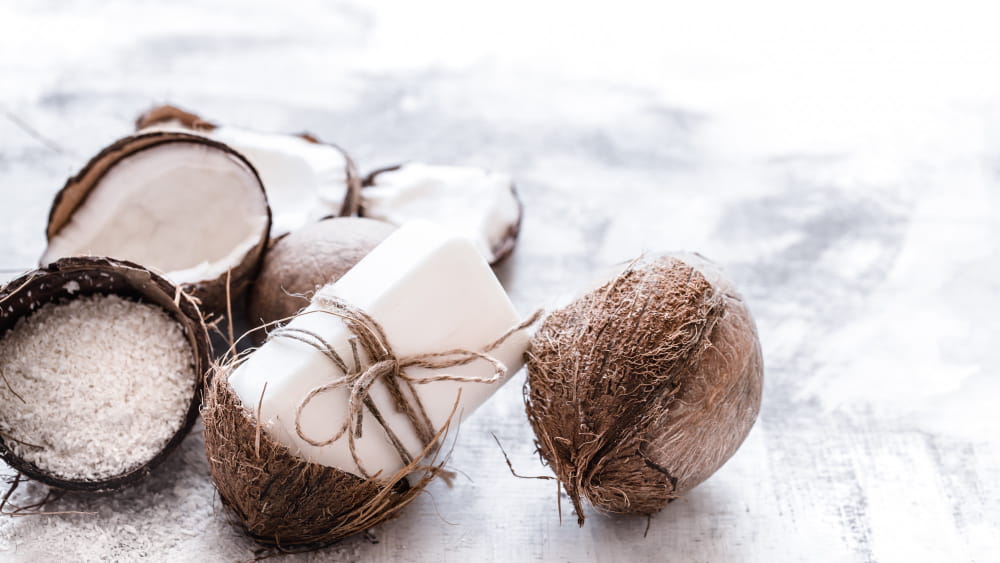
The pairing of coconut oil and honey works for dry skin for specific reasons, not just because both are moisturizing in a general sense. Coconut oil’s fatty acid profile — predominantly lauric acid — gives it good skin affinity. It deposits a light protective film that slows transepidermal water loss during rinsing. Honey’s humectant action draws moisture from the water you’re rinsing with and holds some at the skin surface as the water drains. Together they address dryness on two fronts: barrier protection and active hydration. The lavender isn’t decorative — at the concentration used here, it has mild anti-inflammatory properties that support skin dry enough to be subtly irritated.
Ingredients (250ml batch):
- 150ml liquid Castile soap
- 60ml coconut oil, melted and cooled to room temperature
- 30ml raw honey
- 1 teaspoon vegetable glycerin
- 15 drops lavender essential oil
Method: Combine the cooled coconut oil and honey first and mix until smooth. Add the glycerin, then add the Castile soap slowly, stirring gently — vigorous stirring creates foam and makes the pour messy. Add lavender oil last. Transfer to a pump or flip-top bottle.
Use: Shake before each use. Apply to a loofah or directly to skin. Works best with lukewarm rather than very hot water; high heat strips the oil component before it can deposit.
Shelf life: 3–4 weeks in the shower; 6–8 weeks stored away from heat and light.
2. Oat and Almond Milk Sensitive Skin Wash
For reactive, sensitive, or easily irritated skin
This one requires a small amount of prep that’s worth doing properly. The key ingredient is colloidal oat — oat milled fine enough that particles stay suspended in liquid rather than sinking immediately. Colloidal oat (not regular oat flour, which is coarser and can scratch) contains avenanthramides, compounds with documented anti-inflammatory and anti-itch properties. If you’re making your own, blend rolled oats in a dry blender for 2–3 minutes until they reach a fine, powdery consistency, then test a small amount stirred into water — it should turn the water milky, not gritty.
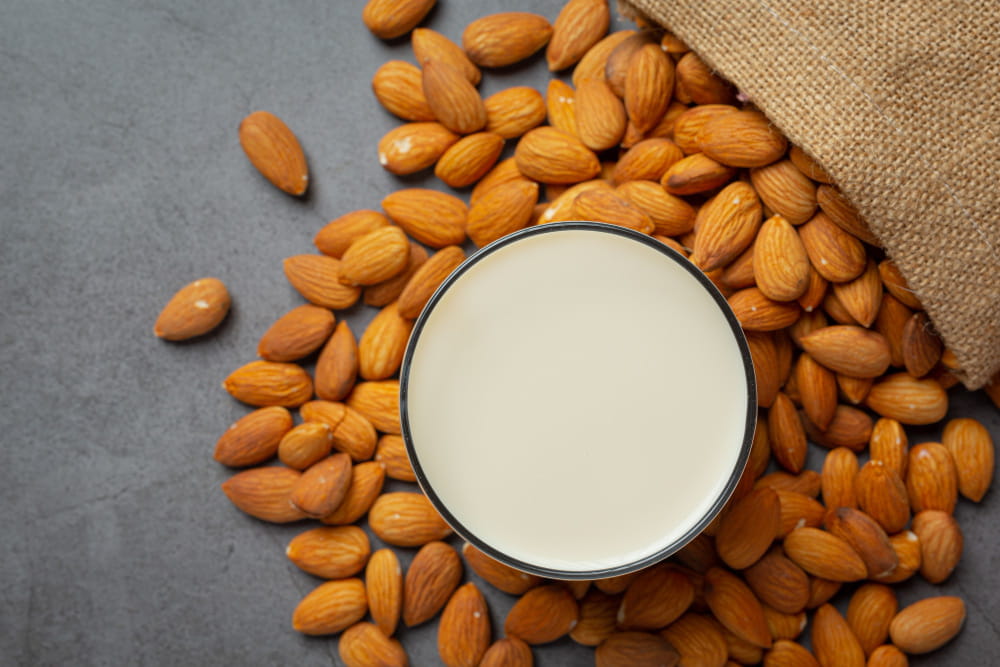
Almond milk does more than plain water would in this formula. It contains fatty acids and vitamin E that deposit lightly on skin during rinsing, and its slightly acidic pH (around 6) is closer to the skin’s natural range than water alone, which makes the formula feel less stripping overall.
Ingredients (250ml batch):
- 150ml liquid Castile soap
- 60ml unsweetened almond milk, plain
- 2 tablespoons colloidal oat, finely milled
- 10 drops chamomile essential oil
Roman chamomile is preferred here over German chamomile. Roman is gentler and better tolerated by reactive skin. German chamomile has a stronger, more medicinal character and a deep blue color (from azulene) that’s better suited to spot treatment than a full-body wash.
Method: Mix the almond milk and oat powder first until no lumps remain. Add Castile soap slowly. Add essential oil. Bottle.
Use: Shake well before each use — the oat will settle, and that’s expected, not a sign of failure.
Shelf life: 2–3 weeks maximum. The almond milk is the limiting factor. If it smells sour, it’s done.
3. Refreshing Peppermint and Tea Tree Wash
For oily skin, post-exercise showers, or mornings when you need to actually wake up
Peppermint’s cooling sensation is often treated as purely sensory, but there’s a real physiological mechanism: menthol activates TRPM8 receptors in the skin, triggering a mild vasodilatory response — increased superficial blood flow that produces genuine cooling and a brief stimulant effect. It works. Tea tree oil is antibacterial and antifungal at concentrations of 1–5%; in a rinse-off wash it operates at the lower end of that range, but it’s meaningful for skin that trends oily or is prone to breakouts on the body.
This formula uses glycerin as its body — no added oils, which is appropriate for oily skin. You don’t want to add lipids to a complexion that already overproduces them.
Ingredients (250ml batch):
- 180ml liquid Castile soap
- 40ml vegetable glycerin
- 20 drops peppermint essential oil
- 10 drops tea tree essential oil
Method: Combine soap and glycerin. Add essential oils. Stir gently. Bottle. This is the most stable formula of the six — no water-based additives means a longer shelf life and less to go wrong.
Use: Best as a morning wash. The peppermint effect lasts 5–10 minutes post-shower, which is useful if you shower before coffee.
Shelf life: 6–8 weeks.
4. Lavender and Chamomile Calming Wash
For evening showers, or skin prone to redness and irritation
A note on lavender worth knowing before you formulate: lavender essential oil and lavender hydrosol are both usable here, but they function differently. The essential oil carries concentrated linalool and linalyl acetate — the compounds responsible for lavender’s anti-inflammatory properties — and is fragrant at low concentrations. Lavender hydrosol (the water byproduct of steam distillation) is far gentler, lightly scented by comparison, and better suited to very reactive skin that might be sensitized even by a diluted essential oil. Choose based on how sensitive your skin actually is, not how sensitive you think it is.
Ingredients (250ml batch):
- 160ml liquid Castile soap
- 50ml pure aloe vera gel
- 1 tablespoon sweet almond oil
- 20 drops lavender essential oil (or substitute 40ml of the Castile soap with lavender hydrosol for a gentler version)
- 5 drops Roman chamomile essential oil
Method: Mix the aloe gel and almond oil until combined. Add Castile soap slowly. Add essential oils. If using hydrosol instead of some of the soap, add it after — the ratio shift keeps the formula stable. Bottle.
Use: Evening shower. The combination of lavender and chamomile has a real, documented effect on the nervous system’s arousal state — this is the formula to use when you want to decompress, not energize.
Shelf life: 3–4 weeks in the shower.
5. Energizing Citrus and Ginger Wash
For a morning shower that functions like one
Two things to address upfront. The photosensitivity concern around citrus essential oils — bergapten causing UV sensitivity — applies to leave-on products: serums, facial oils, perfumes. In a rinse-off wash with brief contact time and significant dilution, it isn’t a relevant risk. Use citrus oils here without concern.
On ginger: it’s available to the formulator in three forms, and they produce meaningfully different results. Ginger essential oil (steam-distilled) delivers the volatile aromatic compounds — the sharp, warming, spicy top note — without much active skin effect. Ginger oleoresin is a concentrated extract containing gingerols and shogaols, the compounds with genuine anti-inflammatory properties; it’s potent by weight and needs to be used sparingly. Ground ginger powder gives texture and a mild warming effect from skin contact but will settle and eventually clog dispensers. For this formula, the essential oil is the practical choice — clean, aromatic, and easy to dose.
Ingredients (250ml batch):
- 170ml liquid Castile soap
- 30ml vegetable glycerin
- 20 drops sweet orange essential oil
- 10 drops lemon essential oil
- 5 drops ginger essential oil
Method: Combine soap and glycerin. Add essential oils. Bottle. This is a simple formula and intentionally so — its value is in the scent profile and the stimulant effect of the peppermint, not complexity.
Use: Morning only. This is not a pre-bed formula.
Shelf life: 6–8 weeks.

6. Exfoliating Coffee and Brown Sugar Scrub-Wash
A hybrid — cleanses and exfoliates in one step
This is the most texture-dependent formula of the six, and particle size matters more than people usually account for. Coarsely ground coffee and coarse brown sugar scratch rather than exfoliate — the particle edges aren’t uniform enough to be gentle at full body pressure. You want espresso-grind coffee or finer, and fine-grain brown sugar. Both exfoliate mechanically, but coffee grounds have an additional benefit: caffeine has documented vasoconstrictive properties that temporarily improve the appearance of skin texture after exfoliation, and the natural oils in coffee grounds (caffeol) deposit a light emollient film as they rinse.
The practical challenge with any scrub-wash is suspension — particles sink. You have two options: source a thicker Castile soap base (formulas vary considerably in viscosity), or shake before each use and accept that this formula behaves differently from a smooth gel wash. The shake-and-use approach is the honest one.
Ingredients (250ml batch):
- 140ml liquid Castile soap
- 40ml coconut oil, melted and cooled
- 2 tablespoons finely ground coffee (espresso grind or finer)
- 1 tablespoon fine brown sugar
- 10 drops sweet orange or vanilla essential oil
Method: Mix coconut oil, coffee grounds, and sugar until combined. Add Castile soap slowly. Add essential oil. Pour into a wide-mouth jar — a standard pump bottle will clog with the grounds, and a flip-top will frustrate you within a week.
Use: Stir or shake before each use. Apply with hands rather than a loofah, which traps the grounds and wastes the exfoliant. Two to three times per week maximum; daily physical exfoliation overshoots the skin’s renewal cycle and causes more irritation than it resolves.
Shelf life: 3–4 weeks. Keep the jar lid closed between uses to slow oxidation of the coconut oil.

A Note on pH — The Part That Actually Matters
This section is what separates a recipe that happens to work from a formula you actually understand.
Your skin’s surface maintains a slightly acidic pH of approximately 4.5–5.5. This environment — called the acid mantle — is sustained by sebaceous secretions and supports the skin’s microbiome, its barrier function, and its ability to resist environmental stress. When you disrupt it significantly and for extended periods, the barrier becomes more permeable, inflammation increases, and reactive skin gets more reactive.
Castile soap sits at pH 9–10. This is why some people find their skin feels tight or stripped after using unmodified Castile soap — the disruption is real, not imagined. In a rinse-off product with short contact time, the effect is limited; your skin’s acid mantle recovers within 30–60 minutes of washing. But the inclusion of aloe vera (pH around 4.5), almond milk (pH around 6), and honey (pH around 3.9–4.5) in meaningful quantities does shift the final formula’s pH closer to neutral — which is part of why those formulas feel gentler than plain Castile soap on sensitive skin.
This is also the complete explanation for why Castile soap plus acid fails as a formula: you’re not just mixing two ingredients, you’re running a neutralization reaction that destroys the surfactant. Knowing the chemistry means you don’t have to learn that one the hard way.
You don’t need a pH meter to use these recipes. But understanding the underlying logic is what makes you someone who formulates, not just someone who follows a recipe.
Storage and Batch Size
Make small batches. The 250ml quantities here are deliberately modest because natural products without commercial-strength preservatives have a shorter viable life than what you’ll find on a supermarket shelf. A batch you finish in three weeks is always going to outperform one sitting in a warm, humid shower for three months.
Use glass or HDPE plastic. Standard shower pump bottles in HDPE are widely available and work for everything here except the coffee scrub, which needs a wide-mouth jar. Avoid containers with metal components — essential oils corrode metal over time in ways you won’t notice until the smell changes. Store extra batch volume in a cool, dark place and refill your shower bottle as needed.
The signs that a batch has gone off: separation that doesn’t re-emulsify when shaken, a sour or rancid smell that wasn’t present before, or visible color change. Natural products expire. That’s not a flaw — it’s chemistry being straightforward about what’s in them.
Making your own body wash isn’t faster than buying one, and it’s not necessarily cheaper once you’ve sourced quality essential oils. What it is, is specific. Once you’ve made a formula that actually fits how your skin behaves — not a generic customer’s skin, but yours — it becomes harder to justify going back to something optimized for everyone and therefore ideal for no one.
The information in this post is based on personal research and experience and is intended for educational purposes only. It is not a substitute for professional medical or dermatological advice, diagnosis, or treatment. Always consult a qualified healthcare provider before making changes to your skincare routine or health practices, especially if you have a medical condition or sensitivity.
