
This post contains affiliate links. If you click a link and make a purchase, I may earn a small commission at no extra cost to you. I only recommend products I genuinely believe in. Thank you for supporting Amoria Style!
Let’s start with something most bath soak articles won’t tell you: the two biggest claims on the packaging are probably not true.
“Detoxifies the body.” “Replenishes magnesium through the skin.” You’ll find these on virtually every bag of Epsom salt, echoed across thousands of wellness articles. They’re repeated so often that they’ve become assumed fact. But when you actually look at the research, the picture gets complicated fast. Transdermal magnesium absorption — the idea that your skin meaningfully soaks up magnesium from the water — is genuinely debated in the scientific literature. Some small studies show trace absorption; others show minimal or none. The methodology of the positive studies has been questioned. As for “detoxification through the skin,” there’s no credible physiological mechanism for it. The skin is a barrier, not a drain.
I’m not saying this to be a killjoy. I’m saying it because I think you deserve the honest case for these baths, which is actually more interesting than the mythologized one.
Here’s what a hot bath genuinely does, and why it’s worth doing.
What a Bath Actually Does — The Real Science
Heat is the active ingredient, and it’s been surprisingly well-studied.
When you submerge in hot water, your blood vessels dilate — vasodilation is the technical term — and blood flow to your muscles increases significantly. This is the actual mechanism behind why a hot bath eases muscle tension. It’s not magnesium working its way into your cells; it’s heat increasing circulation and allowing muscle tissue to soften and release. The effect is real, reliable, and well-documented. You’ve felt it yourself.
The sleep research is even more compelling. A 2019 meta-analysis published in Sleep Medicine Reviews synthesized data across multiple studies and found that taking a warm bath 1-2 hours before bed meaningfully improved sleep onset speed and quality. The mechanism is counterintuitive: the hot water raises your core body temperature, and then when you get out, your body sheds that heat rapidly. This accelerated temperature drop mimics and amplifies the natural cooling process your body uses to signal that it’s time to sleep. Your body interprets the drop as “it’s getting late” and increases melatonin accordingly. The window matters: too close to bedtime and you haven’t had time to cool down; the research-supported sweet spot is 60-90 minutes before you want to be asleep.
Then there’s the skin question, which cuts the other direction from the magnesium story. Hot water doesn’t just do nothing to your skin — it actively removes some of your skin’s natural oils, the lipid layer that keeps moisture locked in. This is why your skin can feel tight after a long bath if you don’t moisturize. The post-bath routine matters enormously, and I’ll come back to it.
Finally: the psychological dimension. There’s a small but genuine body of research showing that the experience of warmth is associated with reduced cortisol levels and increased feelings of social connectedness (warmth is neurologically associated with interpersonal warmth — the association runs deep). Ritual itself has psychological power, and giving yourself 25 minutes of deliberate, undistracted sensory experience is not nothing. It’s something.
The Epsom Salt Specifically
Epsom salt is magnesium sulfate — magnesium and sulfur bonded with oxygen. It dissolves completely in water and changes the water’s mineral composition, which affects how the water feels against your skin. Most people describe it as slightly softer, slightly slippery in a pleasant way. Many people find it genuinely soothing on irritated or rashy skin, possibly due to the altered mineral balance, possibly due to the slightly different osmotic environment at the skin surface. The honest answer is that the mechanism isn’t fully understood, but the subjective experience is consistent enough to take seriously.
The topical magnesium research is thin but not nonexistent. A 2017 study in PLoS ONE found some evidence of magnesium absorption through compromised skin barriers — relevant for people with eczema, for instance. But for intact, healthy skin, the absorption evidence is weak. What’s not weak is the sensory effect. The water genuinely feels different with Epsom salt in it, and that sensory experience feeds directly into the relaxation response and the ritual value.
So: use it. Just don’t use it because you think you’re detoxing.
Recipe 1: Muscle Recovery Soak
This is the bath to draw after a long run, a heavy gym session, a day of moving furniture, or any sustained physical effort that leaves you feeling compressed and dense in your muscles.
What you’ll need:
- 2 cups Epsom salt
- ½ cup baking soda
- 10 drops eucalyptus essential oil
- 5 drops black pepper essential oil
The Epsom salt provides the baseline water texture and whatever topical mineral effect it has. The baking soda softens the water further and is gentle on skin — it’s mildly alkaline, which can ease irritation. Eucalyptus is one of the better-researched essential oils: its primary active compound, 1,8-cineole, has demonstrated analgesic and anti-inflammatory properties in multiple studies, and there’s decent evidence that inhaling it during a soak (the steam does the work) contributes to the relaxation of muscle tension. Black pepper essential oil is warming — it mildly increases local circulation and has a sharp, grounding scent that pairs well with the eucalyptus.
Mix the dry ingredients first, then add the essential oils to the dry mix before adding to the bath so they disperse rather than pooling on the surface.
Temperature and timing are non-negotiable here. For the heat component to genuinely work on muscle tissue, you need to soak for at least 20 minutes — not a quick 8-minute dip. The target water temperature is 40-42°C (104-108°F). This is the therapeutic sweet spot: hot enough to drive significant vasodilation without putting meaningful stress on your cardiovascular system. Hotter than 42°C and you’re adding cardiovascular load; cooler than 40°C and the vasodilatory effect diminishes significantly. Use a bath thermometer if you’re serious about this, at least until you’ve calibrated your sense of what that temperature feels like.
Start the bath slightly hotter than your target — water cools as you fill and as you soak. If you’re going the full 25 minutes, run a small stream of warm water halfway through to maintain temperature.
Recipe 2: Sleep Preparation Soak
This one has the strongest evidence base of the four. The bath-and-sleep research is solid, the lavender research is solid, and the timing principle is well-established.
What you’ll need:
- 1½ cups Epsom salt
- 15 drops lavender essential oil
- 5 drops Roman chamomile essential oil
- ½ cup full-fat milk (or 2 tablespoons dried milk powder)
Lavender is the most rigorously studied essential oil for sleep. Multiple randomized controlled trials — in populations ranging from college students to postpartum mothers to elderly patients with insomnia — have found that lavender aromatherapy improves sleep onset, sleep quality, and morning alertness. The active compounds, linalool and linalyl acetate, appear to interact with GABA receptors, the same receptors targeted by anti-anxiety medications (though at much gentler levels). The steam from a hot bath carries the lavender effectively. Roman chamomile adds a sweet, apple-like counterpoint and has its own mild anxiolytic reputation, though its research base is thinner than lavender’s.
The milk is a genuine pleasure addition rather than a medicinal one. The fats in full-fat milk create a very slightly emollient bath — not dramatically different, but perceptibly silkier. Cleopatra allegedly bathed in milk; the sensory appeal has been consistent across human history for a reason.
The critical variable is timing. Draw this bath 60-90 minutes before you want to be asleep — not immediately before bed. You need time for your elevated body temperature to drop after you get out, and that temperature drop is what triggers the sleep signal. If you get out of a hot bath and immediately get into bed, you’re actually warm, which works against sleep onset. Plan accordingly.
Keep the bathroom dim. No phone. This is the one recipe where the ritual component is as important as the chemistry.
Recipe 3: Skin Soothing Soak
This one is specifically calibrated for dry, irritated, or sensitive skin — including eczema-prone skin, with the important caveat that this is supportive care, not treatment. If you’re managing a significant skin condition, work with a dermatologist. But for garden-variety dry skin, winter itch, or general skin irritability, this bath has genuine rationale behind every ingredient.
What you’ll need:
- 1 cup Epsom salt (lower concentration than the other recipes)
- 1 cup colloidal oatmeal
- ½ cup baking soda
- 1 tablespoon jojoba oil (added directly to running water as the bath fills)
The Epsom salt concentration is deliberately lower here. High salt concentrations in bathwater can have a mildly drying effect via osmosis — the water draws moisture toward the saltier bathwater rather than toward your skin. At lower concentrations, you get the textural benefit without the drying risk.
Colloidal oatmeal is the real workhorse of this recipe. It’s ground so finely it stays suspended in water rather than sinking, and it has one of the strongest evidence bases of any topical skin ingredient — so good that the FDA has approved it as a skin protectant. The mechanism involves the avenanthramides in oats, which have demonstrated anti-inflammatory and antipruritic (anti-itch) properties. When you bathe in colloidal oatmeal, it deposits a thin protective layer on the skin that helps reinforce the barrier and calm irritation. You can buy it as a dedicated product or make it by blending plain rolled oats to a very fine powder and testing that it dissolves in water (it should turn the water milky).
Baking soda raises the water’s pH slightly toward alkaline, which some people with itchy skin find genuinely soothing — the mechanism isn’t perfectly clear, but the subjective relief is commonly reported. Jojoba oil added to the running bath water disperses more evenly than adding it after filling, and its chemical composition is unusually close to human sebum, making it one of the more compatible oils for sensitive skin.
The post-bath routine matters as much as the bath itself. Pat dry — don’t rub. Apply your moisturizer while your skin is still slightly damp, ideally within three minutes of getting out. The goal is to seal in the residual moisture before the evaporation starts working against you. Dress warmly so the temperature elevation has time to dissipate gradually rather than being stripped away by cold air.
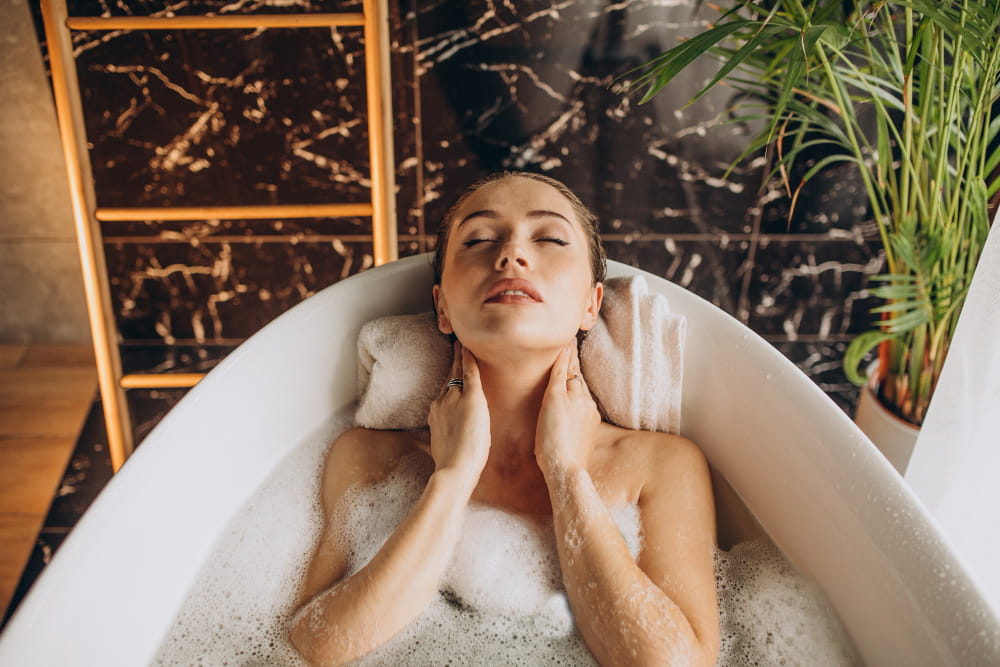
Recipe 4: Full Sensory Ritual Soak
I want to be clear about what this recipe is and isn’t. It’s not a recovery soak. It’s not a sleep hack. It doesn’t have a targeted physiological mechanism I can walk you through with citations. It is, straightforwardly, an extraordinarily pleasurable bath — designed purely for the sensory experience and the genuine psychological value of giving yourself something beautiful.
Think of it as the bath equivalent of a really good meal you cook on a Sunday afternoon for no reason other than that you can.
What you’ll need:
- 2 cups Epsom salt
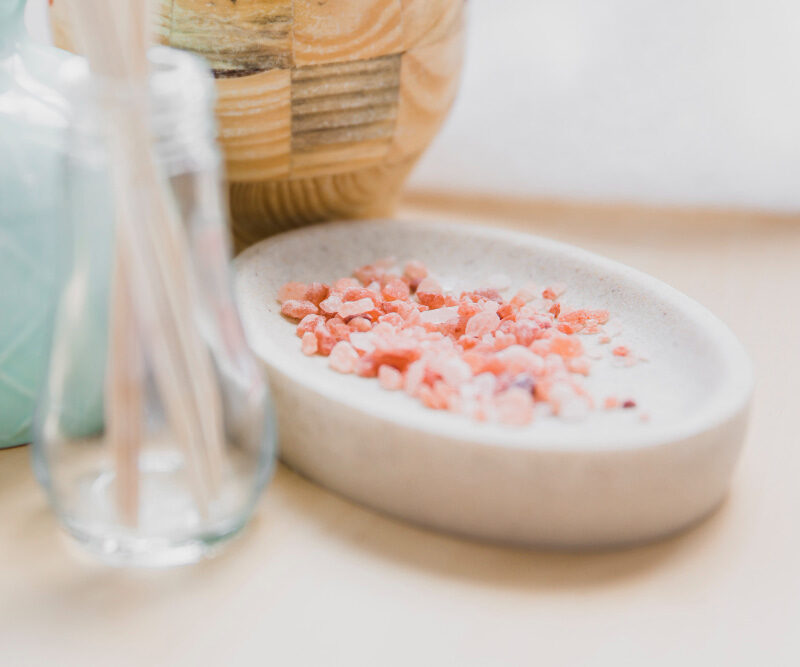
- 1 cup Himalayan pink salt
- 1 cup coconut milk (canned, full-fat)
- Handful of dried rose petals — cosmetic grade, not decorative
- 8 drops ylang ylang essential oil (seriously, no more — it’s potent)
A word about the rose petals: there’s a difference between the dried roses sold for potpourri and those sold for cosmetic or culinary use. Decorative dried roses are often treated with dyes, preservatives, or fragrances that you don’t want in your bathwater. Cosmetic-grade dried rose petals are produced without those treatments. They’re not hard to find online; they’re just a different product, and it’s worth getting them right. Floating in visually beautiful water is part of this recipe’s whole point.
The Himalayan pink salt sits alongside the Epsom salt primarily for the visual effect and the slightly different mineral profile — it contains trace amounts of iron oxide (what makes it pink) along with various other minerals. Whether the mineral difference is physiologically meaningful at bath concentrations is doubtful, but the visual effect of pink-tinted water scattered with rose petals is real and it’s lovely.
Coconut milk contributes fatty acids that make the water feel luscious in a way that’s hard to describe but immediately obvious in the bath. Shake the can well before opening; add it to the running water.
Ylang ylang is one of the most distinctive essential oils in existence — deeply floral, slightly sweet, with a complexity that unfolds during a long soak. It is also extremely potent. Eight drops in a full bath is enough; ten is too much. Beyond a certain concentration it becomes cloying rather than beautiful.
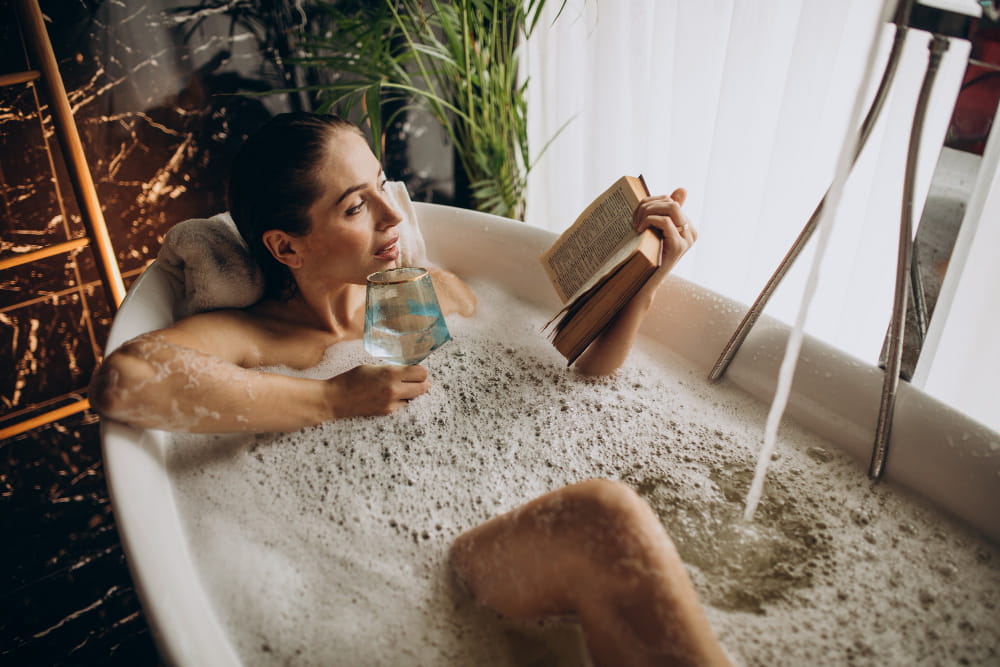
For this bath specifically: light a candle, make yourself a drink (hot tea, sparkling water with a slice of something, whatever feels right), bring a book if you want one, and spend 25 minutes doing nothing except being warm and comfortable and using your senses. Not a podcast, not a scroll. Just the bath.

The Practical Guide Most Articles Skip
Water temperature: Your target is 40-42°C. Fill the bath a degree or two hotter than your target because it cools as you prepare and as the cooler air contacts the surface. For soaks over 20 minutes, run a thin stream of warm water about halfway through to maintain temperature — a bath that’s gone lukewarm is a different experience than one that stays warm.
Duration: 20-30 minutes is the optimal range. Less than 20 and the heat hasn’t had enough time to work on muscle tissue or drive the thermoregulation effects. More than 30 and two things start working against you: the water cools below therapeutic temperature, and prolonged hot water exposure increasingly strips the skin’s lipid layer. Set a timer.
What to do in the bath: Nothing with a screen. Dim the lights. A bath pillow for your neck makes a meaningful difference if you’re going the full 25 minutes — the difference between a genuinely restful soak and a strained one often comes down to neck and head support. If you want to read, paperback or e-reader with a screen that doesn’t require you to hold it up indefinitely.
The five minutes after: This is where most of the skin benefit is either captured or lost. Pat dry — the rubbing motion strips off the thin oil residue from the bath. Apply moisturizer immediately, while your skin is still faintly damp. Put on warm clothes. If you made the sleep soak, get into bed within the next hour. Don’t go outside into cold air directly after a hot bath; you’ll undo the thermal benefit and you’ll also just feel unpleasant.
The Honest Summary
These baths work. They work because heat relaxes muscles through vasodilation, because the cooling after a hot bath genuinely improves sleep onset, because colloidal oatmeal is one of the most well-researched topical skin ingredients available, and because giving yourself 25 minutes of undistracted sensory pleasure is good for your nervous system in ways that don’t require a double-blind trial to validate.
They don’t work through detox. They probably don’t work through significant magnesium absorption. But the actual mechanisms are compelling enough that none of that overclaiming is necessary. A bath that loosens your muscles, helps you sleep, soothes your skin, and simply feels wonderful is already doing a lot.
You’re allowed to enjoy something and understand it accurately at the same time. These recipes let you do both.
The information in this post is based on personal research and experience and is intended for educational purposes only. It is not a substitute for professional medical or dermatological advice, diagnosis, or treatment. Always consult a qualified healthcare provider before making changes to your skincare routine or health practices, especially if you have a medical condition or sensitivity.
