

This post contains affiliate links. If you click a link and make a purchase, I may earn a small commission at no extra cost to you. I only recommend products I genuinely believe in. Thank you for supporting Amoria Style!
Your body care routine in January is not your body care routine in July. It shouldn’t be. The products that repaired and protected your skin through cold, dry months actively work against you when temperatures rise and humidity increases — and the lightweight options you dismissed as insufficient in winter become exactly what your skin needs.
Most people make this transition instinctively but incompletely — swapping their face moisturizer but keeping the same heavy body butter, or switching to a lighter cleanser but continuing to over-exfoliate in a season when their barrier is already more reactive. The full transition is more deliberate than that, and it makes a noticeable difference.
Here’s what actually changes in summer and what to do about it.
What Changes in Your Skin in Summer
Two things shift significantly when temperatures and humidity rise: sebum production and transepidermal water loss.
Sebum production increases with temperature. Your sebaceous glands are sensitive to heat — they produce more oil in warm conditions as part of the skin’s thermoregulatory response. This means skin that was dry or normal in winter often becomes combination or oily in summer, particularly on the chest, back, and face.
Transepidermal water loss decreases in humidity. In dry winter conditions, your skin constantly loses moisture to the low-humidity environment around it. In humid summer conditions, the moisture gradient reverses — the air holds more moisture than it draws from your skin, which means your skin is actually better hydrated passively in summer than in winter.
The practical implication of both: in summer, your skin needs less heavy occlusion and more attention to managing excess oil, sweat, and the specific problems that come with heat — congestion, body acne, friction, and sun exposure.

What to Drop in Summer
Heavy body butters as an all-over product. Shea butter, cocoa butter, and thick balms are excellent for winter barrier repair. In summer heat, the same occlusive layer that was protective in January traps sweat, clogs pores, and creates the conditions for body breakouts on the chest, back, and shoulders. Reserve heavy butters for genuinely dry areas — elbows, heels, knees — and drop them from everywhere else.
Rich, oil-heavy body washes. Cleansers that leave a deliberate moisturizing film were useful when your skin needed every drop of hydration it could get. In summer, that film mixed with sweat and sunscreen residue contributes to congestion. Swap to a gel or foam cleanser that rinses completely clean — you can add moisture back afterward rather than relying on the cleanser to provide it.
Over-exfoliation. Exfoliation is more impactful and more risky in summer than in winter because UV exposure makes freshly exfoliated skin significantly more vulnerable to sun damage. Weekly gentle exfoliation is appropriate in summer. Multiple times per week is not — and if you’re spending time outdoors, the skin you exfoliated the day before is the skin most at risk of UV damage.
What to Add in Summer
A dedicated body SPF. Facial SPF gets attention; body SPF is treated as optional. It isn’t — particularly for arms, shoulders, décolletage, and the back of the neck, which receive consistent incidental sun exposure during summer months even when you’re not deliberately sunbathing. A lightweight, non-greasy body SPF applied after moisturizer on exposed areas is the most impactful addition to a summer body care routine.
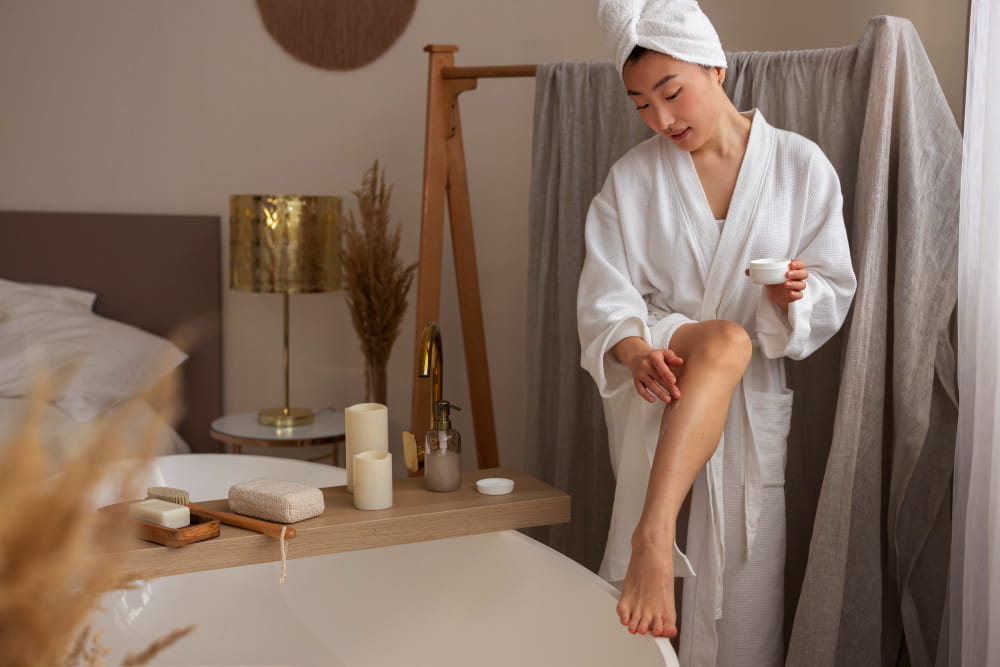
A lighter moisturizer for most of the body. In summer, a lotion or a lightweight oil applied to damp skin after showering is sufficient for most skin types on most of the body. The lighter texture absorbs faster, doesn’t trap sweat, and still provides the moisture retention your skin needs in air-conditioned environments where the air is drier than outside.
An after-sun product for high-exposure days. After extended sun exposure, skin needs more than just moisturizer — it needs active repair of the low-grade inflammation that UV exposure causes even without visible burning. Aloe vera gel is the most evidence-supported option for immediate post-sun application, both for its cooling effect and its documented anti-inflammatory properties. Apply it first, then a lightweight moisturizer over the top once it’s absorbed.
The Body Acne Problem
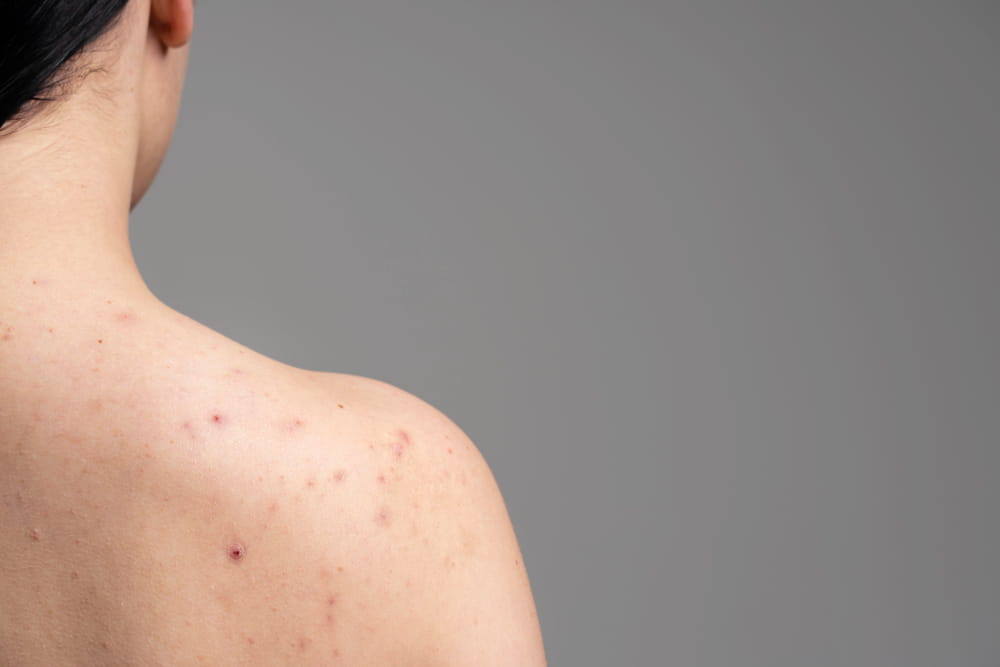
Body acne — specifically on the chest, back, and shoulders — is significantly more common in summer, and the causes are specific enough that they’re worth addressing directly.
Heat and sweat create an environment where the bacteria and yeast naturally present on skin proliferate more rapidly. Combined with increased sebum production and occlusive products that trap both, the conditions for congestion and breakouts are optimal in summer in a way they aren’t in winter.
What helps:
Showering promptly after sweating — within thirty minutes if possible — removes the sweat and surface bacteria before they have time to contribute to congestion. This is more impactful than any product change.
A body wash containing salicylic acid used two to three times per week on affected areas. Salicylic acid is oil-soluble, which means it can penetrate the sebum in a blocked pore and dissolve the material causing the blockage. It’s the only over-the-counter ingredient with meaningful evidence for body acne specifically.
Loose, breathable fabrics against skin that’s prone to breakouts. Tight synthetic fabrics in summer create a warm, occlusive environment directly against the skin that mirrors the effect of a heavy body butter — sweat accumulates, friction increases, and congestion follows. Cotton and linen in looser fits significantly reduce this.
Dropping heavy post-shower products on the chest and back specifically during high-breakout periods. A lightweight gel moisturizer or nothing at all on the back during a breakout is better than a light layer of something that’s still contributing to the problem.
The Friction and Chafing Problem
Chafing — the skin irritation caused by repeated friction between skin surfaces or between skin and fabric — is a summer-specific problem that body care can genuinely address.
The mechanism is straightforward: sweat reduces the friction coefficient between surfaces initially, then as it dries it increases it, and repeated movement over that higher-friction surface breaks down the outer layers of skin. Inner thighs, underarms, and under the bust are the most commonly affected areas.
What actually helps:
Anti-chafe balms or sticks applied to vulnerable areas before activity or before wearing fitted clothing in heat. These work by creating a smooth, low-friction surface — they don’t prevent sweating, they reduce the mechanical damage that happens after sweating. Look for products based on dimethicone or zinc oxide rather than heavy waxes, which can melt and migrate in high temperatures.
Moisture-wicking fabrics in areas prone to chafing. The reduction in sustained moisture contact makes a meaningful difference to how quickly friction damage develops.
Treating existing chafe with barrier cream rather than nothing. Broken, irritated skin needs protection from further friction while it heals — a simple zinc oxide cream applied to chafed areas creates both a healing environment and a protective layer against further damage.
The Timing Shift
One final adjustment worth making in summer: shower timing. A morning shower in winter makes sense — you’re warming up, you have the whole day ahead, moisturizer applied in the morning has time to absorb before you need to get dressed.
In summer, an evening shower has specific advantages. It removes the day’s accumulated sweat, sunscreen, and surface bacteria before you sleep — which means you’re not transferring those things to your bedding and then back to your skin for eight hours. It also means applying your body moisturizer in the evening, when you’re not about to go out in the sun and when the product has the full night to absorb rather than mixing with sweat within an hour.
Neither timing is wrong for all circumstances. But if you’re dealing with body breakouts, congestion, or skin that feels constantly reactive in summer, switching your main shower to the evening is one of the simplest changes available.
The information in this post is based on personal research and experience and is intended for educational purposes only. It is not a substitute for professional medical or dermatological advice, diagnosis, or treatment. Always consult a qualified healthcare provider before making changes to your skincare routine or health practices, especially if you have a medical condition or sensitivity.
