

This post contains affiliate links. If you click a link and make a purchase, I may earn a small commission at no extra cost to you. I only recommend products I genuinely believe in. Thank you for supporting Amoria Style!
Glass skin started as a face-only concept — that smooth, luminous, almost translucent look that became one of the most searched skincare terms of the past few years. It’s now extending to the body, and the search volume for “body glass skin” and “glowy legs” and similar terms reflects a genuine shift: people want the same luminous, smooth effect everywhere, not just on their face.
The good news is that the body version is, in some ways, more achievable than the facial version — body skin is thicker, more resilient, and responds predictably to a smaller number of variables. Here’s what actually creates the effect, separated from the marketing language that surrounds it.
What "Glass Skin" Actually Refers To
The term describes skin that’s smooth enough to reflect light evenly, hydrated enough to appear plump rather than textured, and even enough in tone that there’s no patchiness disrupting the visual effect. It’s not about a specific product — it’s about three things working together: exfoliation (removing texture-causing dead skin), hydration (creating the plumpness that catches light evenly), and tone evenness (removing the patches and discoloration that break up a smooth reflective surface).
For the body specifically, achieving this is mechanically simpler than for the face, because body skin care has fewer competing concerns — no makeup interaction, generally less sensitivity, and more surface area where consistent technique matters more than precise product formulation.
The Exfoliation Layer
Smooth, light-reflecting skin starts with removing the dead skin cell buildup that creates texture and dullness. Body skin renews more slowly than facial skin in terms of consistent care attention — most people exfoliate their face regularly but their body rarely, which means body skin often has more accumulated texture simply from being neglected rather than from any skin-specific issue.
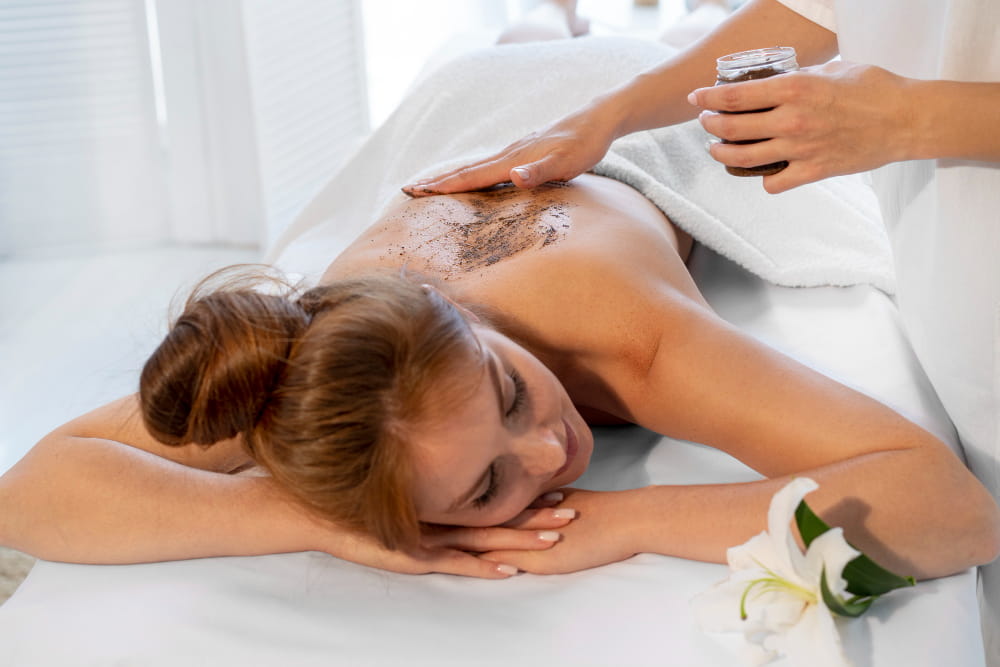
Physical exfoliation — body scrubs, dry brushing, exfoliating gloves — works well for the body specifically because body skin tolerates more mechanical pressure than facial skin. Two to three times per week is generally appropriate, more than that risks over-exfoliation and barrier disruption.
Chemical exfoliation — body washes or lotions containing AHAs (glycolic or lactic acid) or BHA (salicylic acid) — works at a deeper level than physical exfoliation and is particularly effective for rough patches on elbows, knees, and the backs of arms, where dead skin cell buildup tends to be most pronounced. These areas often need more intensive treatment than the rest of the body to achieve the same smoothness.
The combination of both — physical exfoliation a few times weekly, chemical exfoliation used consistently on specific rough areas — produces a more even result than relying on either method alone.
The Hydration Layer
This is where the actual “glass” effect comes from — properly hydrated skin reflects light evenly in a way that dehydrated skin, regardless of how smooth it is, simply cannot replicate. Dehydrated skin, even when exfoliated well, looks dull rather than luminous because there isn’t enough water content in the skin to create the plump, even surface that reflects light cleanly.
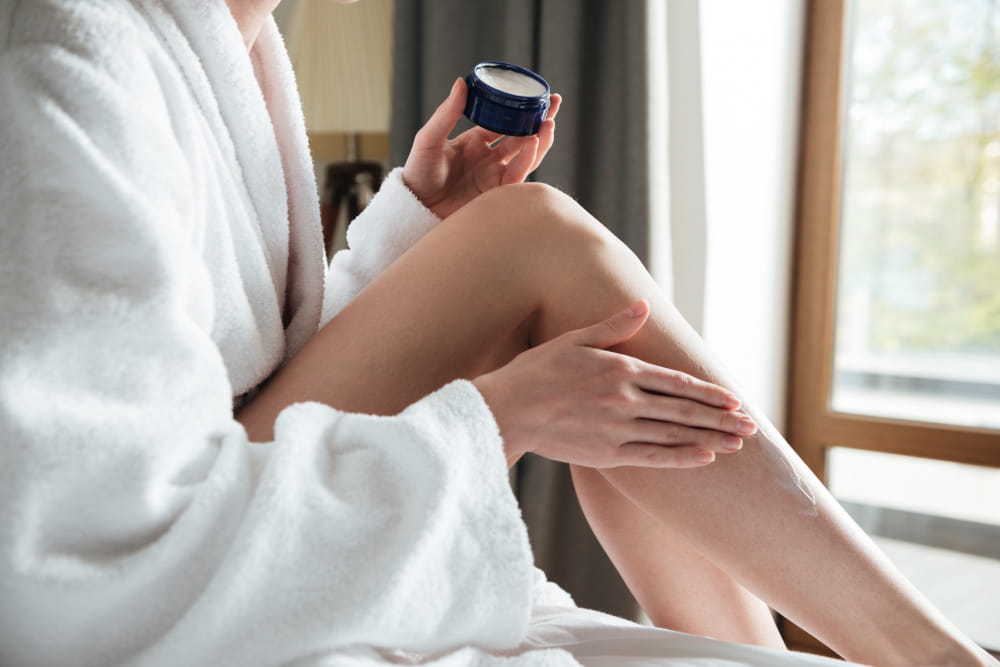
The timing matters as much as the product. Body moisturizer applied to damp skin within a few minutes of showering is significantly more effective than the same product applied to fully dry skin, because the water already on the skin surface gets sealed in rather than needing to be drawn from a drier baseline.
Layering for the body works the same way it does for the face. A lighter, humectant-rich lotion first, allowed to absorb, followed by a richer oil or cream on top to seal it in, produces a more complete hydration result than either product alone. This is particularly worth doing on areas that tend toward dryness — shins, elbows, knees — where a single layer of even a good product often isn’t sufficient to achieve the smooth, light-reflecting effect.
The Tone Evenness Layer
This is the part most “glass skin body” content skips entirely, but it’s genuinely important for the visual effect — uneven skin tone, whether from sun exposure, ingrown hairs, or general discoloration, breaks up the smooth, reflective quality that makes glass skin work, regardless of how well-exfoliated and hydrated the skin otherwise is.
Sun protection on the body is the single most impactful long-term factor here, because UV exposure is the primary driver of uneven pigmentation over time. Daily body SPF on exposed areas — not just for burn prevention but for tone evenness over months and years — has a more significant cumulative effect on overall skin appearance than almost any other single intervention.
Niacinamide-containing body products have meaningful evidence for improving tone evenness and reducing the appearance of hyperpigmentation over consistent use. It’s increasingly available in body lotions specifically marketed for tone evenness, and it’s one of the better-tolerated actives for body use because it doesn’t carry the same irritation risk as stronger options.
Addressing ingrown hairs and folliculitis in areas prone to them — typically thighs, underarms, and bikini area — removes a common source of small, scattered discoloration and texture that disrupts the smooth effect locally even when the rest of the body looks even. Gentle chemical exfoliation in these specific areas, combined with proper shaving or hair removal technique, addresses this directly.
The Routine, Put Together
Two to three times weekly: physical exfoliation (scrub, dry brush, or exfoliating gloves) in the shower, followed immediately by moisturizer applied to damp skin.
Daily: a lighter lotion applied to damp skin after showering, focused especially on areas prone to dryness or texture.
Daily on exposed skin: SPF, for the long-term tone evenness benefit as much as burn prevention.
Targeted, as needed: chemical exfoliant (AHA or BHA) on specifically rough or discolored areas — elbows, knees, areas prone to ingrown hairs — used consistently rather than only occasionally for it to have a cumulative effect.
Weekly or as tolerated: a richer treatment — an oil applied generously after exfoliation, or a more intensive mask-style body treatment — for an extra boost before specific occasions, though the daily habits matter more than any single intensive treatment for the overall result.

What Actually Produces the Visible "Glow"
The light-reflecting quality that makes glass skin so visually striking comes down to surface smoothness and hydration working together — smooth skin without adequate hydration looks matte and flat; hydrated skin with rough texture looks dull and uneven despite the moisture. Neither factor alone creates the effect; it’s specifically the combination that produces visible light reflection.
This is why routines that focus exclusively on heavy moisturizing without any exfoliation, or exclusively on exfoliation without adequate follow-up hydration, tend to underperform relative to a routine that addresses both factors consistently. The visible result that makes this trend so appealing in photos and videos is specifically the product of texture and hydration working together, not either factor maximized in isolation.
A Realistic Timeline
Visible improvement in texture from consistent exfoliation typically appears within one to two weeks. Hydration-related glow is often visible immediately after a session but requires consistent daily practice to maintain rather than being a one-time achievable state. Tone evenness improvements, particularly from sun protection and niacinamide use, take longer — meaningful change is usually visible over one to three months of consistent use rather than weeks.
The trend’s visual appeal comes from documenting the immediate, in-the-moment glow rather than the longer-term tone evenness work. Worth knowing going in, so the routine doesn’t feel like it’s failing simply because the slower benefits haven’t shown up on camera yet.
The information in this post is based on personal research and experience and is intended for educational purposes only. It is not a substitute for professional medical or dermatological advice, diagnosis, or treatment. Always consult a qualified healthcare provider before making changes to your skincare routine or health practices, especially if you have a medical condition or sensitivity.
