
This post contains affiliate links. If you click a link and make a purchase, I may earn a small commission at no extra cost to you. I only recommend products I genuinely believe in. Thank you for supporting Amoria Style!
The three sit on the same shelf, they all claim to moisturize, and most people pick based on smell or packaging. Which is fine, until you notice that one leaves your skin feeling tight an hour later, another takes so long to absorb you’re still slipping around at breakfast, and the third works perfectly in winter but makes you feel suffocated in July.
The differences between body oil, lotion, and butter are not marketing distinctions. They’re chemistry. And once you understand what each one actually does, the choice becomes obvious rather than arbitrary.
What Moisturizing Actually Means
Before comparing the three, it helps to understand that “moisturizing” isn’t one thing — it’s three distinct mechanisms that work differently and can be combined.
Humectants draw water into the skin from the environment and from deeper skin layers. Ingredients like glycerin, hyaluronic acid, and urea are humectants. They add water content to the skin directly.
Emollients fill in the gaps between skin cells, smoothing texture and making skin feel soft. Many plant oils and fatty acids work as emollients — they don’t add water, they improve the feel and function of the skin surface.
Occlusives sit on top of skin and slow down water loss by creating a physical barrier. Heavier waxes, butters, and certain oils are occlusive — they trap moisture already in the skin rather than adding new moisture.
Body lotion, body oil, and body butter each weight these mechanisms differently. That’s what makes them genuinely different products, not just different textures of the same thing.
Body Lotion — What It Actually Is
Body lotion is an emulsion — water and oil mixed together with an emulsifier to keep them combined. The water phase typically contains humectants like glycerin. The oil phase provides emollience. The result is a product that delivers both hydration (from the water and humectants) and some barrier support (from the oils), but neither as intensively as a pure oil or butter would.
This balance is why lotion is the most universally appropriate format. It absorbs quickly because the water evaporates, leaving the oil phase behind. It works on most skin types without feeling heavy. It’s the right choice when your skin needs maintenance hydration rather than intensive repair.
Where lotion falls short: it’s the least occlusive of the three formats, which means it doesn’t hold moisture in as effectively as oil or butter. In very dry climates, in winter, or on severely dry skin, lotion applied alone will often feel like it’s worn off within a couple of hours — because a significant portion of what it delivers evaporates before it can fully benefit the skin.
Lotion works best for: normal to combination skin, humid climates, daytime use when you need to get dressed quickly, anyone who finds heavier textures uncomfortable.
Body Oil — What It Actually Is
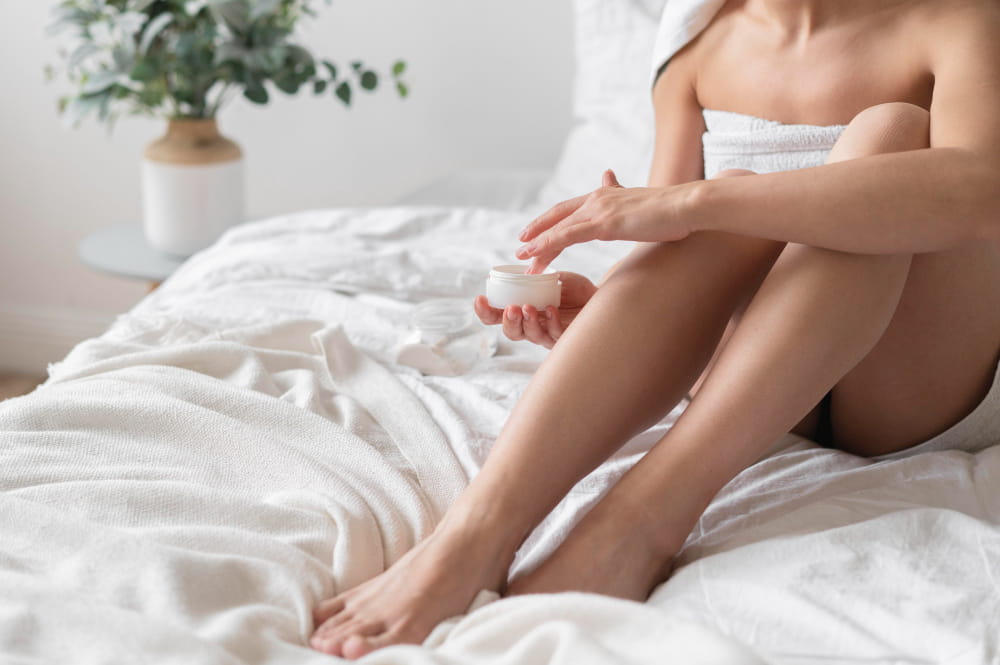
Body oil is pure emollient with no water phase. It doesn’t hydrate skin directly — it has no humectants and no water to deliver. What it does is absorb into the top layers of skin, reinforce the lipid barrier, and slow transepidermal water loss.
This distinction matters practically: body oil applied to dry skin seals in dryness. Applied to damp skin — immediately after a shower, before fully towel-drying — it seals in the water already sitting on your skin surface and delivers its emollient benefits on top of that. The damp skin application method is not a trick. It’s the correct use of the product.
Different oils have meaningfully different compositions. Lighter oils — squalane, jojoba, rosehip — are closer in structure to the skin’s natural sebum and absorb relatively quickly without leaving a heavy residue. Heavier oils — sweet almond, avocado, marula — are richer in oleic acid, more nourishing for very dry skin, and slower to absorb. The oil you choose should match your skin’s needs and how much absorption time you have.
One thing body oils genuinely do better than any lotion: long-term barrier reinforcement with consistent use. The lipid replenishment from regular oil application supports the skin’s own barrier function in a way that a lotion’s relatively low oil concentration can’t fully replicate.
Oil works best for: dry to very dry skin, post-shower application on damp skin, anyone whose skin drinks up lotion without feeling satisfied, nighttime use when absorption speed isn’t a concern.
Body Butter — What It Actually Is
Body butter is a blend of solid plant butters — shea, cocoa, mango, kokum — sometimes combined with oils, with no water phase. It’s the most occlusive of the three formats and the richest in emollients.
The solid-at-room-temperature texture comes from saturated fatty acids, which are what make shea and cocoa butter firm until they meet skin warmth. These same saturated fats are what make butter the most effective format for sealing moisture and repairing severely compromised skin.
The practical limitation of body butter is the same as its strength: it’s heavy. On oily or combination skin, or in warm humid weather, body butter can feel suffocating — it sits on top of skin rather than absorbing, and the occlusive layer that’s useful in winter becomes uncomfortable in summer. It also transfers — onto clothes, onto sheets — for longer after application than oil or lotion.
Shea butter specifically has a meaningful evidence base beyond simple occlusion. It contains triterpene alcohols with documented anti-inflammatory properties, and it’s been used in dermatological contexts for barrier repair in eczema-prone and reactive skin. This makes it genuinely useful for more than just dry skin — it’s appropriate for sensitive or reactive skin that needs more than moisture.
Butter works best for: very dry or severely dry skin, elbows, knees and heels where skin is thickest, cold or dry climates, nighttime use, anyone with eczema-prone or reactive skin that needs barrier repair.
How Climate Changes the Answer
This is the variable most moisturizer guides ignore entirely, and it changes the recommendation significantly.
In humid climates, humectants work efficiently because there’s atmospheric moisture for them to draw from. Lotion is often sufficient. Heavy butter can feel genuinely uncomfortable. Oil applied to damp skin works well without feeling sticky.
In dry climates or heated indoor environments, humectants can actually pull moisture from deeper skin layers if there’s not enough in the environment — which can leave skin feeling tighter after application. In these conditions, pairing a humectant lotion with an occlusive layer (oil or butter on top) works better than either alone.
In cold weather, the skin barrier is under additional stress from temperature fluctuations and low humidity. This is when butter earns its place — the heavier occlusion compensates for the increased water loss that cold air causes.
In summer, lighter formats win for comfort and practicality. Oil on damp skin, or a glycerin-rich lotion, delivers the benefits without the heaviness.

The Layering Approach
The most effective body moisturizing routine isn’t choosing one product — it’s understanding that the three formats can work together.
Lotion first, then oil on top, seals the humectants from the lotion under the emollient layer of the oil. This is the same logic as the skincare rule of lightest to heaviest, and it works for the same reason: you’re layering by function, not just by texture.
In winter, adding a butter on top of oil on particularly dry areas — shins, elbows, the backs of hands — provides maximum occlusion where the skin needs it most without applying that level of intensity everywhere.
This doesn’t have to be complicated. A simple lotion applied all over after showering, with a small amount of oil or butter on the driest areas, covers most people in most conditions.
The One Thing Worth Remembering
Timing matters more than product choice for all three formats. Moisturizer applied to damp skin — within three minutes of showering, before fully drying — is significantly more effective than moisturizer applied to dry skin. The water already on your skin surface provides the hydration that your product then seals in. Waiting until your skin is completely dry before moisturizing means you’re working with less to lock in.
Get the timing right first. Then choose the format that suits your skin, your climate, and the season — and don’t be surprised if the answer ends up being all three, just on different days.
The information in this post is based on personal research and experience and is intended for educational purposes only. It is not a substitute for professional medical or dermatological advice, diagnosis, or treatment. Always consult a qualified healthcare provider before making changes to your skincare routine or health practices, especially if you have a medical condition or sensitivity.
