

This post contains affiliate links. If you click a link and make a purchase, I may earn a small commission at no extra cost to you. I only recommend products I genuinely believe in. Thank you for supporting Amoria Style!
Quiet luxury isn’t about spending more. That’s the part the aesthetic gets misunderstood on most often — people assume the look requires designer labels, and then either give up on it as unattainable or buy expensive pieces that don’t actually deliver the effect they’re chasing. The aesthetic is built on a specific set of visual signals, almost none of which are exclusive to luxury price points. Once you know what those signals actually are, the look becomes accessible at almost any budget.
Here’s what quiet luxury actually consists of, and how to build it without the designer markup.
What Quiet Luxury Actually Signals
The aesthetic communicates restraint and quality over visible branding or trend-chasing. No logos, no obvious “this season” pieces, nothing that screams for attention. The visual language is built on fabric quality, fit precision, and a tightly controlled color palette — and crucially, all three of those things are achievable without spending designer prices, because they’re about choices rather than brand names.
The look reads as expensive because it reads as deliberate. Every piece looks chosen rather than acquired, which is a styling skill more than a budget requirement.

Fabric: The Detail That Actually Matters Most
This is the single biggest lever for achieving the quiet luxury look on a normal budget, and it’s the one most people skip because checking fabric composition takes slightly more effort than checking price or style.
Natural fibers over synthetic blends, wherever the budget allows. Cotton, wool, linen, silk, and cashmere all drape, move, and age differently than polyester and acrylic — they hold structure without looking stiff, they develop a softness over time rather than degrading, and they photograph with a richness that synthetic fabric simply doesn’t replicate. A wool-blend coat at a mid-range price point will read as significantly more expensive than a 100% polyester coat at the same price, because the fabric itself carries visual weight.
Weight and structure over thinness. Cheap fabric is often thin because thin fabric is less expensive to produce. A t-shirt, knit, or trouser with some substance to it — fabric that doesn’t show your hand through it when held up to light, that has enough weight to hang properly rather than cling — reads as higher quality almost instantly, regardless of brand.
Check the inside, not just the outside. Seams that are finished rather than raw, linings that match or complement rather than being an obvious cheap polyester contrast, buttons that feel substantial rather than light and plasticky — these details don’t show in a quick glance but they affect how a garment moves and lasts, and over time that translates into how it photographs and how it ages.
Color: The Palette That Reads as Considered
Quiet luxury draws heavily from a specific, narrow color range, and the narrowness itself is part of what creates the expensive effect — a tightly controlled palette reads as curated, while a wide, varied palette reads as accumulated rather than chosen.
Cream, camel, chocolate, navy, black, grey, and white form the core of the palette. These colors share two qualities that matter: they’re neutral enough to combine endlessly with each other, and they don’t date the way trend colors do, which means pieces in these tones look current for years rather than looking dated within a single season.
Avoid stark, “fast fashion white.” A slightly warmer, softer white or cream reads as more considered than a stark, bright white, which can look like an inexpensive basic regardless of the actual price paid for it. The same logic applies to black — a true, deep black in a quality fabric reads completely differently from a slightly grey-tinted black in thin synthetic fabric.
One muted accent color, used sparingly. Sage, dusty blue, terracotta, or burgundy in low saturation can appear occasionally without disrupting the overall quiet effect, as long as it doesn’t dominate and stays within the same muted, low-saturation family as the rest of the palette.
Fit: The Skill That Costs Nothing Extra
Fit is the variable with the highest impact-to-cost ratio in this entire aesthetic, because it’s almost entirely about alteration and selection rather than the price of the garment itself.
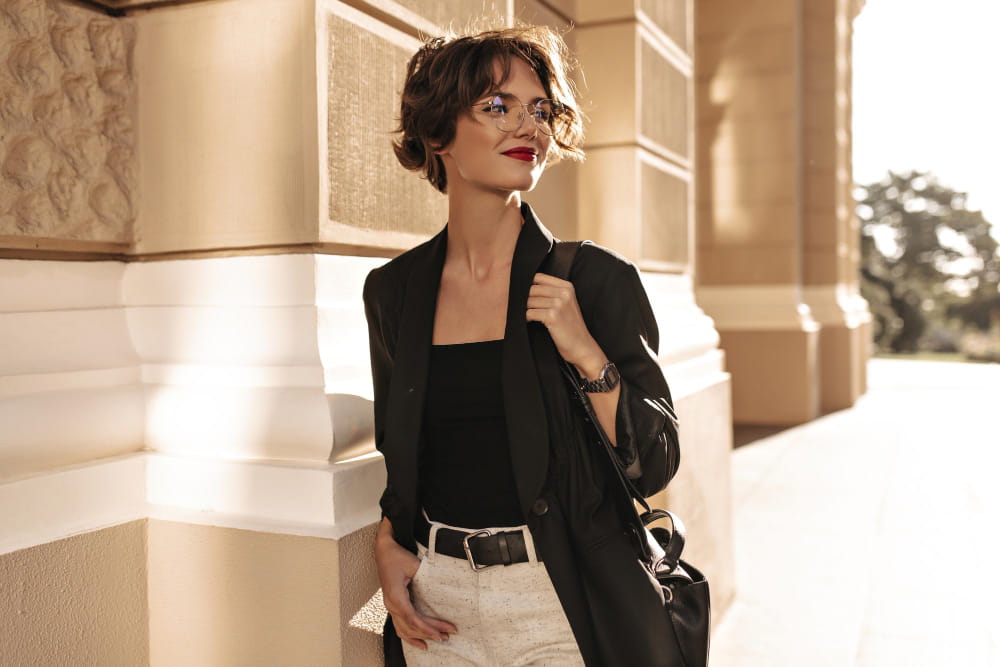
Trousers that hit the correct length. This is the single most common fit failure and the easiest to fix. Trousers that are too long and bunch at the ankle, or too short and expose an awkward amount of sock or ankle, undermine an otherwise well-chosen outfit instantly. A basic hem alteration, available at any tailor for a modest cost, transforms an inexpensive pair of trousers into something that reads as considerably more expensive simply through correct proportion.
Shoulders that actually fit on blazers and coats. As covered in capsule wardrobe building, the shoulder seam is the one fit point that can’t be altered without significant cost and effort — it needs to be correct from the start. Everything else on a blazer or coat can be taken in or let out reasonably easily; the shoulder cannot. Prioritize shoulder fit over every other consideration when buying outerwear, regardless of price point.
Nothing straining or pulling. Buttons that strain across the chest, fabric that pulls at the hips, sleeves that ride up when you move — these small tension points read as “wrong size” instantly and undermine the entire effect regardless of how good the individual pieces are. Sizing up rather than insisting on a specific number is almost always the better choice for this aesthetic.
Where to Actually Spend More (If You're Going to Spend More At All)
If your budget allows for a few higher-investment pieces, the quiet luxury aesthetic rewards spending strategically rather than evenly across everything.
A genuinely good coat. This is the single highest-impact investment because a coat is worn over everything else and is visible in nearly every winter outfit. A well-made coat in good fabric elevates whatever’s underneath it, which means the investment pays off across dozens of outfit combinations rather than just once.
Leather shoes and bags over synthetic alternatives. These are the accessories most frequently touched, seen up close, and subject to wear — and the visual and tactile difference between leather and synthetic leather becomes more apparent the longer an item is used. A well-maintained leather bag ages into something that looks better over time; a synthetic equivalent tends to look progressively worse.
One genuinely well-fitted blazer. Given the shoulder-fit issue described above, a blazer is worth getting properly fitted or tailored even if that means spending more on the base piece or on alteration costs, because it can’t be easily fixed later if the foundational fit is wrong.

Where Spending More Makes Little Difference
Basic t-shirts and casual knitwear, where mid-range options in good natural fibers achieve a very similar visual and tactile result to expensive equivalents, particularly once worn and washed a few times.
Jewelry, where the quiet luxury aesthetic actually favors minimal, simple pieces over anything ornate — a few well-chosen simple pieces (a fine chain, simple studs, one substantial ring) communicate the aesthetic more effectively than an expensive but ornate statement piece, which works against the restraint the whole look is built on.
Bags for everyday casual use, where a well-structured, simple silhouette in a quality mid-range material does the job the aesthetic requires without needing to be the most expensive option available.
The Mistake That Undoes Everything
Visible logos and branding. This is the most direct contradiction of the entire aesthetic — quiet luxury is built on the absence of obvious status signaling, and a visible logo, no matter how expensive the item, reintroduces exactly the kind of loud signaling the look is designed to avoid. A genuinely effective quiet luxury outfit could, in theory, be entirely unbranded inexpensive pieces and still read as more expensive than a heavily logoed designer outfit, because the visual language being communicated is restraint, not price. That’s the whole trick, really — and it costs nothing to apply it to what’s already in your closet.
